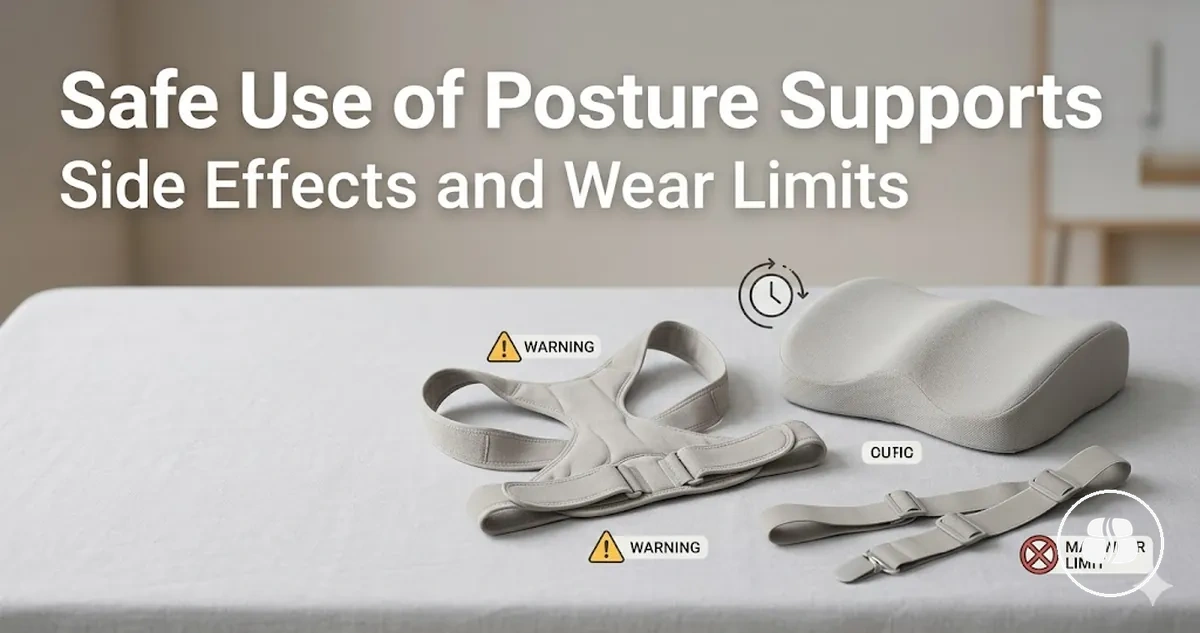
Posture support accessories safety guide
Posture support accessories safe use refers to using posture support accessories such as posture braces, lumbar cushions, and shoulder supports as temporary alignment cues rather than continuous replacements for posture awareness, movement, or medical care. This means their usefulness depends on fit, wear duration, and how the body response adapts during use. Safe use is conditional because pressure, discomfort, and side effects may appear when support intensity or duration does not match individual tolerance.
Safe use of posture support accessories depends on how well they balance support and comfort without creating excessive pressure or long-term dependency. Fit influences how pressure is distributed across the body, while wear duration affects how the body adapts to external support over time. When these factors are not aligned, discomfort or early side effects may appear, especially in sensitive users or during prolonged use patterns.
Risk control in posture support accessories depends on maintaining natural muscle activity while using external support as a temporary cue. Overuse can reduce active posture engagement, and increased pressure may contribute to discomfort or mild side effects in some conditions. Monitoring body response helps identify early signals such as stiffness or irritation, allowing adjustments before issues develop further.
In practical use, posture support accessories should match fit and wear duration to the specific activity, such as sitting, standing, or light movement. The body response becomes the main indicator of whether support is appropriate, especially when pressure or discomfort changes during daily tasks. Safe use remains a balance between external support and maintaining natural muscle activity without relying on continuous reinforcement.
What safe use means for posture support accessories
Safe use means posture support accessories are used in a way that provides posture cues without creating new pressure, discomfort, or dependence. It defines posture support accessories as alignment cues that support posture awareness while the support role remains temporary. The focus stays on body response, comfort, and movement breaks rather than continuous reliance.
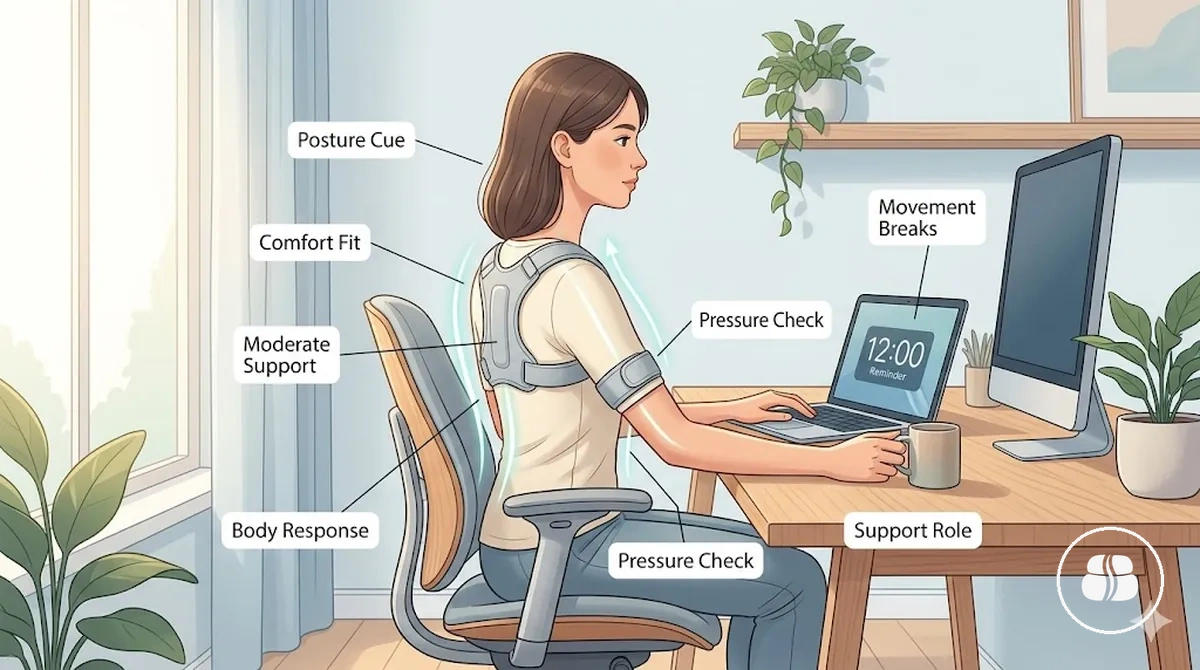
Safe use checks for posture support accessories organize how posture cues, pressure, discomfort, dependence, and body response stay balanced during wear. These checks help clarify whether the support role remains comfortable and controlled within daily movement patterns.
- safe use alignment through posture cues without excess pressure
- fit balance that avoids discomfort and supports body response
- dependence control while maintaining movement breaks
- support role awareness during daily activity and posture correction cues
Safe use of posture support accessories depends on balancing posture cues with comfort and physical limits. When fit is appropriate, pressure is distributed more evenly and discomfort is less likely to build during use. If dependence on external support increases or movement breaks are ignored, the body response may shift away from active muscle activity, which can reduce natural postural engagement over time.
Safe use of posture support accessories does not replace diagnosis, treatment, strengthening, movement breaks, or ergonomic adjustment when those are needed. It remains a supportive method that works alongside broader body care approaches depending on the situation. Posture support accessories hub provides the broader context of support roles and usage conditions for different accessory types.
Posture support should cue alignment, not replace muscle activity
Posture support means using posture support as a cue alignment tool rather than a replacement for muscle activity. It acts as a reminder and positional aid that supports movement while the body continues natural muscle activity during daily posture changes.
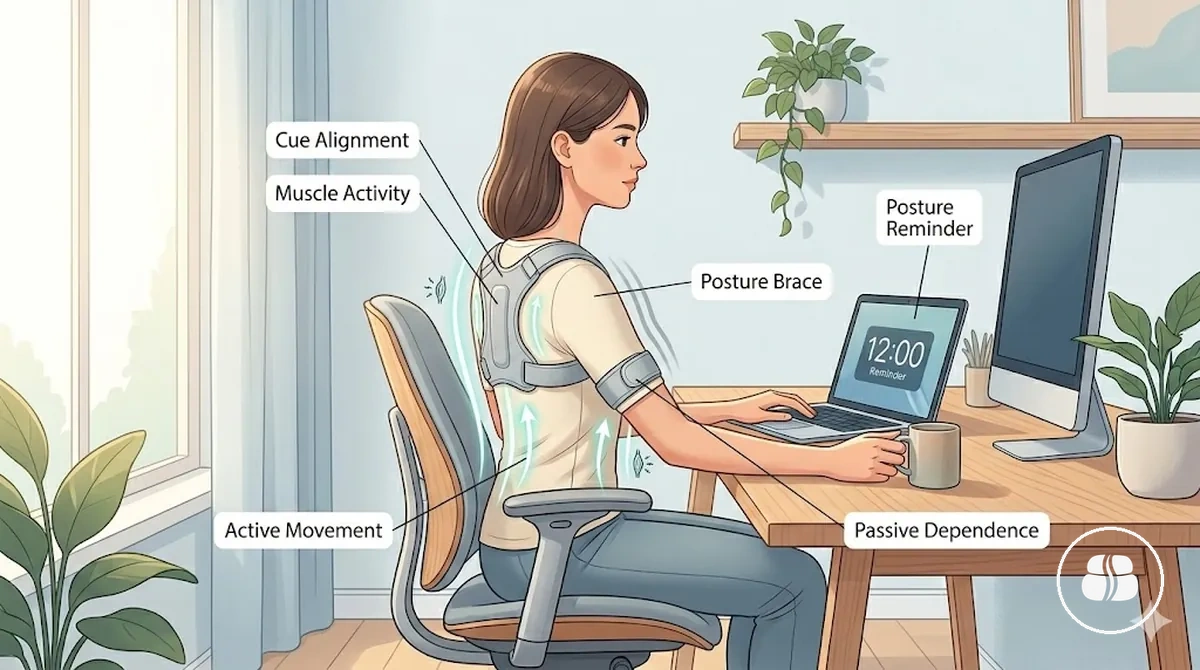
The contrast between cue alignment and replacing muscle activity in posture support helps clarify how posture support should function in real use conditions.
| Cue alignment | Replaces muscle activity |
|---|---|
| Supports posture reminder during movement | Reduces active muscle activity |
| Acts as positional aid for awareness | Encourages passive holding of posture |
| Maintains movement and breaks | Limits natural movement adjustments |
| Helps manage strain through awareness | Can increase over-reliance risk |
Posture support such as a posture brace, cushion, or support attachment applies gentle support pressure to guide alignment without fully taking over body control. When used correctly, it works with muscle activity rather than replacing it, especially during sitting or short focused tasks.
Over-reliance on posture support may reduce natural movement engagement when breaks and active posture adjustments are ignored. Keeping posture support as a reminder and positional aid helps maintain balanced muscle activity and reduces unnecessary strain over time.
Safety factors that change the risk of side effects
Safety factors that change the risk of side effects depend on fit, pressure, wear time, activity intensity, skin sensitivity, existing discomfort, tightness, support type, and user condition. Different posture support accessories such as braces, cushions, or support attachments may create different pressure patterns, which changes how the body responds during use. :contentReference[oaicite:0]{index=0}
Safety factors that change the risk of side effects can be better understood through a visual breakdown of how fit, pressure, wear time, and body response interact during posture support use. The image below labels the main factors that influence risk before side effects appear.
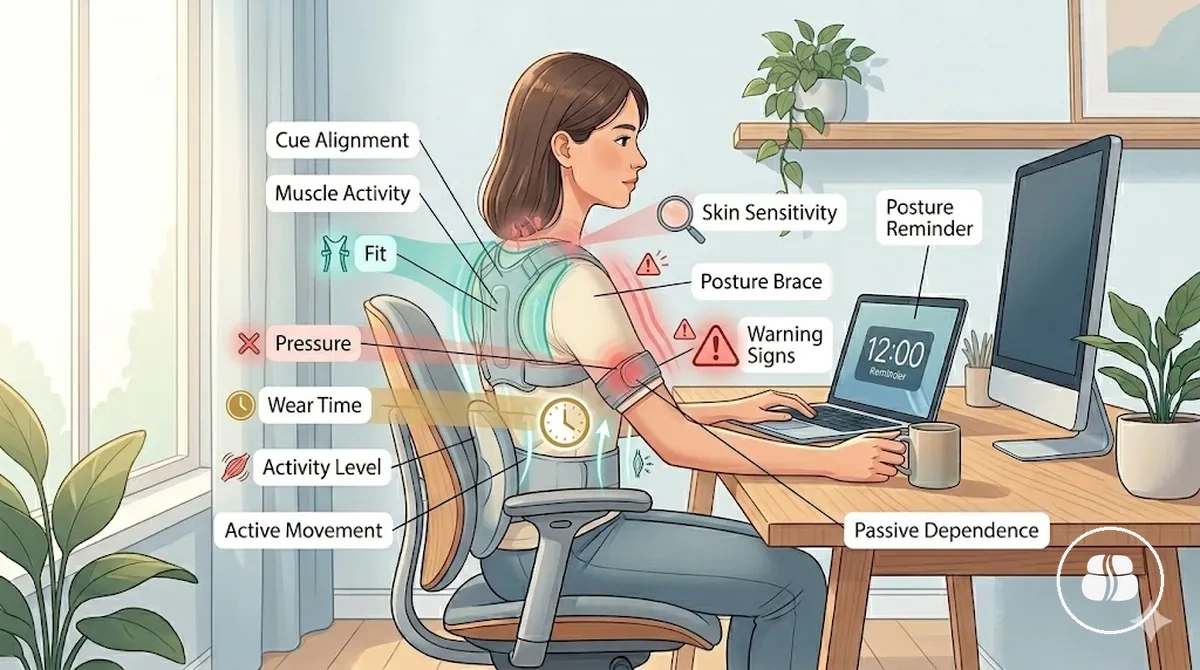
Risk levels change based on how posture support accessories interact with fit, pressure distribution, wear duration, activity intensity, skin sensitivity, and any existing discomfort. A well-distributed fit with moderate pressure may support comfort, while tightness, uneven pressure, or long wear time may increase strain depending on user condition and activity level.
Safety factors that change the risk of side effects vary by condition; the table below organizes key factors, what to check, possible risks, and safer responses to help distinguish low-risk adjustment from conditions that may require reducing use.
| Factor | Condition to check | Possible risk | Safer response |
|---|---|---|---|
| Fit | Too loose or too tight | Reduced stability or pressure buildup | Adjust to balanced fit |
| Pressure | Uneven or concentrated pressure | Discomfort or localized strain | Redistribute support pressure |
| Wear duration | Extended continuous use | Increased fatigue or dependency | Introduce movement breaks |
| Activity intensity | High movement or static posture | Misalignment or added strain | Match support to activity level |
| Skin sensitivity | Irritation or friction response | Skin discomfort or redness | Reduce friction and adjust contact |
| Existing discomfort | Pre-existing strain or sensitivity | Increased discomfort under support | Lower support intensity or pause use |
When warning signs such as increasing discomfort, uneven pressure, or reduced body response appear, adjusting fit, reducing wear time, or taking breaks can help restore balance. Safety factors should always be evaluated based on user condition and movement response rather than fixed assumptions.
Fit, tightness, and pressure points
Fit, tightness, and pressure points determine how posture support accessories distribute strap tension across contact area and skin contact zones. When fit is too tight or too loose, pressure points may form at edges or concentrated areas, which can increase discomfort or restrict natural movement. Adjusting fit and tightness balance may be required to restore even pressure distribution and reduce localized strain. :contentReference[oaicite:0]{index=0}
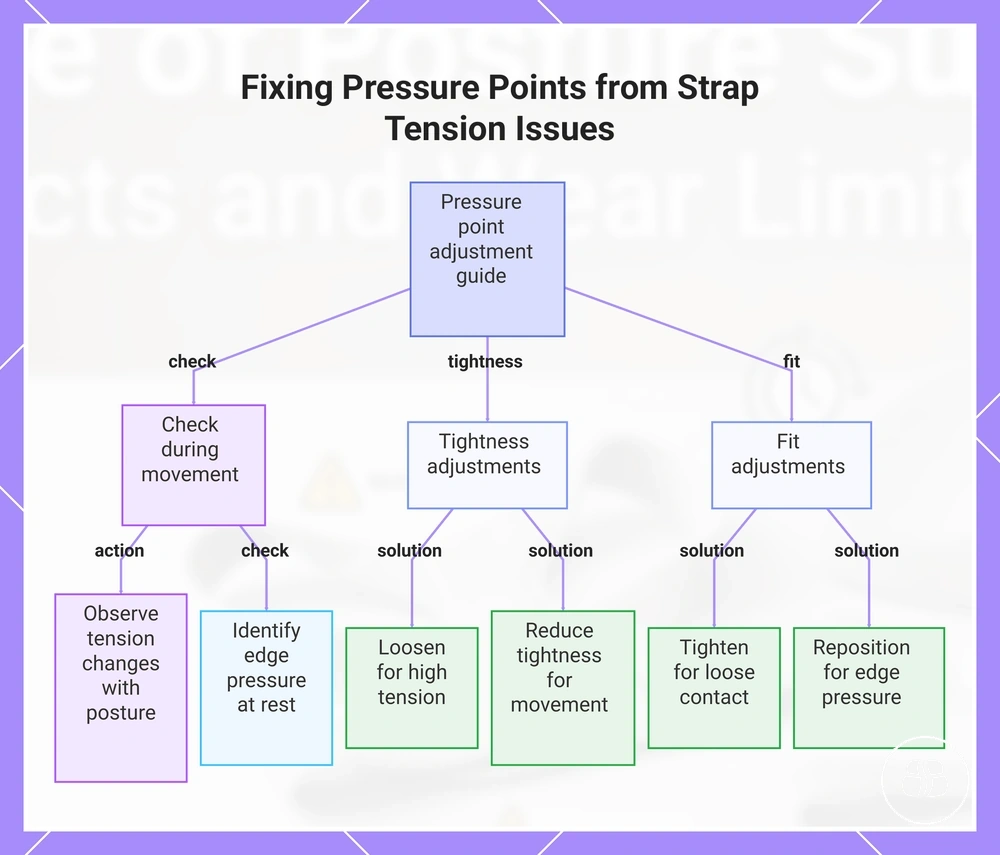
During wear, fit, tightness, and pressure points should be checked while moving or sitting to understand how strap tension changes with posture. Small shifts in body position can change contact area and create edge pressure that may not be noticeable at rest. Monitoring these changes helps identify whether adjustability is correctly set for comfort and controlled movement.
- Strap tension too high → loosen adjustability to reduce pressure points and restore balanced skin contact
- Loose contact area → tighten fit slightly to stabilize position without creating edge pressure
- Edge pressure at seams → reposition support to distribute pressure more evenly across contact area
- Uneven skin contact → adjust alignment to prevent localized tightness and improve comfort distribution
- Movement restriction during activity → reduce tightness to allow smoother posture changes and reduce strain
- Pressure point discomfort → recheck adjustability and reset fit to balance support and flexibility
This chart shows how to identify and resolve pressure point issues by checking movement and adjusting strap tension and fit.
Wear time, activity type, and existing discomfort
Wear time, activity type, and existing discomfort determine how posture support accessories affect body response during use. Risk changes when these factors interact because longer wear time or higher activity type can increase pressure changes, while existing discomfort can heighten sensitivity. The decision to continue, adjust, shorten use, or stop depends on how the body response reacts in real conditions. :contentReference[oaicite:0]{index=0}
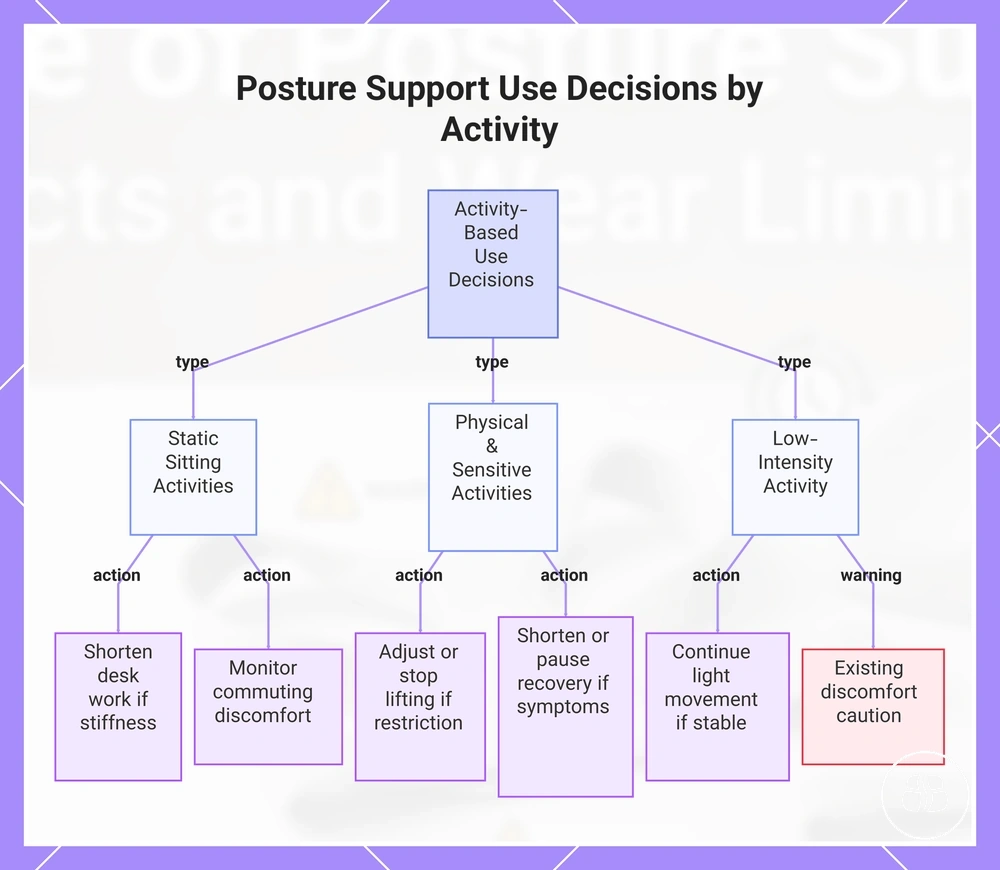
During use, activity type changes how wear time is experienced, since desk work, lifting, commuting, or recovery-sensitive use can each affect pressure and movement differently. Existing discomfort such as fatigue, mild pain, or irritation may amplify sensitivity, making normal wear feel more intense. Monitoring body response helps decide whether to continue, adjust, or shorten use based on comfort and control.
- Desk work → shorten use if static posture increases stiffness or pressure buildup
- Lifting → adjust or stop if movement restriction affects control or comfort
- Commuting → monitor discomfort during prolonged sitting and adjust if needed
- Recovery-sensitive use → shorten or pause use if symptoms increase
- Light movement → continue only if body response remains stable
If existing discomfort such as pain, numbness, or irritation is already present before wearing support, caution is required. In such cases, even low-intensity activity may increase sensitivity, and shortening use or stopping may be more appropriate depending on body response.
This chart shows how to adjust posture support use based on activity type and existing discomfort, with specific actions for each scenario.
Common side effects from posture support accessories
Common side effects from posture support accessories can occur when fit, tightness, wear time, skin sensitivity, or use purpose is mismatched. These posture support accessories may lead to skin irritation, chafing, restricted movement, soreness, stiffness, numbness, tingling, or over-reliance when pressure distribution or duration is not well balanced.
Side effects from posture support accessories should be read as body response signals that indicate adjustment, reduced wear time, or stopping use may be needed. Mild temporary discomfort can occur during initial adaptation, but persistent symptoms such as numbness, tingling, or restricted movement should not be ignored and may require immediate adjustment. The key distinction is between short-lived adjustment sensations and ongoing or worsening discomfort patterns.
The table below organizes common side effects and shows how each symptom may relate to possible contributing conditions, what should be checked during use, and safer response actions to reduce discomfort or prevent escalation.
| Side effect | Possible contributing condition | What to check | Safer response |
|---|---|---|---|
| Skin irritation | Friction or sensitive skin contact | Strap contact points, redness, material feel | Adjust fit or reduce contact pressure |
| Chafing | Repeated friction during movement | Edge rubbing or motion zones | Reposition or loosen support |
| Restricted movement | Excessive tightness or rigid support | Mobility limitation during activity | Loosen or shorten wear time |
| Soreness | Prolonged pressure on muscles | Duration and pressure areas | Reduce wear time and take breaks |
| Stiffness | Limited natural movement variation | Posture hold duration | Increase movement breaks |
| Numbness | Localized pressure affecting sensitivity | Tight strap zones and circulation feel | Stop use and readjust fit |
| Tingling | Nerve or pressure sensitivity response | Persistent pressure points | Loosen support or discontinue use |
| Over-reliance | Frequent dependency on external support | Reduced active posture control | Limit usage duration and increase natural posture activity |
Skin irritation, chafing, and restricted movement
Skin irritation, chafing, and restricted movement from posture support accessories occur when strap edge pressure, tightness, sweat, friction, or range of motion limitations are not balanced with body movement. These posture support accessories may create early warning signs when skin contact or movement restriction increases during use.
Skin irritation and chafing often appear as visible rubbing or redness caused by strap edge contact combined with sweat and friction during movement. Restricted movement may occur when tightness or support positioning limits natural range of motion, especially during repeated posture changes. These signals should be treated as indicators to adjust, shorten use, or remove support rather than continue through discomfort.
- Skin irritation → check strap edge contact, sweat buildup, and fabric rubbing → adjust or reduce wear time
- Chafing → check friction points and repeated movement zones → reposition or loosen support
- Restricted movement → check tightness and range of motion limits → adjust fit or remove support
- Redness or rubbing → check skin contact and strap alignment → shorten use or change positioning
- Movement stiffness → check prolonged wear duration → increase breaks or discontinue use if persistent
Numbness, tingling, soreness, and stiffness
Numbness, tingling, soreness, and stiffness from posture support accessories are stronger body-response signals that require reducing, removing, or reassessing use when linked to pressure, compression, restricted movement, prolonged wear, or existing sensitivity. These posture support accessories should not be continued unchanged when these signals appear.
These symptoms need cautious interpretation because they may indicate that current pressure or wear conditions are no longer appropriate. Numbness and tingling are often associated with pressure or compression, while soreness and stiffness may increase with prolonged wear or limited movement variation. When these signals persist, worsen, or feel unusual, stopping use or reassessing fit and duration becomes necessary to avoid further escalation.
- Numbness → check pressure or compression points → reduce tightness or stop use
- Tingling → check localized pressure zones → loosen or remove support
- Soreness → check prolonged wear duration → take breaks or reduce usage time
- Stiffness → check restricted movement → increase movement breaks or stop use if persistent
Muscle reliance and overuse concerns
Muscle reliance refers to a use-pattern concern where posture support accessories may shift body behavior toward passive support instead of maintaining active posture habits. It becomes relevant when overuse, higher support level, or extended wear duration changes how the body responds during normal movement and breaks. :contentReference[oaicite:0]{index=0}
Muscle reliance and overuse concerns often develop through gradual changes in wear duration, movement reduction, support level, and reduced attention to body feedback. When posture support is used for long periods without breaks, active posture habits may become less frequent, and the body may depend more on external support for positioning. Adjusting support level, introducing breaks, and maintaining movement and body feedback awareness can help keep usage more balanced.
In situations where posture support is used during long sitting sessions, reduced movement and limited posture variation may increase overuse patterns. This does not imply a fixed outcome, but it highlights how repeated reliance on external support can influence posture habits over time depending on individual use patterns.
Muscle reliance and overuse concerns can be understood through the difference between short-term cueing and dependence-like use patterns.
| Safer cueing use | Overuse pattern |
|---|---|
| Supports active posture habits during movement | Replaces active posture habits with passive support |
| Includes regular breaks and body feedback awareness | Extends wear duration without sufficient breaks |
| Maintains balanced support level | Relies on high support level for long periods |
| Encourages movement reduction only when needed, not constant | Leads to continuous movement reduction over time |
Safe wear limits for posture braces, cushions, and supports
Safe wear limits for posture braces, cushions, and supports depend on accessory type, fit, user tolerance, and purpose, so limits vary by condition rather than following a single universal number. Gradual use, breaks, and body feedback remain more reliable than fixed duration assumptions when managing wear limits. :contentReference[oaicite:0]{index=0}
Safe wear limits vary because posture braces, cushions, and supports differ in support intensity and pressure distribution. Posture braces usually provide higher structural support, so they may require more controlled wear sessions depending on fit and tolerance. Cushions and seat-based supports distribute pressure more passively, which can allow longer sitting use in some cases when movement variation is maintained. Shoulder and lumbar supports sit between these patterns, where wear limits depend on comfort level, movement reduction, and body feedback response.
In practice, safe wear limits are guided by how the body responds during use rather than fixed timing rules. Signs such as increasing pressure discomfort, reduced movement, or reliance without breaks may indicate the need to shorten sessions or adjust support level. Gradual use and regular breaks help maintain balanced usage across different accessory types and activity levels.
Safe wear limits comparison across posture braces, cushions, and supports depends on support intensity, pressure distribution, and user tolerance rather than preset duration rules.
| Support type | Wear burden | What to monitor | Safer limit logic |
|---|---|---|---|
| Posture brace | Higher structural support and restriction | Pressure points, movement reduction | Shorter sessions with frequent breaks and fit checks |
| Cushion / seat pad | Lower direct restriction, passive support | Sitting comfort, posture shifting | Longer use possible with movement variation |
| Lumbar support | Moderate lower-back support | Lower-back pressure, posture fatigue | Balanced sessions with posture resets |
| Shoulder support | Moderate directional support | Tension buildup, range of motion | Adjusted duration based on mobility comfort |
Why all-day posture support can increase risk
All-day posture support can increase risk when it creates pressure, compression, movement restriction, discomfort, skin contact irritation, fatigue, or reliance that replaces active posture habits. Prolonged use changes how the body responds to external support, especially when breaks and body feedback are reduced or ignored. :contentReference[oaicite:0]{index=0}
This effect is not universal, but prolonged use may shift posture behavior toward passive support patterns when restrictive support is worn continuously. Low-burden passive support may feel less limiting, while higher support intensity or restrictive bracing can increase constraint when used for extended periods. Maintaining breaks and observing body feedback helps reduce unnecessary strain and reduces the chance of over-reliance.
- Pressure → may build at contact zones during prolonged use → reduce wear time and adjust fit
- Compression → may affect comfort over time in tight support areas → loosen support and allow recovery breaks
- Movement restriction → can reduce natural posture variation → introduce periodic movement and posture resets
- Skin contact → may lead to friction or irritation → adjust positioning and improve contact balance
- Fatigue → may increase with continuous static support → shorten continuous wear sessions
- Reliance → may reduce active posture habits over time → balance support use with movement and body feedback
How gradual use lowers overuse risk
Gradual use lowers overuse risk by testing tolerance before increasing duration or relying on posture support during longer tasks. It helps reveal how fit, comfort, and movement restriction behave under real conditions instead of assuming immediate sustained use is suitable. :contentReference[oaicite:0]{index=0}
This approach works because tolerance, starting duration response, and break sensitivity vary by accessory type and body feedback. Short sessions make it easier to detect early discomfort, pressure changes, or adjustment needs before they turn into overuse patterns. Based on symptom checking, the next-use decision can be adapted by extending, maintaining, or shortening use depending on response.
- Test a short starting duration to evaluate initial tolerance
- Check symptoms such as pressure, fatigue, or movement restriction during and after use
- Adjust or shorten the next session if discomfort or strain appears
- Decide next-use duration based on body feedback and recovery response
Safe use checks before and during wear
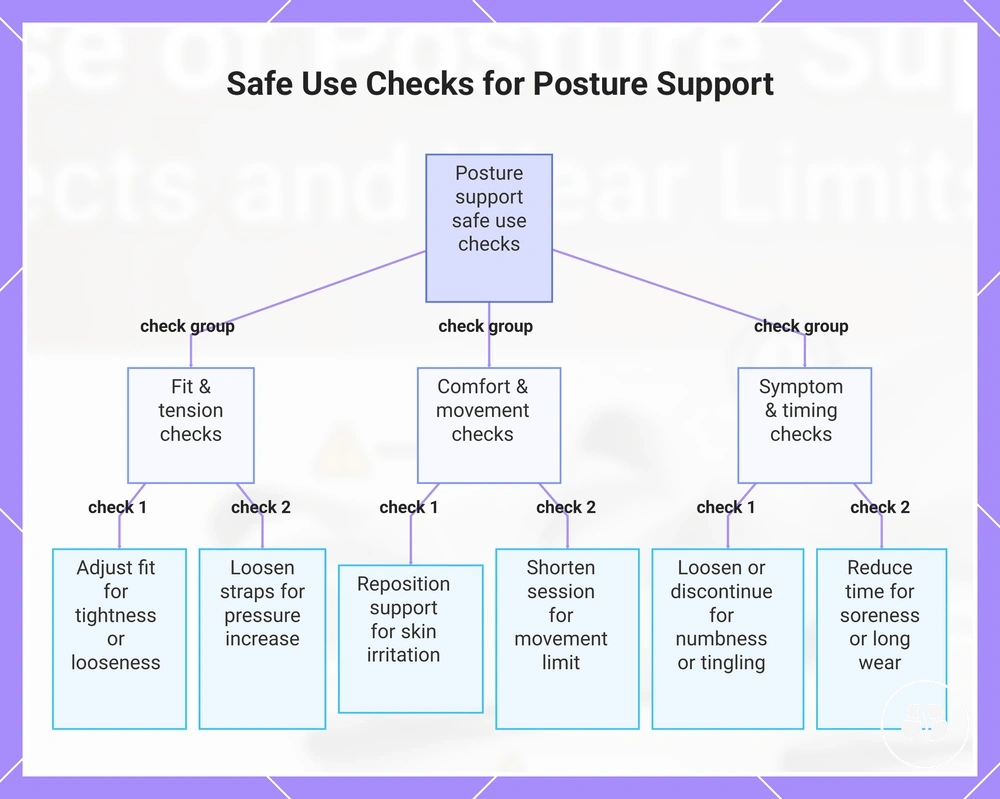
Safe use checks before wear and during wear help confirm whether posture support remains comfortable, aligned, and non-restrictive by identifying early signs of pressure, movement limitation, skin response, and symptom changes. These safe use checks reduce overuse risk by ensuring issues are detected before they escalate during continuous use. :contentReference[oaicite:0]{index=0}
When any check shows discomfort or restriction, the response should be immediate and based on body feedback rather than continued use. Typical actions include loosening, repositioning, shortening the session, or removing the support when warning signs persist during wear.
- Fit → if too tight or loose → adjust fit to restore stable and comfortable alignment
- Strap tension → if pressure increases → loosen straps to reduce compression
- Skin contact → if irritation or chafing appears → reposition support to reduce friction
- Movement restriction → if breathing or motion feels limited → shorten session or adjust alignment
- Numbness → if reduced sensation occurs → remove support and reassess before reuse
- Tingling → if persistent sensitivity appears → loosen or discontinue use if it continues
- Soreness → if muscle strain builds → reduce wear time and add breaks
- Break timing → if continuous wear exceeds comfort window → pause and reset usage intervals
This chart organizes the safe use checks for posture support into three categories—fit/tension, comfort/movement, and symptom/timing—with specific actions for each warning sign.
When to stop using posture support accessories
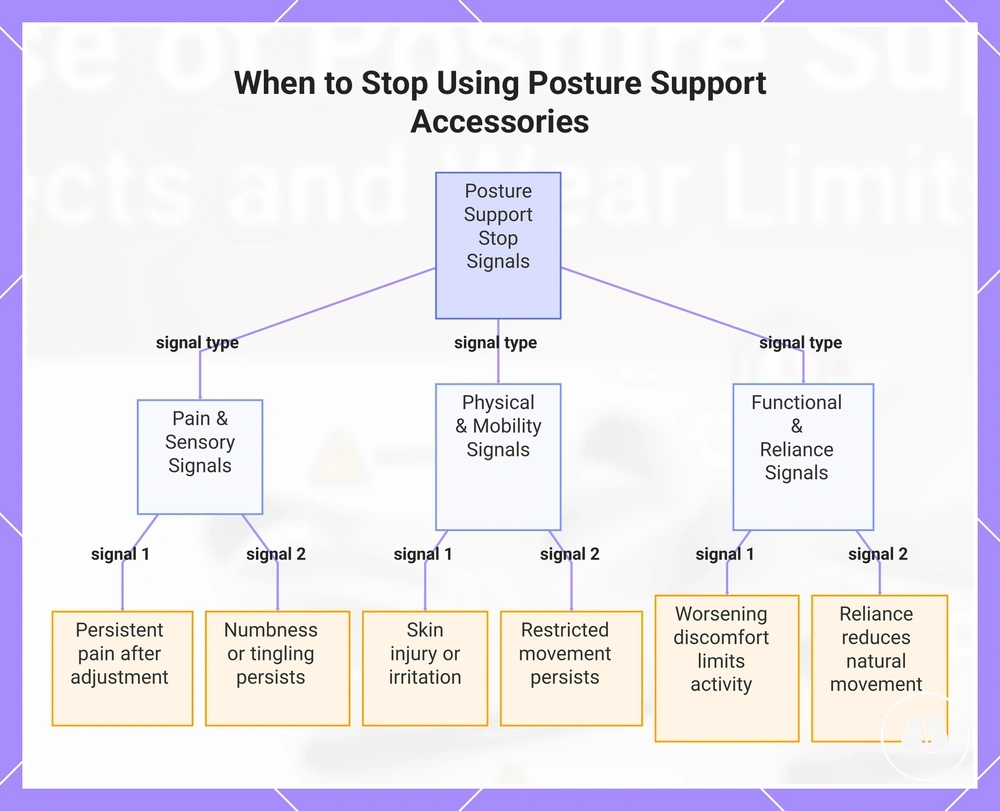
Stop using posture support accessories when they lead to persistent pain, numbness, tingling, skin injury, restricted movement, or worsening discomfort that interferes with normal activity. Reliance that reduces natural movement or creates ongoing strain is also a stop signal that should not be ignored. :contentReference[oaicite:0]{index=0}
Stop signals are stronger than normal adjustment cues because they indicate that the current level of support is no longer compatible with body feedback. When symptoms persist after adjustment, recur during re-use, or gradually worsen with continued wear, the risk shifts from temporary discomfort to an unresolved condition that requires stopping use and reassessing fit or support type. In some cases, it may also be appropriate to seek advice if symptoms remain unclear or continue despite removal.
Temporary discomfort can sometimes appear during initial use or short sessions, but these usually reduce after removal or adjustment. In contrast, persistent or worsening symptoms that return quickly when the support is reapplied indicate a stronger stop condition rather than a simple adjustment need.
- Persistent pain → if pain continues after adjustment → stop using posture support accessories and reassess use conditions
- Numbness or tingling → if sensation changes persist or return quickly → remove support and avoid re-use until resolved
- Skin injury or irritation → if skin response worsens with continued wear → stop use and allow recovery before reconsidering
- Restricted movement → if mobility limitation continues during normal activity → reduce or stop use depending on severity
- Worsening discomfort → if symptoms intensify over time → stop using posture support accessories and seek advice if needed
- Activity limitation → if support interferes with basic movement or tasks → discontinue use until cause is identified
This chart shows the key stop signals for posture support accessories, helping you identify when to stop use and reassess fit or support type.
When professional guidance is needed
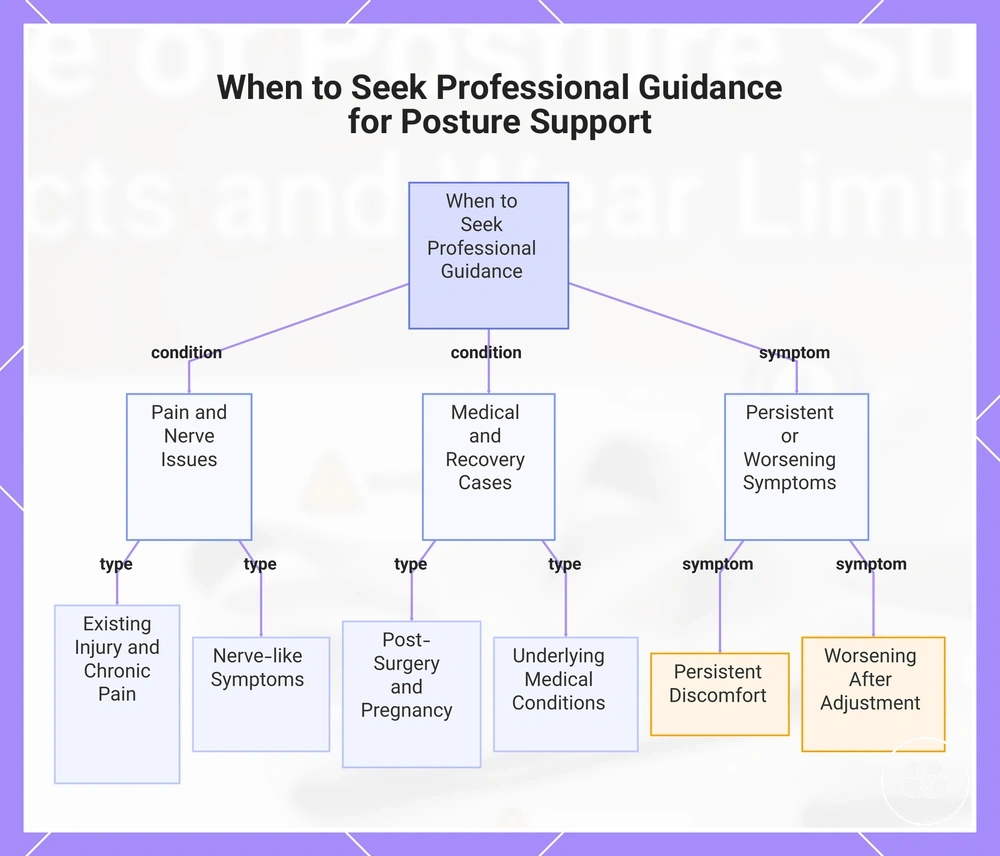
Professional guidance is needed when posture support safety moves beyond self-adjustment and requires qualified evaluation due to existing injury, chronic pain, nerve-like symptoms, post-surgery use, pregnancy-related discomfort, medical conditions, or worsening symptoms that do not improve with basic adjustments. In these cases, self-adjustment may not be sufficient to maintain safe and appropriate use. :contentReference[oaicite:0]{index=0}
When these conditions are present, the reason professional guidance becomes important is that symptom patterns may be influenced by underlying sensitivity, recovery status, or structural conditions that cannot be reliably assessed through comfort-based changes alone. If discomfort persists, worsens, or remains unclear after adjusting fit, timing, or support level, qualified evaluation or personalized advice may help determine whether continued use is appropriate or requires modification.
This boundary is especially relevant when posture support is used in recovery, pain-related, or medically sensitive situations where normal comfort signals are not enough to judge safe usage. In such contexts, uncertainty or ongoing symptoms should be treated as a sign that external evaluation may be necessary rather than relying only on self-correction.
- Existing injury → when pain or instability persists → professional guidance needed for safe usage context
- Chronic pain → when symptoms continue over time → qualified evaluation needed for suitability assessment
- Nerve-like symptoms → when numbness or tingling is recurring → personalized advice needed for pressure sensitivity review
- Post-surgery use → when recovering from procedures → professional guidance needed for appropriate support integration
- Pregnancy-related discomfort → when body sensitivity changes → personalized advice needed for safe adaptation
- Medical conditions → when underlying conditions affect posture response → qualified evaluation needed before continued use
- Worsening symptoms → when discomfort increases despite adjustment → seek advice to reassess usage approach
This chart identifies the key conditions and symptom patterns that indicate professional guidance is required for safe posture support use.