
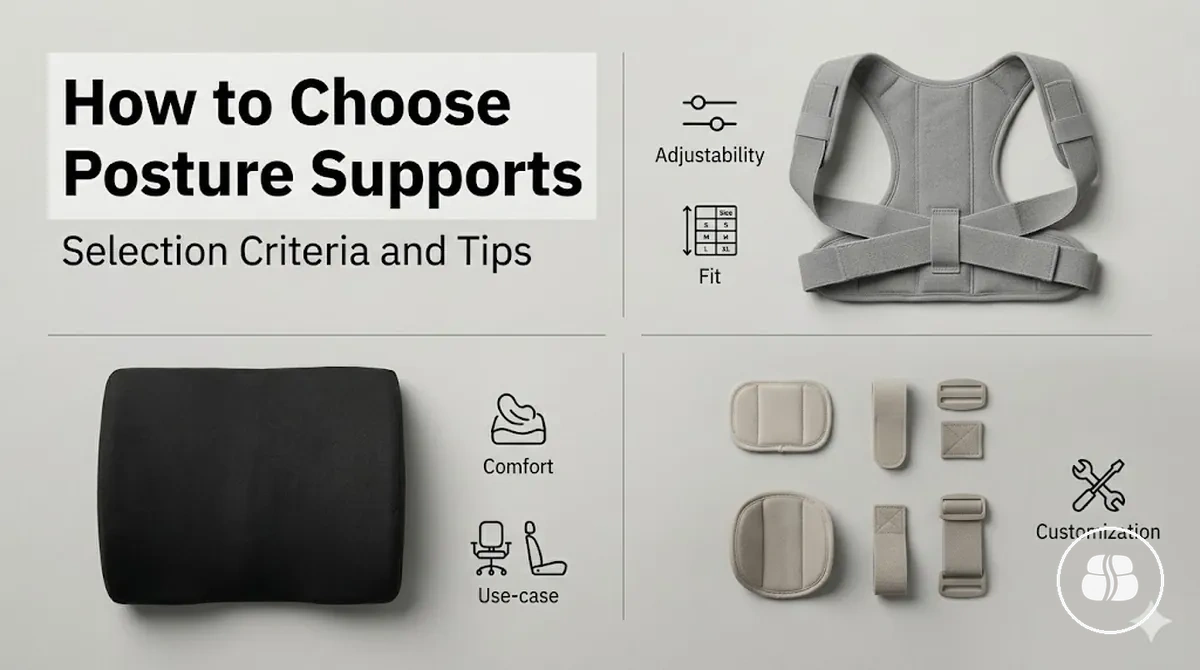
Posture support accessories selection guide
Posture support accessories selection guide helps choose posture support accessories based on support need, fit, and comfort. The right choice depends on use context, body alignment needs, and adjustment tolerance rather than a one-size-fits-all outcome.
Posture support accessories selection refers to the process of evaluating posture support accessories based on support area, adjustability, material behavior, and realistic support limits. The Posture support accessories hub provides a broader overview of categories and use cases: Posture support accessories hub.
Choosing posture support accessories becomes less effective when fit, comfort, or material behavior does not match the intended support need. A mismatch can reduce wear consistency, limit movement tolerance, or create pressure points that affect usability in daily contexts. For this reason, selection works best when evaluated through clear conditions such as how the accessory sits on the body, how it adjusts, and how it behaves during normal activity.
In office sitting, short movement breaks, or light daily activity, different posture support accessories may lead to different outcomes depending on sensitivity and use duration. Some users may prioritize softer comfort for longer wear, while others may need more structured support for short corrective cues. These differences make context-based selection more reliable than assuming a single configuration fits all situations.
What posture support accessories can and cannot change
Posture support accessories can cue alignment and improve support comfort, but they do not automatically create posture correction or resolve pain conditions. Their real effect depends on accessory type, fit, and use context, which together shape the level of support assistance the user may experience.
Posture support accessories work by providing external cue alignment and structured support comfort that can increase awareness of body positioning during daily activity. This influence is typically limited to temporary positioning feedback rather than posture correction or any treatment effect. The distinction between support assistance and medical guidance is important because posture support accessories do not replace strengthening habits or professional evaluation when needed.
Many expectations around posture support accessories come from the assumption that they can permanently fix posture or directly treat discomfort, but these outcomes are not guaranteed and often depend on broader factors like movement habits and user condition. In cases of persistent pain, weakness, or ongoing discomfort, relying only on support devices may not address the underlying cause and medical guidance may be more appropriate.
What posture support accessories can and cannot change is best understood by separating realistic support effects from unsupported expectations. The visual below highlights how cue alignment, support comfort, and limitation boundaries interact in real use conditions.
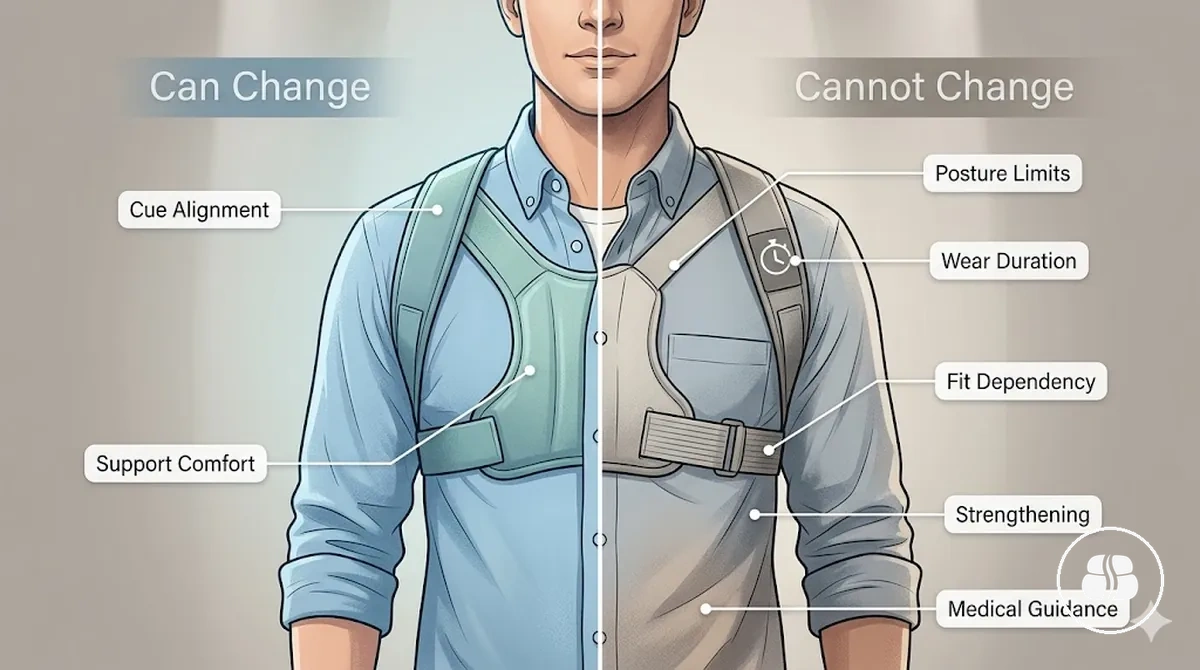
What posture support accessories can and cannot change can be clarified through the contrast between support effects and limitations:
- They can provide cue alignment that encourages awareness of posture during use.
- They can improve support comfort depending on fit, material, and wear duration.
- They cannot guarantee posture correction or permanent structural change.
- They do not replace strengthening routines or medical guidance when pain or weakness persists.
Selection criteria for posture support accessories
Selection criteria for posture support accessories depend on how well an option matches support need, comfort, material, adjustability, and use context. These selection criteria determine acceptable condition for use and directly shape decision effect when evaluating different accessory types for daily wear.
Poor alignment between selection criteria and user condition can lead to pressure points, low wear tolerance, or inconsistent use across different activities. For example, weak adjustability or unsuitable material may reduce comfort during office sitting or short movement tasks, while unclear support need can affect suitability across accessory types. This is why evaluation works more reliably when structured before comparison.
Selection criteria for posture support accessories should be organized clearly to support consistent evaluation across different body fit and activity levels.
The criteria below organize how support need, comfort, material, adjustability, use context, and safe wear signals influence decision effect in practical use.
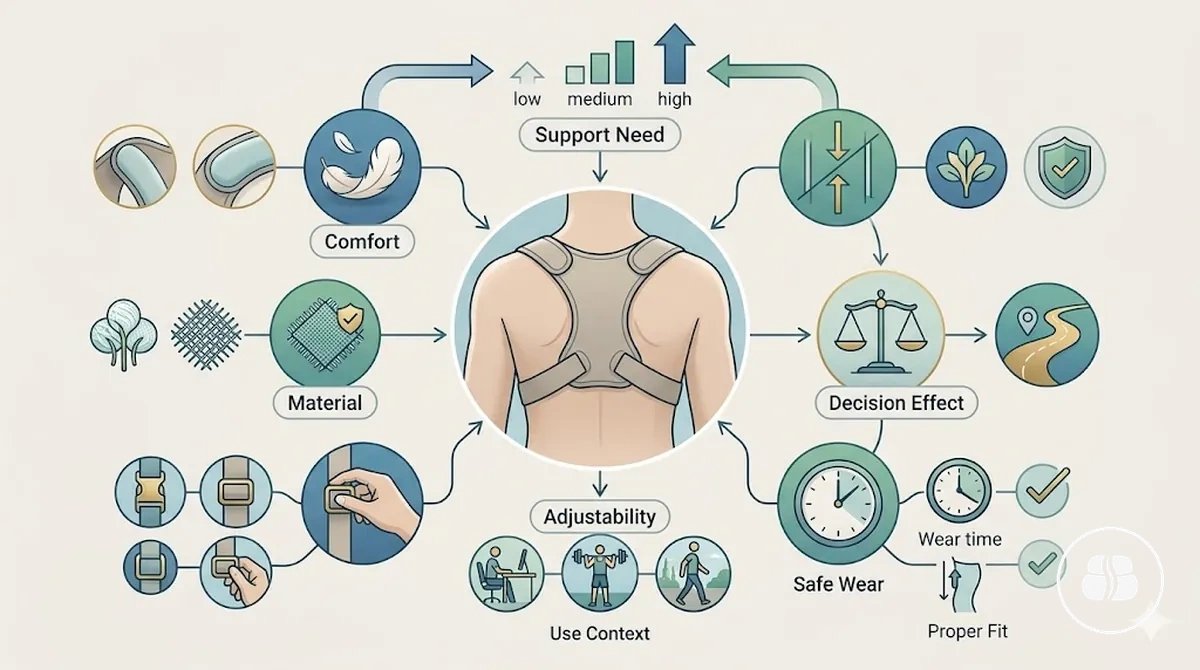
| Criterion | What to check | Acceptable condition | Decision effect |
|---|---|---|---|
| Support need | Target posture area and intensity requirement | Matches user condition and accessory type | Defines suitability of support level |
| Comfort | Skin contact and pressure distribution | No persistent discomfort during wear duration | Affects consistency of use |
| Material | Breathability and flexibility | Stable performance in expected use context | Influences tolerance and wear comfort |
| Adjustability | Fit range and strap control | Secure fit without restriction | Improves adaptability across body fit |
| Use context | Office sitting, movement, or short wear | Matches daily activity pattern | Determines practical usability |
| Safe wear signals | Pressure, irritation, or fatigue indicators | No persistent negative signals | Indicates whether adjustment or stop is needed |
Support area and posture need
Support area and posture need depend on where alignment support is required and what posture issue the body is trying to address during daily activity. The support area should match the posture need so the intended cue aligns correctly with the affected region.
When the support area does not match the posture need, the alignment cue can become weak or misplaced across different movements. Shoulders often require cueing for forward posture awareness, while upper back support focuses on midline alignment during standing or light activity. Lower back support is typically connected with seated support needs, where lumbar comfort and stability matter most. These differences change the suitability outcome depending on daily posture situation and support location.
Selection works best when each support area is matched to its specific posture need before comparing comfort or other factors.
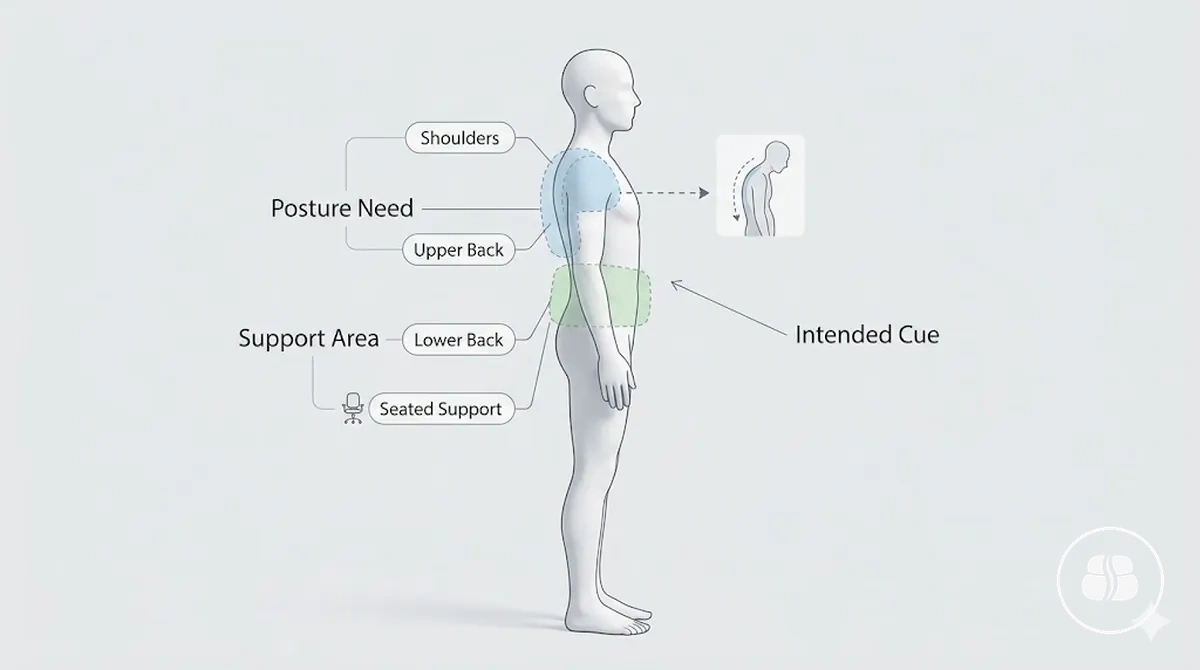
- Shoulders: Intended cue supports forward posture awareness, suitable for reducing rounded shoulder positioning in daily movement.
- Upper back: Intended cue focuses on midline alignment, suitable for general standing posture support and light activity.
- Lower back: Intended cue targets lumbar area, suitable for seated support situations requiring stability and comfort.
- Seated support: Intended cue supports prolonged sitting posture, suitable for maintaining alignment during desk-based routines.
Comfort, skin contact, and chafing risk
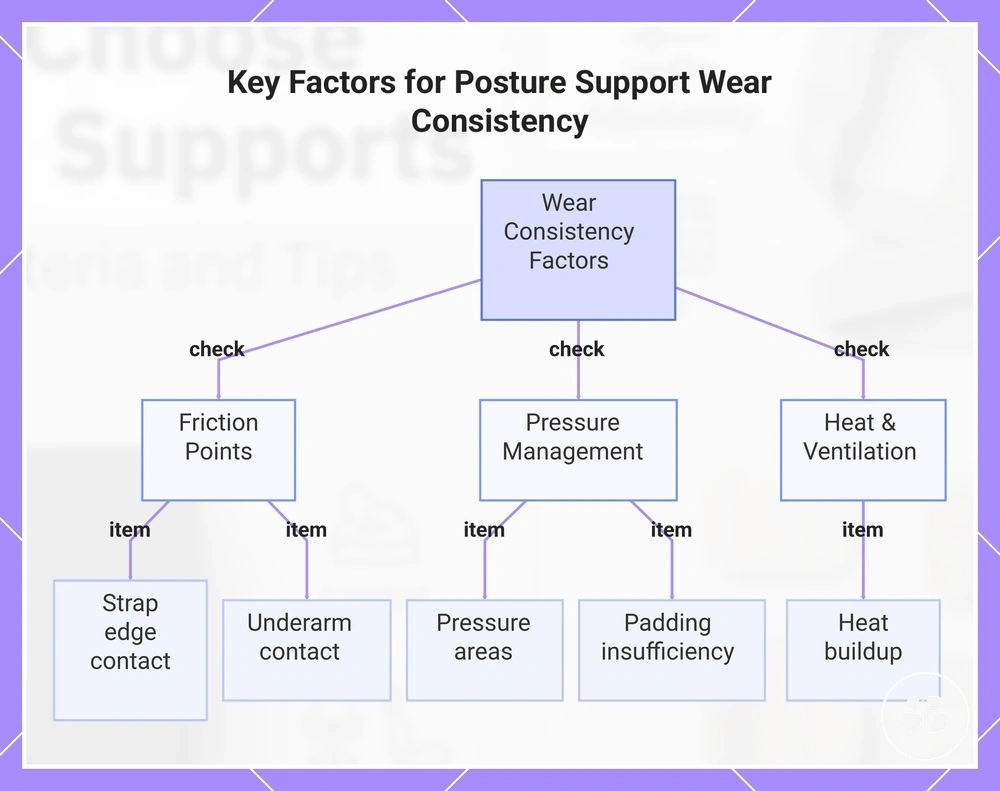
Comfort, skin contact, and chafing risk determine whether a posture support accessory can be worn consistently across daily activity. These factors depend on friction points, strap edges, padding, heat, and pressure areas that directly interact with the skin during movement and rest. This affects consistent wear.
When friction or uneven skin contact increases, chafing risk may rise in areas such as underarm contact or high-pressure zones. Heat buildup and insufficient padding can also reduce tolerance during longer sessions or movement-heavy use, which may lower wear consistency. Before longer wear, Comfort, skin contact, and chafing risk should be checked.
- Friction points: increased rubbing may raise irritation risk and reduce consistent wear during movement.
- Strap edges: rigid or sharp contact areas can affect skin contact comfort, influencing wear duration.
- Underarm contact: sustained pressure may increase chafing risk, especially in longer sessions.
- Padding: insufficient padding can increase pressure areas, reducing comfort over extended use.
- Heat: trapped heat may lower skin tolerance and affect consistent wear in warm conditions.
- Pressure areas: uneven load distribution can increase discomfort and reduce wear decision quality.
This chart shows the main factors to check before longer wear to ensure comfort and reduce chafing risk.
Breathability, material flexibility, and support level
Breathability, material flexibility, and support level determine how a posture support accessory behaves in real use, especially in terms of heat buildup, movement freedom, and perceived firmness. These material attributes shape support feel and user tolerance during wear, where fabric, mesh, elastic, padding, and rigidity interact to influence comfort and restriction. This changes comfort, heat, and support feel.
When breathability is limited, heat buildup may increase and reduce wear tolerance over longer sessions, while higher breathability usually supports better airflow and longer-duration comfort. Flexible material often improves movement adaptability, whereas higher rigidity increases support level but may restrict motion and change perceived firmness. The table below organizes how these material attributes affect support feel and decision outcomes.
Lead-in: Breathability, material flexibility, and support level together define how material behavior influences comfort, restriction, and stability during use.
| Material attribute | What it changes | Useful condition | Watch-out |
|---|---|---|---|
| Breathability | Airflow and heat buildup | Long wear duration or warm environments | Low breathability may increase heat buildup |
| Material flexibility | Movement range and support feel | Active movement or posture shifts | Too much flexibility may reduce perceived support level |
| Padding | Pressure distribution on contact zones | Extended wear with direct skin contact | Insufficient padding may increase pressure areas |
| Rigidity | Firmness and restriction level | Structured or corrective support needs | High rigidity may limit movement comfort |
| Support level | Overall stability and hold strength | Posture reinforcement requirements | Mismatch may reduce comfort or usability |
Adjustability, movement tolerance, and daily wear practicality
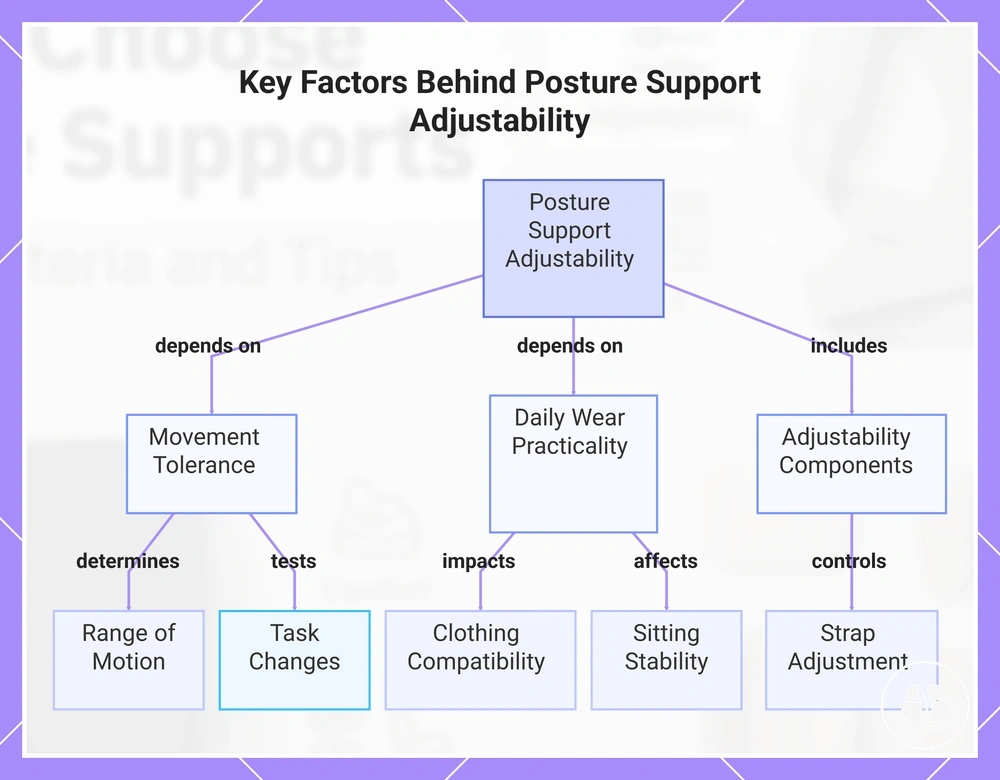
Adjustability depends on movement tolerance and daily wear practicality because strap adjustment, range of motion, clothing compatibility, sitting, walking, and task changes all influence whether a posture support accessory remains usable in normal conditions. It determines how well the support adapts without limiting natural movement, especially during routine activity. This must preserve normal movement.
Desk work, commuting, and short corrective sessions create different demands on adjustability and movement tolerance, particularly when frequent posture shifts affect comfort and stability. Clothing compatibility and transitions between sitting and walking also influence whether daily wear practicality is maintained across changing tasks. Adjustability, movement tolerance, and daily wear practicality should be checked during normal activities.
- Strap adjustment: affects fit stability during sitting and may influence comfort during desk work routines.
- Range of motion: determines how freely the body moves during walking and task changes.
- Clothing compatibility: impacts whether the accessory remains practical under different daily wear conditions.
- Sitting: influences stability and comfort during stationary work sessions.
- Walking: tests whether support remains practical during commuting or movement.
- Task changes: affects how well adjustability holds during shifting daily activities.
This chart explains how movement tolerance, daily wear practicality, and specific components drive the adjustability of a posture support accessory.
Matching accessory type to support need
Accessory type depends on support need and the support area it targets during daily use. Each posture support option is designed for a different level of alignment demand across the shoulders, back, or seated posture. This makes selection dependent on functional requirement rather than general preference. Accessory type should follow support need.
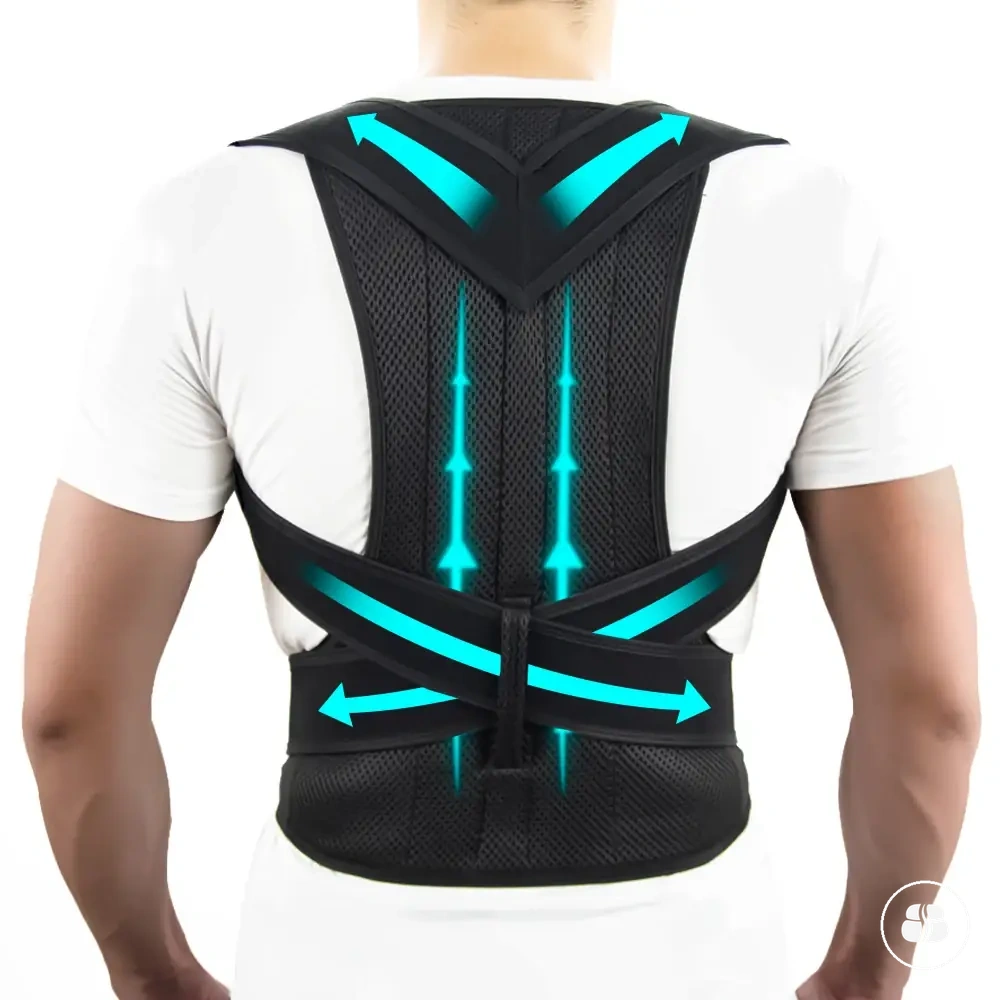
Accessory type refers to how posture support accessories are categorized based on support area, cueing method, and support intensity. A shoulder posture corrector focuses on upper body cueing, a back brace provides broader structural restriction, a lumbar support targets seated lower-back comfort, and a posture trainer encourages user participation in alignment awareness. These differences affect practical use case, limitation, and selection implication, especially when comparing movement tolerance and support level. This forms the basis for structured comparison.
In scenarios like desk work, commuting, or short corrective sessions, the right accessory type depends on whether the need is cueing, stability, or seated support. A shoulder posture corrector may be a strong match for upper alignment cues, while a lumbar support may be a partial match when seated comfort is the priority. A back brace or posture trainer may serve as alternatives depending on restriction level and user involvement. Posture support accessories comparison helps clarify these differences for decision-making.
Different accessory types may overlap in purpose but still vary in limitation, especially when movement tolerance and support requirements change across daily tasks. Because of this, selection implication should always consider both support area and practical use case instead of relying on category alone.
Matching accessory type to support need can be structured by comparing support area, best-fit condition, and limitation across categories. The table below organizes the main posture support options for clearer decision-making.
| Accessory type | Main support area | Best-fit condition | Main limitation |
|---|---|---|---|
| Shoulder posture corrector | Upper back and shoulders | Upper body cueing and alignment awareness | May reduce freedom during extended movement |
| Back brace | Full back support area | Higher stability and restriction need | Can limit movement flexibility |
| Lumbar support | Lower back in seated position | Desk work and seated comfort focus | Less effective in standing or active movement |
| Posture trainer | General posture awareness system | User-driven correction and habit training | Requires consistent user participation |
Shoulder posture correctors, back braces, and lumbar supports
Shoulder posture correctors, back braces, and lumbar supports differ mainly by support location and restriction level during use. Each option provides a different balance of upper-body cueing, structural support, and comfort burden depending on user need. This makes selection dependent on how much restriction and movement impact is acceptable in daily activity.
Shoulder posture correctors mainly guide upper body alignment, back braces extend support across a larger portion of the back with higher restriction level, and lumbar supports focus on lower-back seated comfort. In many cases, shoulder posture correctors align with posture cueing needs, back braces align with higher stability requirements, and lumbar supports align with seated posture comfort needs. These differences become clearer when comparing movement impact and comfort burden across use conditions. The Posture support accessories comparison helps clarify these distinctions in selection contexts.
In desk work situations, lumbar supports often align better with seated posture needs, while shoulder posture correctors may suit light activity involving upper-body awareness. Back braces may be relevant when higher restriction level and broader support are required, although they can increase movement impact depending on use duration and activity type. This leads to different user need outcomes based on support location.
The comparison below outlines how each option differs in support location, trade-offs, and better-fit situations.
| Type | Support location | Trade-off | Better-fit situation |
|---|---|---|---|
| Shoulder posture correctors | Upper back and shoulders | Moderate comfort burden with cueing-based restriction | Upper-body posture awareness during light activity |
| Back braces | Full back region | Higher restriction level and movement impact | When stronger structural support is required |
| Lumbar supports | Lower back in seated position | Limited effect outside seated posture | Desk work and seated comfort support |
Wearable braces, posture trainers, and strengthening support
Wearable braces, posture trainers, and strengthening support differ by how they assist posture, the level of user participation, and whether the effect is passive or activity-driven. Wearable braces and posture trainers provide external assistance, while strengthening support relates more to habit and functional engagement outside the device itself. This separates passive support from cueing-based feedback and strengthening-oriented approaches.
Wearable braces typically provide passive support by holding posture with external structure, posture trainers introduce cueing devices that rely on feedback and user participation, and strengthening support focuses on developing long-term functional stability through consistent engagement. Device behavior varies from restrictive support to feedback-based cueing, which influences how much the user depends on the system during daily activity. Decision fit depends on whether the need is passive assistance or active posture awareness support.
In some cases, wearable braces may reduce movement demand, while posture trainers may encourage more awareness through feedback rather than full support. Strengthening support should be understood as a related but separate path that may complement accessory selection without replacing it directly in all situations. This distinction helps clarify support dependency risk and decision fit.
Fit and sizing checks before choosing
Fit and sizing checks depend on body measurement alignment, accessory design, and the adjustment condition between the intended support area and the available size range. A correct fit helps ensure the posture support accessory stays aligned during use, so fit should be checked before choosing.
When fit is not verified early, mismatches can appear in strap position, contact points, and overall adjustment condition during real use. Body measurement provides a starting estimate for size range, but accessory design and adjustability determine how accurately that range translates into a stable fit outcome. Strap position and contact points should be reviewed together to avoid uneven pressure distribution. The checklist below helps structure these sizing checks before choosing.
Body shape differences and accessory design variations can influence how the same size range performs across users, especially when adjustment condition is limited. This means similar body measurement results may still lead to different fit outcomes depending on structure and support layout. For deeper sizing context, refer to Posture support accessories fit and sizing for extended guidance.
Fit uncertainty can increase return-risk signals when adjustment condition cannot compensate for body shape variation or when contact points create discomfort during initial wear. These signals help indicate whether the selected size range matches real use conditions or requires reassessment.
Fit checklist:
- Body measurement: compare key measurements to size range to estimate baseline compatibility.
- Size range: confirm overlap with body shape for stable positioning.
- Adjustment condition: check whether straps allow fine-tuning for secure fit.
- Strap position: ensure straps remain stable during movement and sitting.
- Contact points: verify pressure is evenly distributed across support areas.
- Body shape: consider torso or back shape influence on alignment outcome.
- Accessory design: evaluate how structure affects overall fit behavior.
- Return-risk signals: monitor slipping, discomfort, or misalignment during initial use.
This chart organizes the pre-choice fit and sizing checks for posture support accessories into baseline alignment, design and adjustability, and outcome monitoring categories.
Measurement points and size range
Measurement points and size range depend on how accessory type aligns with body measurement and intended support placement. Chest, waist, shoulder span, torso length, and seat dimensions act as key measurement points that influence how different accessories fit within an available size range. Each measurement point contributes differently to the fit decision, so interpretation varies by accessory type rather than a fixed rule. This makes measurement points vary by accessory type.
When body measurement falls between size range boundaries or outside standard ranges, the fit decision becomes less direct and depends more on adjustment condition and accessory design. In such cases, small variations in body shape can affect alignment, and sizing outcomes may differ across accessory types even with similar measurements. The checklist below maps measurement points to accessory type and fit decision.
Measurement points and size range help clarify how body dimensions connect to accessory type and influence fit decision in practical selection scenarios.
- Chest: relevant for posture correctors where upper-body size range affects strap positioning and alignment stability.
- Waist: important for back braces where midsection measurement influences support distribution and fit decision.
- Shoulder span: linked to shoulder-based supports where width affects strap placement and balance across the upper body.
- Torso length: relevant for full-coverage accessories where vertical size range impacts support alignment and coverage consistency.
- Seat dimensions: important for lumbar supports where seated fit depends on contact placement and stability in use.
- Between-size condition: when measurements fall between ranges, accessory design and adjustment condition determine final fit outcome.
Strap tension, snugness, and natural alignment
Strap tension and snugness describe how a posture support accessory fits against the body while maintaining natural alignment during movement. These fit conditions influence pressure distribution, shoulder pull, and overall alignment cues without turning posture into a rigid position. Snugness should support natural alignment without forcing posture.
When strap tension is uneven or too strong, pressure may increase and lead to restricted breathing, shoulder pull, or reduced sitting comfort over time. When too loose, slipping can reduce stable body feedback and weaken alignment consistency during movement. Strap position, tension level, and body feedback together determine whether support remains balanced. Strap tension, snugness, and natural alignment should be evaluated through comfort and movement response.
- Pressure: increasing pressure may indicate excessive strap tension and reduced comfort balance.
- Slipping: repeated shifting suggests low snugness and unstable alignment support.
- Restricted breathing: any breathing limitation signals unsafe tension and requires immediate adjustment.
- Shoulder pull: uneven pulling indicates misaligned strap position and uneven support distribution.
- Sitting comfort: reduced comfort during sitting may reflect imbalance between tension and alignment support.
- Body feedback: numbness, tingling, or pain indicates unsafe conditions and the accessory should be loosened or removed.
Trade-offs that change the better choice
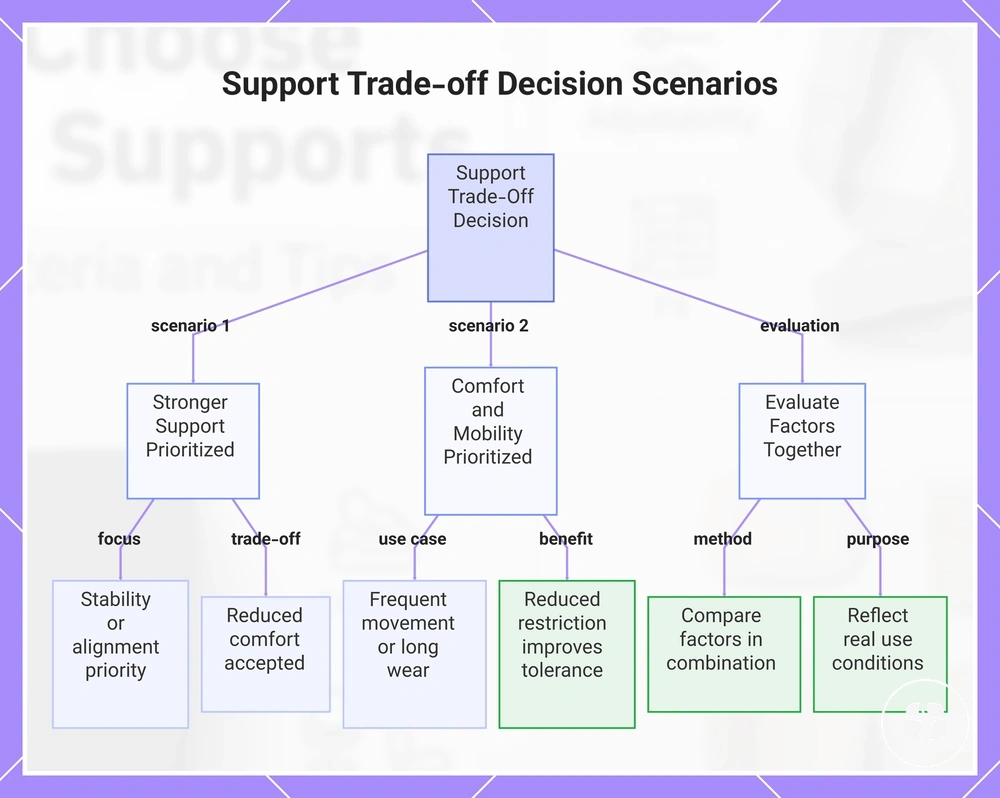
Trade-offs that change the better choice depend on how support strength, comfort, wear duration, and mobility interact in a specific use case. The better choice changes when one factor becomes more important than the others, so selection outcome depends on the situation rather than a fixed rule.
Support strength, comfort, wear duration, and mobility often create competing decision trade-offs during selection. Stronger support may reduce comfort or mobility, while higher comfort may reduce structural firmness depending on design. Wear duration needs often require balancing stability with flexibility to maintain usability over time. The table below explains how these comparison factors influence selection outcome.
When stronger support is worth reduced comfort, it usually applies in cases where stability or alignment support is prioritized over ease of wear. In such cases, the Posture support accessories comparison can help clarify how different trade-offs influence the decision. This helps identify when support strength becomes more important than comfort in practical use.
When comfort and mobility should outrank firmness, lighter support options may become more suitable, especially in situations involving frequent movement or long wear duration. In these cases, reduced restriction improves practical use and tolerance during daily activity. The selection outcome depends on how the body responds under real usage conditions.
Trade-offs that change the better choice should be evaluated by comparing support strength, comfort, wear duration, and mobility together rather than in isolation. This ensures the decision reflects real use conditions instead of assuming a universal best option.
Here are product examples that may make comparison easier. Before buying, always review the compatibility criteria, essential features, and product details.
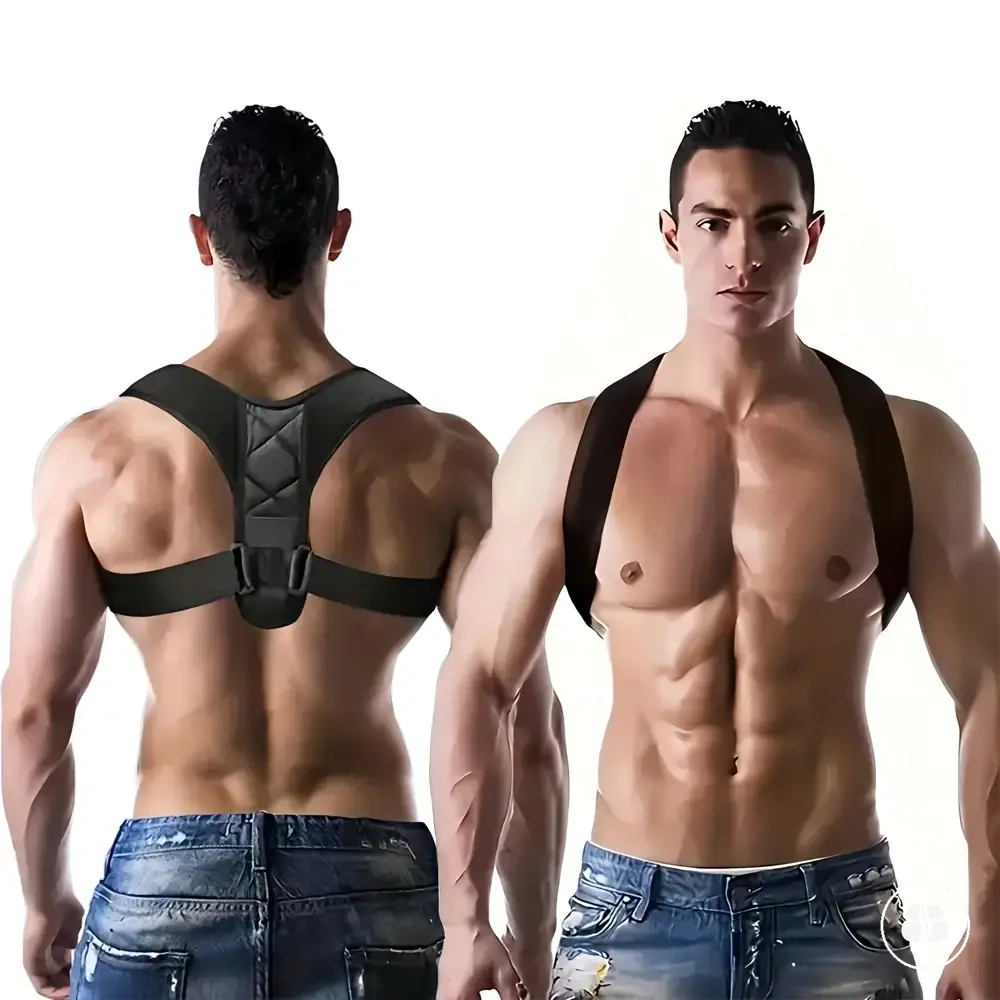
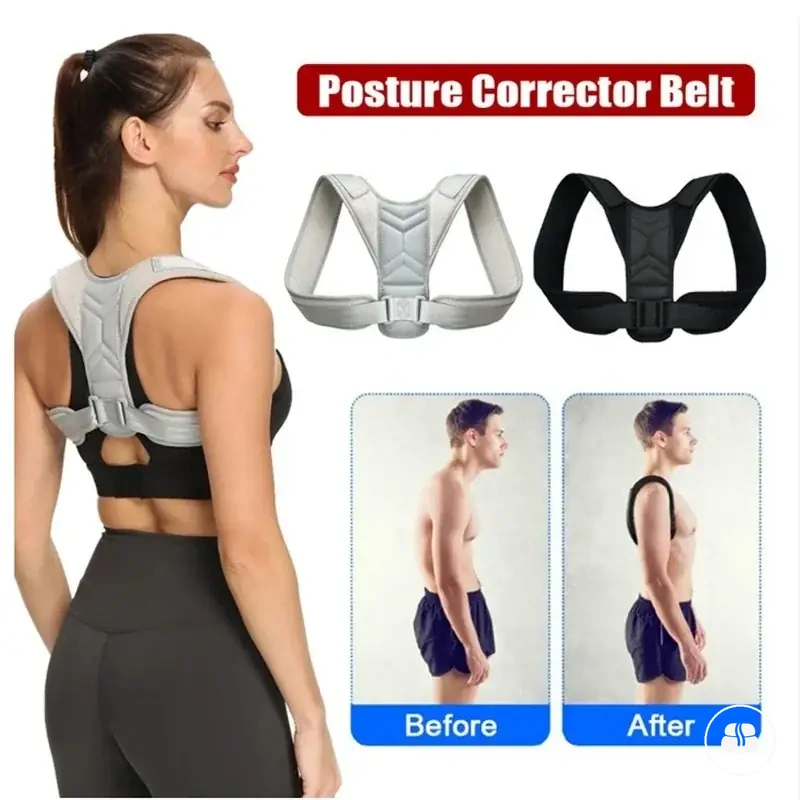
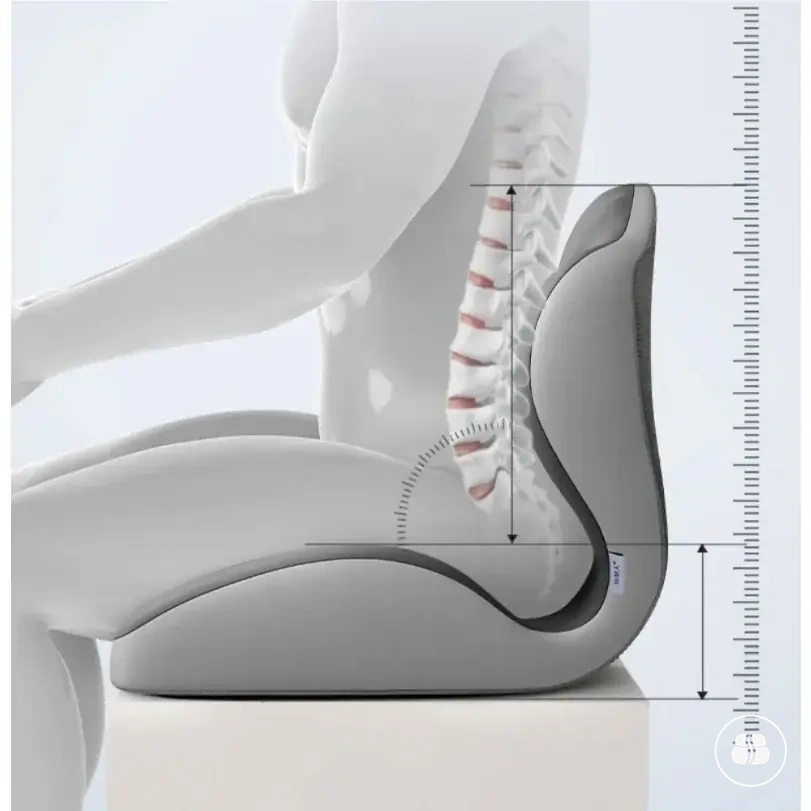
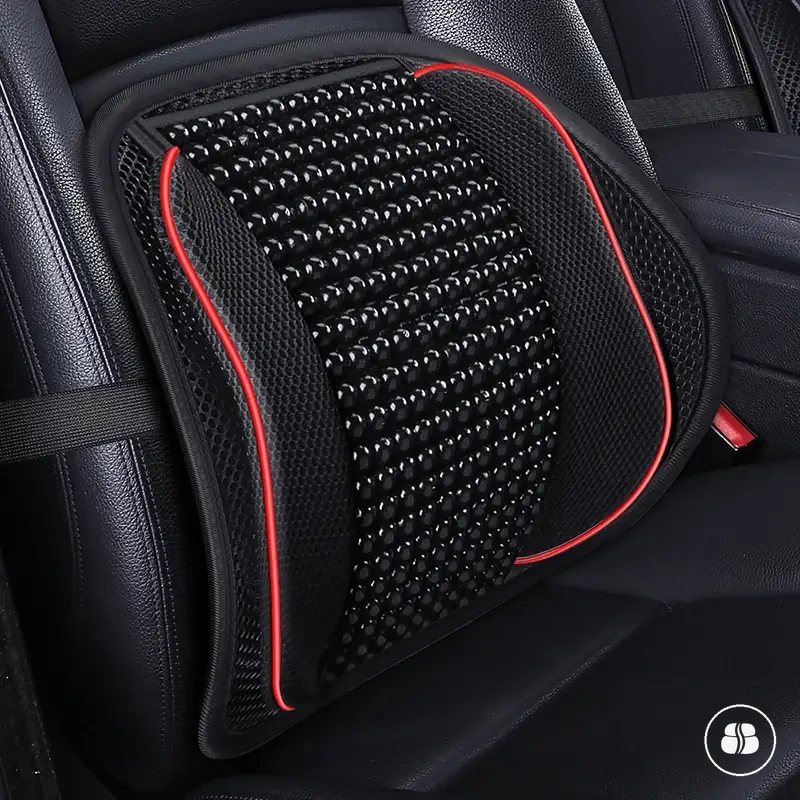
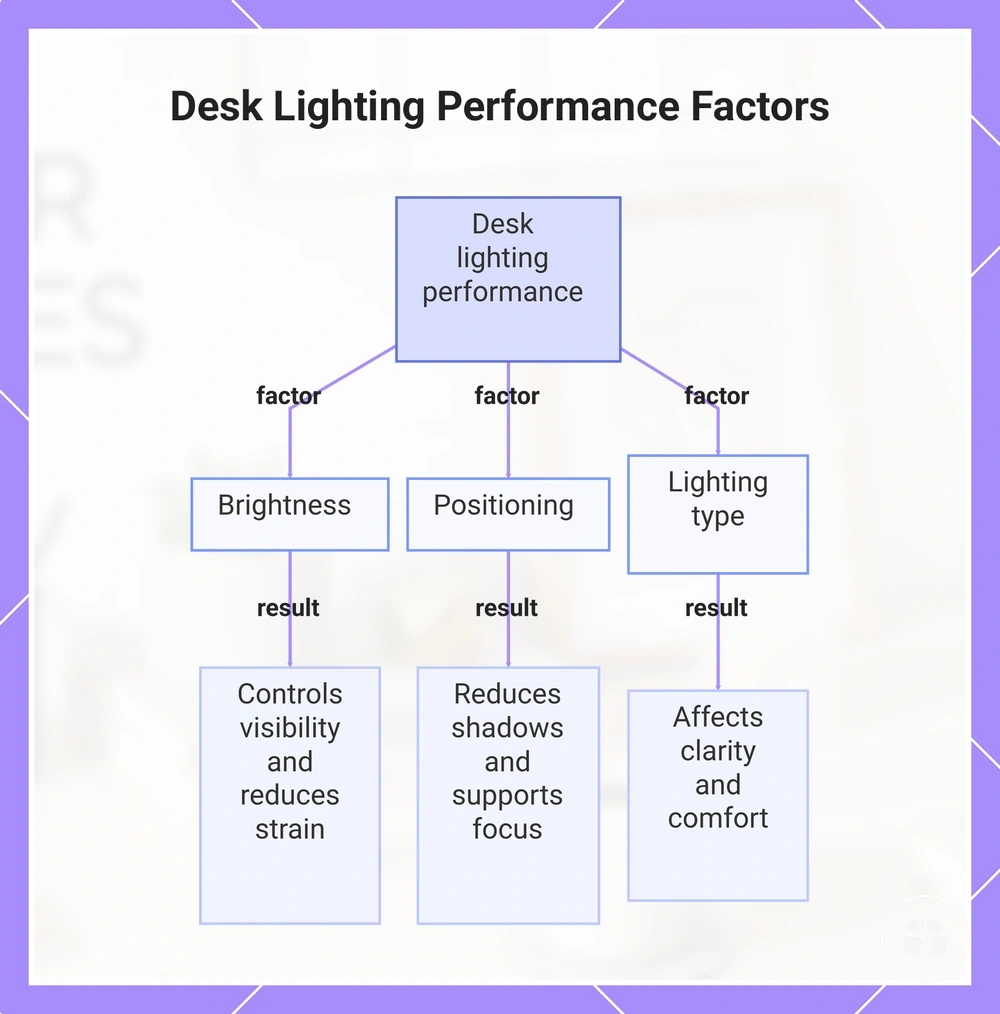
This chart shows two main scenarios where trade-offs between support strength, comfort, wear duration, and mobility decide the better choice, plus a recommended evaluation approach.
Support strength versus comfort
Support strength versus comfort defines a direct trade-off where increasing support strength can improve firmness and restriction while reducing wearable comfort. This relationship depends on how support strength influences pressure distribution, heat buildup, and movement freedom during use. Stronger support can reduce comfort or movement, especially as session length increases.
When support strength increases, firmness and restriction typically increase as well, which may improve stability but also raise pressure and heat depending on design and usage duration. This can reduce suitability outcome for longer wear situations where comfort and mobility are important. In contrast, moderate support often balances firmness with more consistent comfort across session length and daily practical use.
- Support strength vs firmness: Higher firmness can improve stability but may reduce wearable comfort in sensitive use conditions.
- Restriction vs mobility: Increased restriction may limit movement and affect practical use in daily activity.
- Pressure vs comfort: Higher pressure levels can reduce comfort, especially during extended wear duration.
- Heat vs session length: Increased heat buildup can lower tolerance during longer session length use cases.
Moderate support may be more suitable when wear duration and mobility matter more than maximum firmness. This balance often improves usability in real-world conditions where both comfort and functional support are required.
Short wear sessions versus all-day practicality
Short wear sessions versus all-day practicality depend on how wear duration influences comfort, heat, adjustment, and movement tolerance during real use. Short cueing periods and longer wear patterns create different suitability outcomes because the body responds differently over time. In many cases, wear duration changes the practical choice.
Short wear sessions usually focus on brief posture cueing where adjustment remains easier and movement tolerance stays higher, while longer wear introduces comfort decline, heat buildup, and stronger reliance on breaks and user feedback. Over extended use, these factors can reduce practicality and may increase sensitivity to discomfort, fatigue, skin irritation, or dependency concerns in some cases. The comparison below shows how duration affects selection outcome.
| Wear pattern | What changes | Watch-out | Selection cue |
|---|---|---|---|
| Short wear sessions | Lower heat, easier adjustment, higher movement tolerance | Limited continuity of posture feedback if usage is inconsistent | Use when brief cueing and flexible movement are priorities |
| Longer wear use | Higher comfort demand, increased heat, reduced adjustment ease | Possible comfort decline, fatigue, or irritation over time | Use when sustained posture support is needed with breaks and feedback |
Buying signals that support a safer choice
Buying signals that support a safer choice depend on how clearly adjustability, size clarity, material sensitivity, return feasibility, realistic claims, symptom warnings, and transparent product information are communicated. These buying signals reduce mismatch risk by making selection conditions easier to evaluate before purchase. In many cases, clearer buying signals support a safer choice.
Unclear selection often happens when size clarity is inconsistent, adjustability is not well described, material sensitivity is missing, or return feasibility is not stated. These gaps reduce confidence and increase the chance of mismatch risk during use. To evaluate safer buying signals, use the checklist below before making a decision.
- Adjustability: unclear adjustment details can reduce fit predictability and increase mismatch risk.
- Size clarity: vague or inconsistent sizing can lead to incorrect selection outcomes.
- Material sensitivity: missing material details can increase comfort-related uncertainty.
- Return feasibility: unclear return options can reduce decision confidence.
- Realistic claims: extreme correction claims can distort expected performance.
- Symptom warnings: missing usage warnings can reduce awareness of discomfort signals.
- Transparent product information: incomplete descriptions limit informed comparison.
Some weak buying signals include vague sizing charts, pressure-heavy designs without clear adjustment logic, and claims that suggest extreme correction outcomes. These patterns can create unrealistic expectations and increase mismatch risk by reducing transparency around real use conditions.
In practice, symptom warnings and transparent product information help clarify when comfort, fit, or adjustment may vary depending on user response. When these signals are missing, decision confidence typically decreases and uncertainty increases around suitability outcomes.
Safer buying signals focus on clarity rather than promotion. When adjustability, size clarity, material sensitivity, return feasibility, realistic claims, and transparent product information are clearly presented, the decision process becomes more reliable and less prone to mismatch risk.
Here are product examples that may make comparison easier. Before buying, always review the compatibility criteria, essential features, and product details.
This chart shows the main attributes of clear buying signals that reduce mismatch risk and the weak signal patterns that increase it.
When posture support accessories are the wrong primary solution
When posture support accessories are the wrong primary solution depends on whether pain, injury, neurological symptoms, or worsening discomfort are present alongside posture concerns. In such cases, the accessory may not be the main solution and can act only as a temporary support rather than a corrective approach. Some warning conditions should delay purchase and shift attention toward a more appropriate support path instead of immediate reliance.
A normal fit mismatch usually relates to adjustment, pressure, or sizing issues that may improve with correction, while symptom concern involves pain, injury, neurological symptoms such as numbness or tingling, or reliance without improvement. The difference is important because fit mismatch is typically accessory-related, while symptom concern may require professional attention. This distinction helps separate simple adjustment issues from warning condition signals that should not be ignored. The checklist below clarifies these boundaries.
When posture support accessories are the wrong primary solution, continued use without improvement in symptom-related cases may increase worsening discomfort or delay appropriate guidance. Fit mismatch can often be adjusted, but symptom-related signals indicate a different support path may be needed. The following boundary conditions help identify when the accessory should not remain the primary solution.
Boundary checklist:
- Pain that increases during use: may indicate a warning condition requiring delay and reassessment of use decision.
- Injury-related discomfort: suggests the accessory should not be the main solution and a different support path may be needed.
- Neurological symptoms such as numbness or tingling: indicate potential need for professional attention and caution in continued use.
- Worsening discomfort despite adjustment: may show that the issue is not a simple fit mismatch.
- Reliance without improvement: indicates limited effectiveness and need to reconsider primary use approach.
Medical condition, pain, and professional guidance cues
Medical condition, pain, and professional guidance cues depend on whether persistent pain, recent injury, numbness, tingling, circulation concerns, or medical uncertainty are present during selection of posture support accessories. These factors may change the buying decision because the accessory is not always the primary solution in such situations. Pain or medical uncertainty should influence the decision toward caution and professional guidance.
Persistent pain is different from temporary fit discomfort when it continues despite adjustment or is associated with recent injury, numbness, tingling, or circulation concerns. In these cases, the situation may require careful evaluation rather than treating it as a simple accessory fit issue. To support safer selection thinking, review the conditions below before proceeding.
In situations involving pregnancy, post-surgery use, or when clinician guidance is already part of the decision context, posture support accessories may act only as supportive tools rather than primary solutions. Professional guidance should take priority when medical condition or uncertainty is present, as suitability can vary by individual case.
Caution checklist:
- Persistent pain: may indicate a condition where professional guidance should influence the decision.
- Recent injury: suggests the accessory should not be treated as the main support solution.
- Numbness or tingling: can indicate neurological symptoms requiring caution and professional attention.
- Circulation concerns: may require reassessment under professional guidance.
- Pregnancy: suitability may vary and should follow professional advice.
- Post-surgery use: may require clinician guidance before selection.
- Clinician guidance already provided: should take priority over independent selection decisions.
Posture support accessories may assist comfort or cue alignment, but they should not override professional guidance when pain or medical condition signals are present.