
Posture support accessories: Overview, Types, Fit, and Safe Use
Posture support accessories are support tools used to guide posture alignment, improve ergonomic support, or make slouching easier to notice during sitting, standing, or daily work positions. The category can include shoulder braces, posture correctors, lumbar support cushions, seat posture pads, and chair attachments. These tools may support awareness and comfort, but they should not be treated as guaranteed correction devices or substitutes for medical guidance when pain, injury, or a health condition is involved. The first category distinction is between wearable support and seated support types.
Users need an overview before selection because posture support accessories depend on the relationship between type, fit, safety, and daily use context. A wearable brace may create body-position feedback, while lumbar support or a seat pad may support a seated ergonomic setup. Fit affects whether the accessory stays comfortable and usable, and safety depends on adjustment, wear duration, body response, and whether the user feels discomfort. A category-level view keeps the decision process focused on posture support accessories rather than individual product claims, so users can move from types to comparison and selection with clearer boundaries.
- Types: Separate braces, cushions, pads, and chair attachments by function, support area, and use setting.
- Fit: Check whether the accessory matches body position, chair shape, adjustability needs, and comfort tolerance.
- Safety: Treat support as conditional, avoid over-tight adjustment, and stop use if discomfort appears.
- Comparison logic: Compare options by support purpose, ergonomic support role, comfort, fit, and safe-use limits.
For desk work, study sessions, travel, or general posture awareness, the better starting question is not which product is strongest but which support type matches the posture alignment problem. A user who needs seated lower-back support may evaluate lumbar support differently from a user who needs shoulder-position feedback. Cost-value and selection criteria become clearer only after the accessory type, fit limits, and safety boundary are understood. For the effectiveness boundary before deeper evaluation, use Do posture support accessories work as the next guidance bridge.
Do posture support accessories work?
Effectiveness in posture support accessories means how well a support tool helps a user maintain posture awareness, posture alignment, or ergonomic support within a specific use context. Posture support accessories do not have a single outcome for every user because effectiveness depends on conditions rather than the accessory alone. Fit, usage duration, support consistency, and individual response can influence the perceived result. For that reason, posture support accessories are often evaluated through practical use rather than absolute expectations.
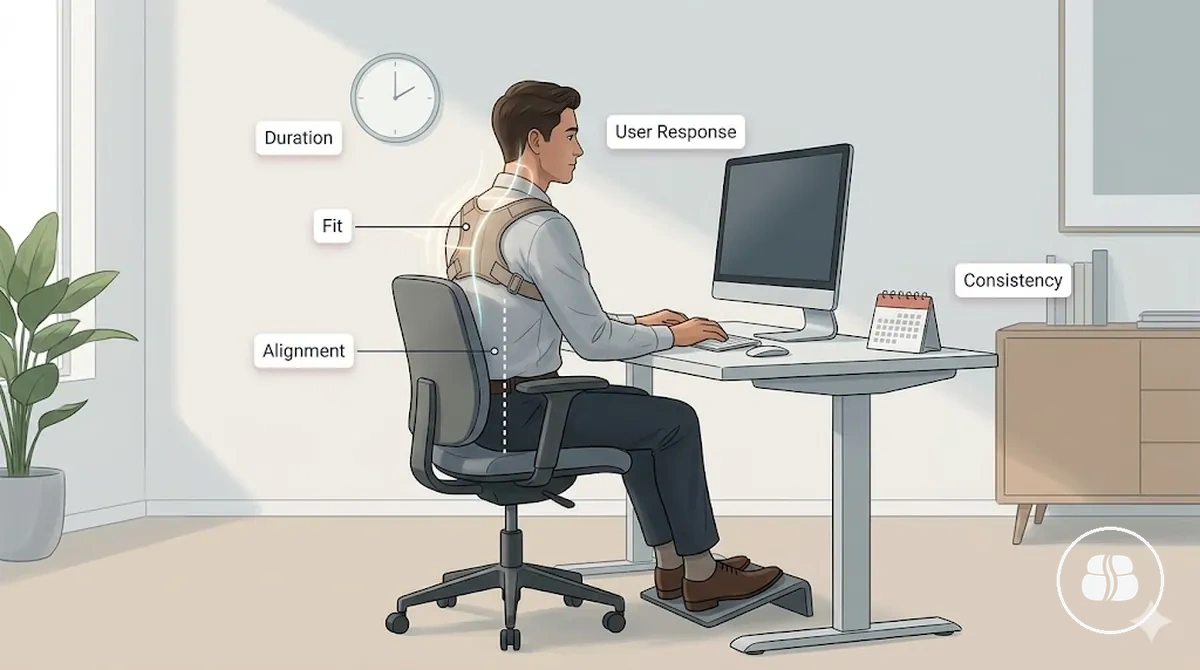
Posture support accessories may feel more effective when the selected support type matches the user's needs and when adjustment remains comfortable and consistent. A lumbar support cushion, posture brace, or seating accessory can influence posture awareness differently depending on how it is used. Perceived posture improvement may vary when fit is inaccurate, when support is used inconsistently, or when the accessory does not match the intended activity. Effectiveness should be viewed as context-dependent rather than guaranteed.
- Fit: Effectiveness may depend on how accurately the accessory matches body shape, seating position, or support requirements.
- Duration: User experience can vary based on how long posture support accessories are worn or used.
- Alignment: Support tools may be more useful when they encourage awareness of posture alignment during daily activities.
- Consistency: Perceived benefits often depend on regular and appropriate use rather than occasional use.
Users who want a broader understanding of posture support accessories and their role in selection, fit, and safety can return to the Posture support accessories hub.
Types of posture support accessories: Braces, Cushions, and Attachments
Posture support accessories are commonly classified into braces, cushions, and attachments because each category supports posture through a different structure and use case. Braces are wearable supports, cushions are placed between the body and a seating surface, and attachments connect to furniture or equipment to modify support conditions. This classification helps users evaluate posture support accessories according to function and intended use rather than appearance alone.
Braces are typically used to provide body-position awareness or physical support while being worn. Cushions are generally intended to influence seating comfort, pressure distribution, or lumbar support during seated activities. Attachments are often added to chairs, seats, or workstations to adjust ergonomic support without direct body wear. The suitability of each category may depend on activity type, environment, comfort preferences, and fit requirements.
- Braces: Wearable posture support accessories that may help reinforce posture awareness during daily activities.
- Cushions: Seat-based or back-support accessories that can influence comfort and sitting support.
- Attachments: Add-on components that modify an existing chair, seat, or workstation setup.
Comparing braces, cushions, and attachments is most useful when the focus is on support location, function, and use context rather than assuming one category is suitable for every situation. Users seeking a deeper category-level evaluation can continue to the Posture support accessories comparison page.
How to choose posture support accessories: Selection Criteria and Tips
Choosing posture support accessories depends on fit, adjustability, comfort, and material suitability rather than appearance alone. A posture support accessory may be more suitable when it aligns with the user's body shape, daily activities, and support goals. Selection is most effective when the focus remains on expected use conditions and long-term comfort.
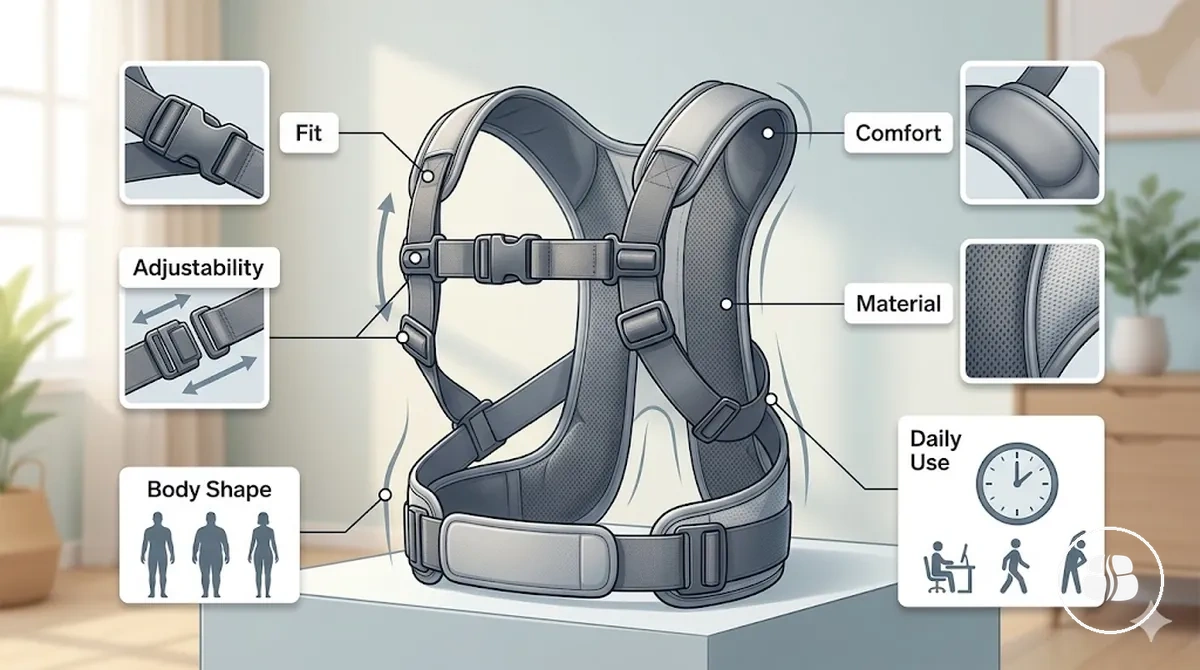
Fit is often the first criterion because posture support accessories may function differently when sizing, positioning, or body contact is unsuitable. Adjustable designs can provide flexibility when support needs vary across activities or seating environments. Comfort can influence whether an accessory is used consistently, while material characteristics may affect feel, flexibility, breathability, and maintenance needs.
- Fit: Check whether the accessory matches body dimensions, seating setup, or the intended support area.
- Adjustability: Look for adjustment features that may help accommodate different positions and preferences.
- Comfort: Consider padding, contact points, and overall comfort during expected use.
- Material: Evaluate material properties that may influence flexibility, breathability, durability, or maintenance.
A practical selection checklist focuses on matching support requirements with usage conditions rather than assuming a single option is suitable for every user. For a more detailed evaluation of sizing and body-position considerations, see Posture support accessories fit and sizing.
Comparing posture support accessories: Type, Comfort, and Cost-Value
Comparing posture support accessories depends on balancing support type, comfort expectations, and cost-value rather than assuming one category is suitable for every user. Braces, cushions, and attachments serve different purposes, and the perceived value of each option may vary according to usage frequency, support needs, and comfort preferences.
Type is often the first comparison factor because posture support accessories interact with the body and environment differently. Wearable braces may focus on posture awareness or body support, while cushions are commonly associated with seated comfort. Attachments are typically used to modify an existing chair or workstation setup. The most suitable category often depends on where support is needed and how the accessory will be used.
| Comparison Factor | Braces | Cushions | Attachments |
|---|---|---|---|
| Primary Use | Wearable support | Seating support | Workspace or chair support |
| Comfort Focus | Depends on fit and wear duration | Depends on seating preferences | Depends on setup compatibility |
| Cost-Value Consideration | May suit users seeking body-worn support | May suit users focused on sitting comfort | May suit users adjusting existing furniture |
Cost-value is usually clearer when the accessory's function aligns with the intended use case. A lower-cost option may provide enough support for one user, while another user may prioritize adjustability, comfort, or usage flexibility. Evaluating trade-offs between support method, comfort expectations, and long-term use can provide a more useful comparison than focusing on cost alone. For broader category context, visit the Posture support accessories hub.
Posture support accessories for office chairs: Fit and Desk Use
Posture support accessories for office chairs depend on how the support item fits the chair, the user's seated posture, and the desk setup. A lumbar cushion, seat pad, brace, or chair attachment may work differently depending on chair shape, backrest height, sitting duration, and movement needs. Compatibility is based on fit and use conditions rather than the accessory name alone.
In a desk setup, the accessory should support the area where the user needs help without making the seated position feel forced or unstable. A lumbar support cushion may be more relevant when lower-back support is the main concern, while a seat pad may be considered when sitting comfort or pelvic position affects posture awareness. Wearable braces may be used independently of the chair, but comfort and movement tolerance still matter during desk work. Chair attachments may suit users who want to modify an existing office chair without changing the entire seating setup.
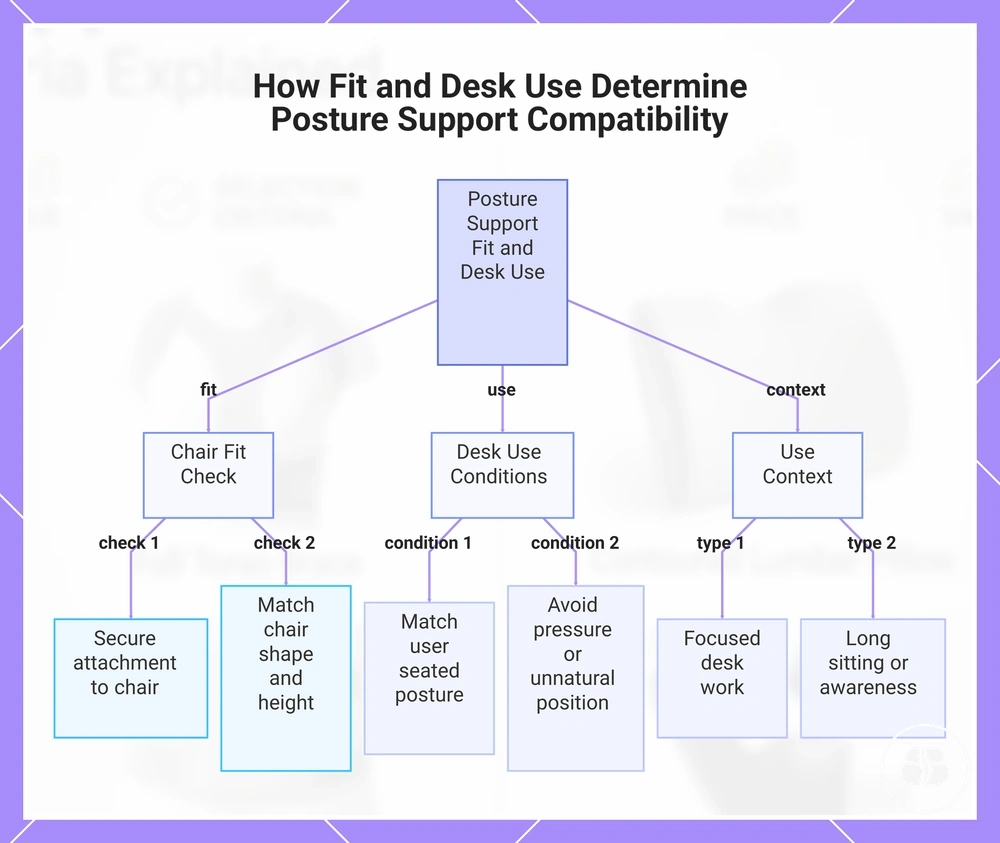
- Chair fit: Check whether the accessory sits securely on the backrest, seat, or attachment area.
- Desk posture: Match the support position to how the user sits, reaches, types, or shifts during work.
- Comfort: Avoid support that creates pressure, distraction, or an unnatural seated position.
- Use context: Consider whether the accessory is needed for focused desk work, long sitting, or occasional posture awareness.
Office-chair compatibility is stronger when the accessory, chair, and user position work together under realistic desk conditions. For a more detailed sizing and adjustment check, see Posture support accessories fit and sizing.
This chart shows the key factors that determine whether a posture support accessory (lumbar cushion, seat pad, brace, or chair attachment) will work well with an office chair in a desk setup.
Posture support accessories: Fit, Sizing, and Adjustment Confidence
Posture support accessories depend on fit, sizing, and adjustment flexibility because the same support item may feel different across users, seating positions, and daily activities. Adjustment confidence comes from understanding that the accessory can be positioned comfortably and adapted when support needs change rather than relying on a fixed setup.
Fit focuses on how the accessory contacts the body, chair, or support area. Sizing considerations may vary according to body dimensions, chair shape, and intended support location. An accessory that feels stable and comfortable may be easier to use consistently than one that requires frequent repositioning or creates pressure points.
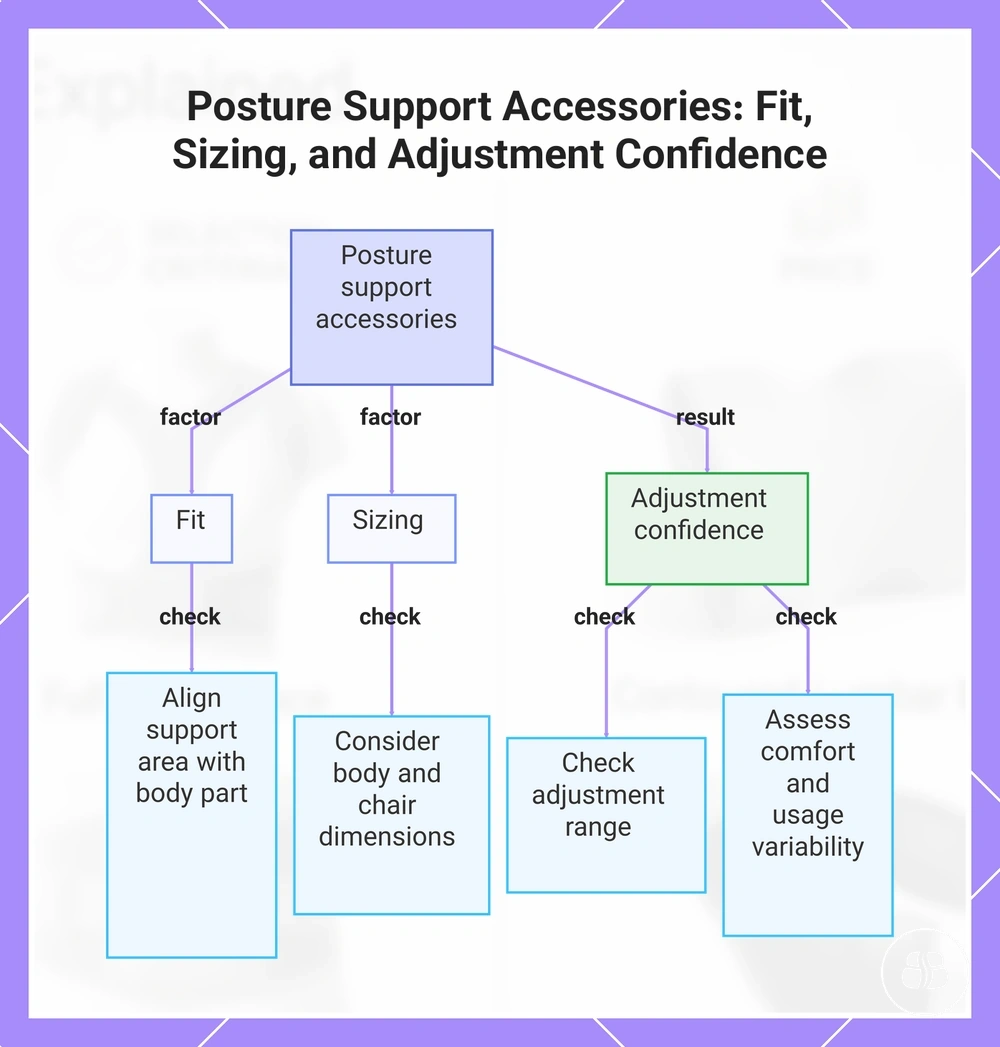
- Fit check: Confirm that the support area aligns with the part of the body that needs support.
- Sizing review: Consider body dimensions, chair dimensions, and available adjustment range.
- Adjustment range: Look for features that may allow repositioning, tightening, loosening, or support refinement.
- Comfort assessment: Check whether the accessory remains comfortable during expected use conditions.
- Usage variability: Consider whether support needs may change between sitting, standing, work, or travel situations.
Adjustment confidence is often higher when users understand how fit, sizing, and positioning interact during everyday use. For broader category context and selection guidance, visit the Posture support accessories hub.
This chart shows the three main factors that determine the effectiveness of posture support accessories: fit, sizing, and adjustment confidence, along with key checks for each.
Posture support accessories: Safe Use, Side Effects, and Wear Limits
Safe use of posture support accessories depends on fit, comfort, adjustment, and wear duration rather than continuous or unrestricted use. A posture support accessory may be more comfortable and practical when it supports posture awareness without creating excessive pressure, restriction, or discomfort. Wear limits can vary according to the accessory type, the user's response, and the intended activity.
Side effects may occur when a posture support accessory is too tight, poorly positioned, or used in a way that does not match the user's needs. Discomfort, pressure points, reduced comfort, or irritation can indicate that adjustment or usage habits should be reviewed. If discomfort continues, reducing wear time or reassessing fit may be appropriate.
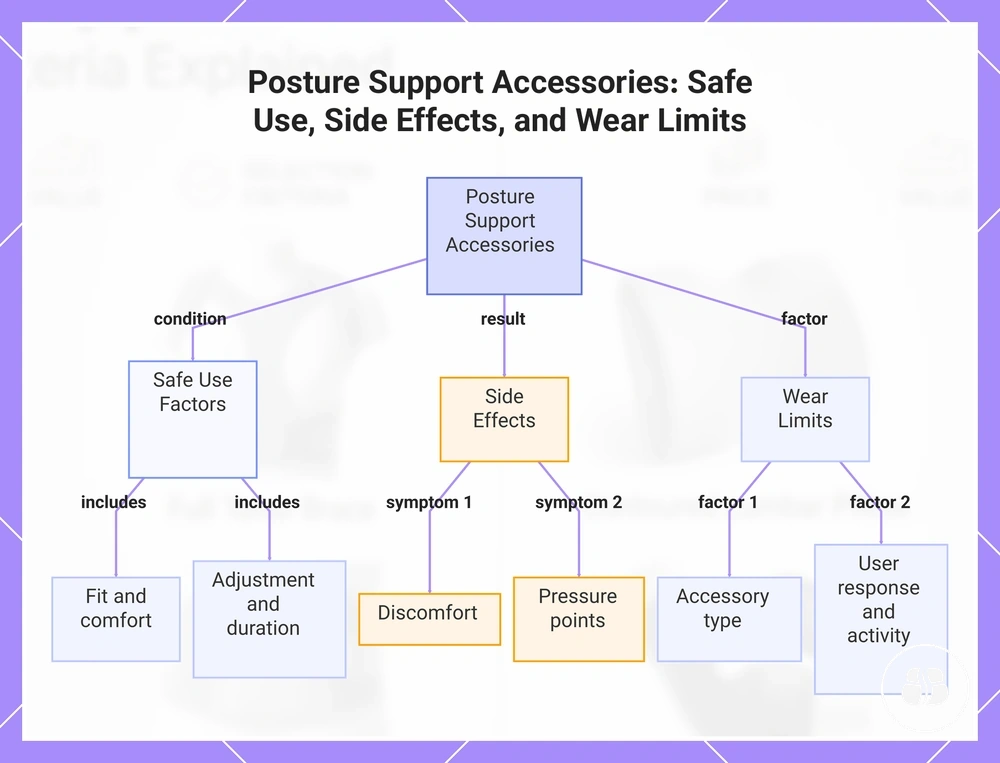
- Check fit regularly: Ensure the accessory remains comfortable and properly positioned during use.
- Avoid excessive tightening: Support should feel secure without creating unnecessary pressure.
- Monitor comfort: Pay attention to discomfort, irritation, or movement restriction during wear.
- Use according to activity: Wear limits may vary between desk work, travel, standing, and other daily situations.
- Adjust when needed: Reposition or modify the setup if comfort, posture awareness, or usability changes.
Safe use is usually supported by balancing posture assistance with comfort and practical daily use. For broader category guidance and support selection context, visit the Posture support accessories hub.
This chart shows the key factors for safe use, common side effects, and factors affecting wear limits of posture support accessories.
How to wear and adjust posture support accessories correctly
Wearing and adjusting posture support accessories correctly starts with positioning the accessory so it aligns with the intended support area and feels comfortable during normal use. Proper adjustment depends on fit, body position, and accessory design rather than applying maximum tension or pressure.
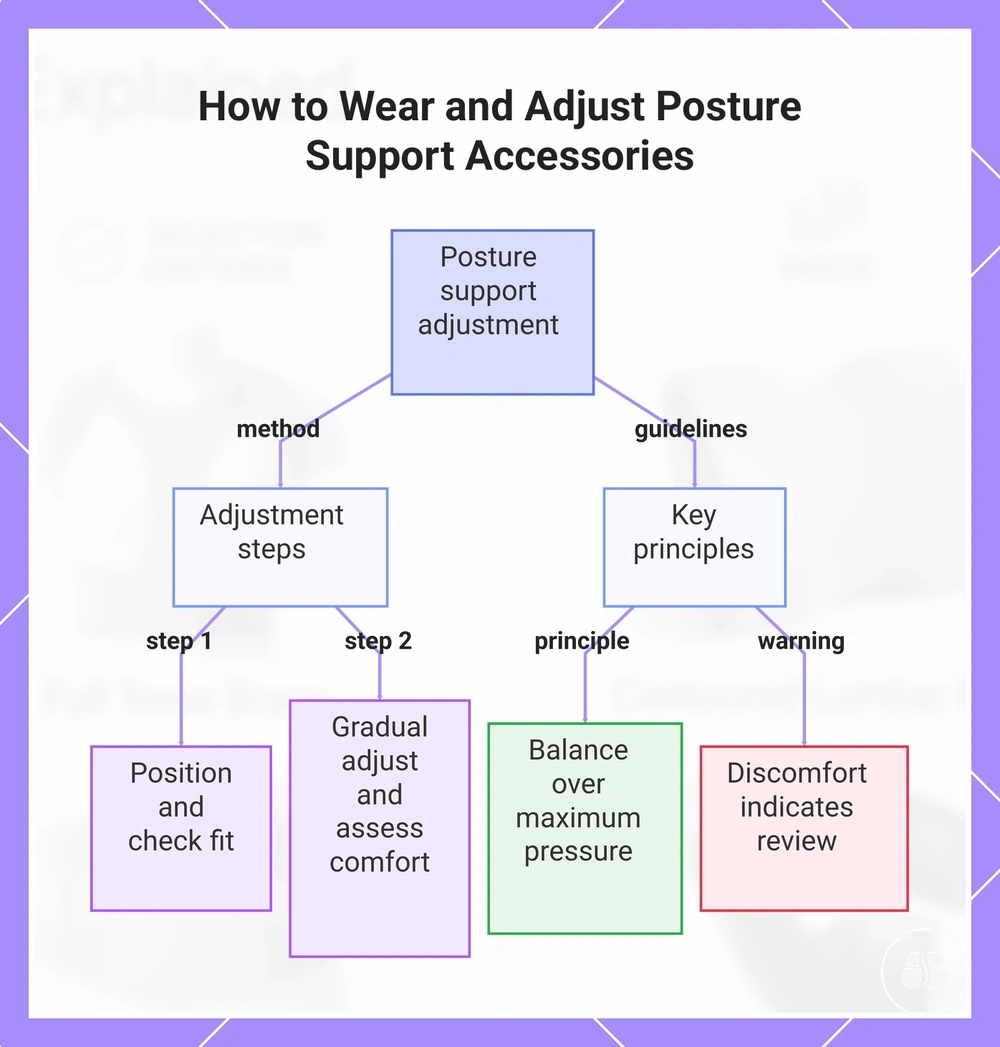
- Position the accessory: Place the brace, cushion, pad, or attachment where support is intended to be provided.
- Check initial fit: Confirm that the accessory remains stable without excessive movement during sitting, standing, or routine activity.
- Adjust gradually: Tighten, loosen, or reposition the accessory in small increments until it feels supportive and comfortable.
- Assess posture and comfort: Check whether the accessory encourages posture awareness without creating unnecessary pressure or restriction.
- Review during use: Reassess positioning and adjustment if activity level, body position, or comfort changes.
Correct adjustment is usually based on balance rather than maximum support pressure. If a posture support accessory creates discomfort, irritation, or movement restriction, fit and positioning may need to be reviewed.
Users who need additional guidance on body measurements and support alignment can refer to Posture support accessories fit and sizing.
This chart shows the main adjustment steps and key principles for correctly wearing and adjusting posture support accessories.
Posture support accessories: Troubleshooting and Care
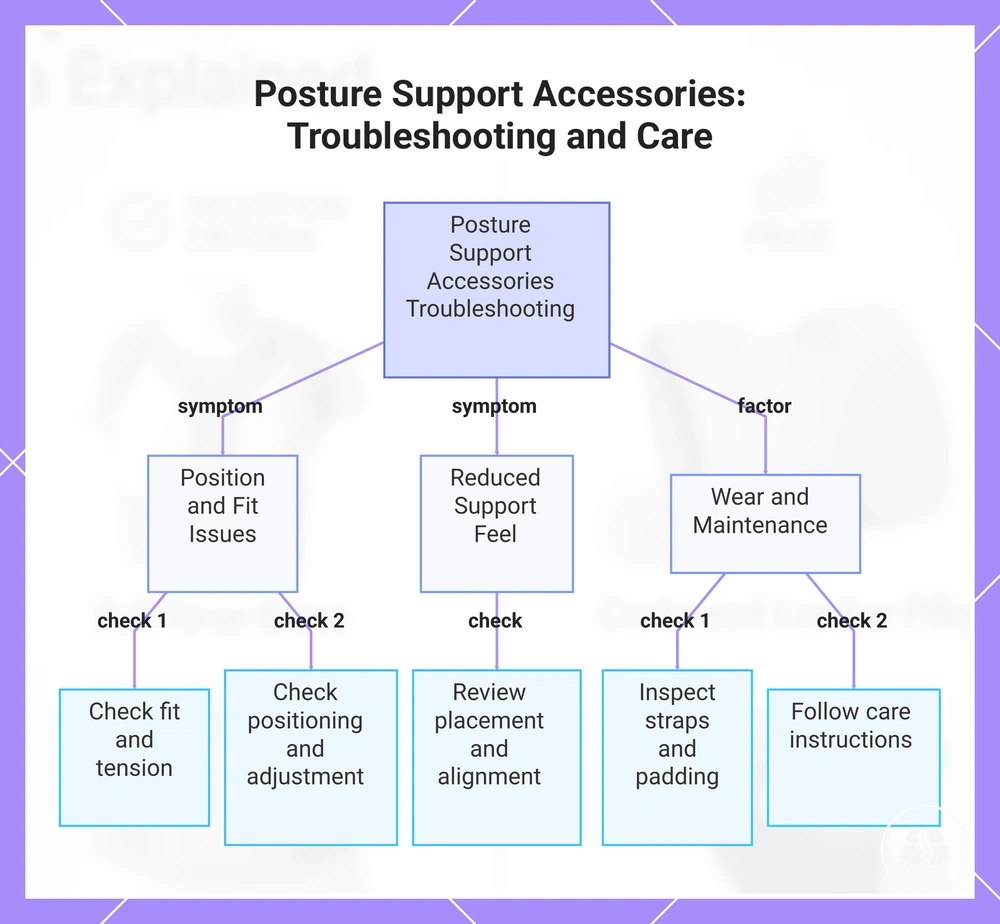
When a posture support accessory feels uncomfortable, shifts position, or provides less support than expected, the cause may be related to fit, adjustment, placement, or wear condition. Troubleshooting starts by identifying the specific issue and checking whether the accessory is positioned and adjusted appropriately for the intended support area.
Discomfort may occur when a posture support accessory is too tight, incorrectly positioned, or not well matched to the user's support needs. If pressure points, irritation, or movement restriction develop, adjusting the position, reducing tension, or reassessing fit may help improve comfort. When an accessory moves out of place during use, placement and adjustment should be reviewed before considering other causes.
- Shifting during use: Check positioning and adjustment to help improve stability.
- Pressure or discomfort: Reassess fit and reduce unnecessary tension where appropriate.
- Reduced support feel: Review placement and whether the accessory aligns with the intended support area.
- Wear-related concerns: Inspect straps, padding, fasteners, or support surfaces for signs of wear that may affect usability.
- Cleaning and maintenance: Follow applicable care instructions to help maintain comfort and condition.
Regular care can help preserve the condition of posture support accessories and make future adjustments easier when support needs change. For broader guidance on selection, fit, and usage, visit the Posture support accessories hub.
This chart helps identify common posture support accessory issues and provides actionable checks for fit, placement, and maintenance.
Posture support accessories: Daily Wear Schedule and Duration
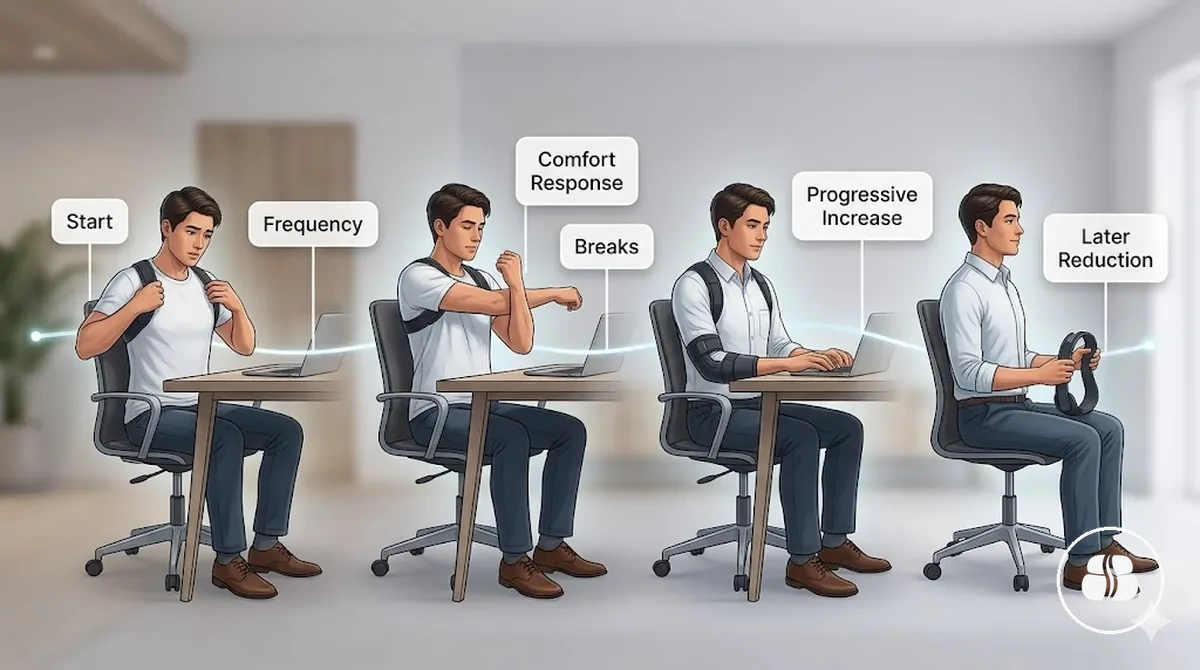
Using posture support accessories on a daily schedule depends on comfort, fit, activity level, and individual response rather than a fixed wear duration. Daily use is often easier to manage when the accessory is introduced gradually and adjusted according to how the user feels during normal activities.
Wear duration may vary because posture support accessories can be used in different situations, including desk work, travel, study, or general posture awareness. Shorter periods of use may help users evaluate comfort and positioning before extending wear time. If discomfort, irritation, or excessive pressure develops, reducing wear duration or reassessing fit may be appropriate.
- Start gradually: Introduce the accessory during routine activities and monitor comfort.
- Review fit regularly: Check positioning and adjustment as posture and activity change throughout the day.
- Match duration to activity: Wear needs may differ between sitting, standing, and movement-based tasks.
- Monitor body response: Comfort, mobility, and usability can help guide wear decisions.
- Adjust when needed: Reposition or modify the setup if support requirements change during use.
Daily wear schedules are usually most practical when they balance posture support with comfort and normal activity demands. For additional guidance on wear limits and safety considerations, see Posture support accessories: Safe Use, Side Effects, and Wear Limits.
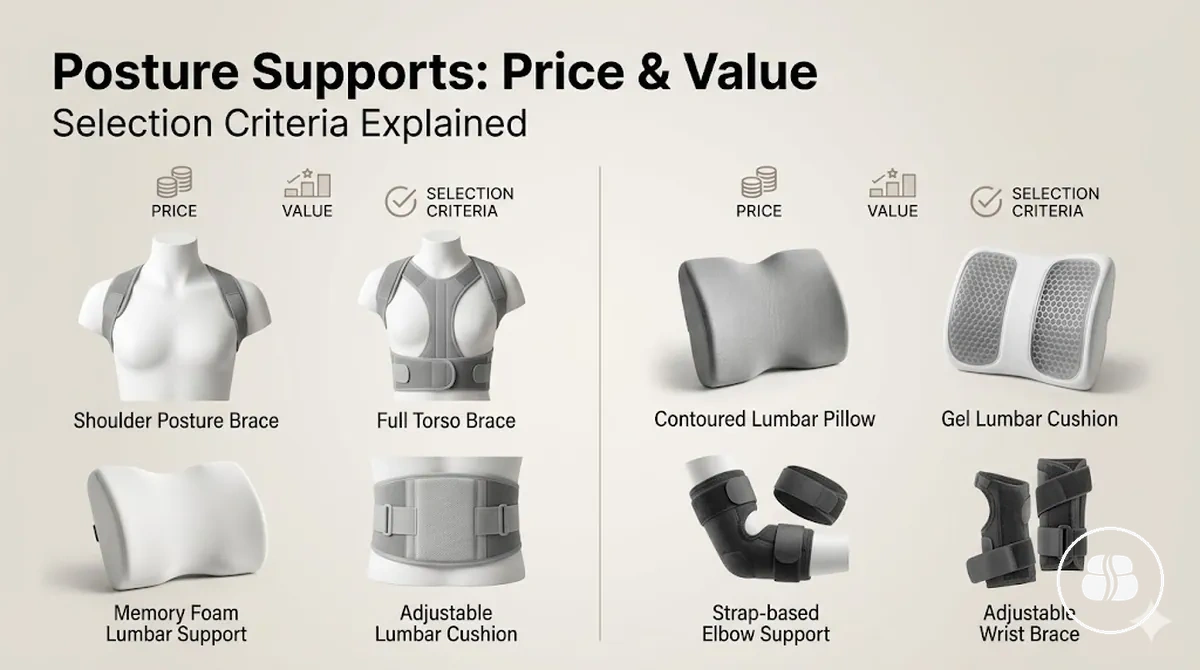
Posture support accessories: Price, Value, and Selection Criteria
Evaluating posture support accessories depends on balancing price, expected value, fit, comfort, and intended use rather than focusing on cost alone. A higher-priced accessory may include features that suit a specific user, while a simpler option may provide adequate support when requirements are more limited.
Value is often determined by how well a posture support accessory aligns with daily activities, support goals, and comfort preferences. Features such as adjustability, material characteristics, ease of positioning, and ongoing usability may influence perceived value more than price by itself. Comparing functional benefits against actual support needs can help create a more practical selection process.
- Fit: Consider whether the accessory matches the intended support area and usage environment.
- Comfort: Evaluate comfort during expected daily use conditions.
- Adjustability: Check whether support settings or positioning can be modified when needs change.
- Material: Review material characteristics that may influence comfort, maintenance, and usability.
- Use-case alignment: Compare features against actual support requirements rather than price alone.
Cost-value decisions are often clearer when support needs are identified before comparing options. For broader category-level evaluation and trade-off analysis, see Posture support accessories comparison.
Optimizing workspace with posture support accessories
Optimizing workspace with posture support accessories depends on how well the accessory integrates with the chair, desk arrangement, and daily work habits. Compatibility is usually influenced by the relationship between the support accessory, seating position, movement requirements, and the overall workspace environment rather than by the accessory alone.
Posture support accessories may function differently across workspace setups. A lumbar support cushion may contribute to seated support, while a seat pad or chair attachment may influence positioning and comfort. Wearable posture supports can be used independently of furniture, but their suitability may depend on movement patterns, task duration, and comfort during routine workspace activities.
- Chair compatibility: Check whether the accessory fits securely within the existing seating arrangement.
- Desk interaction: Consider how the accessory affects typing, reaching, viewing, and general workstation use.
- Movement needs: Ensure the support setup allows comfortable position changes during normal activities.
- Comfort balance: Evaluate whether the accessory supports posture awareness without creating distraction or discomfort.
- Workspace consistency: Review whether the accessory remains practical across routine daily tasks.
Workspace integration is often more effective when posture support accessories complement existing ergonomic arrangements instead of attempting to replace them. The suitability of a setup may depend on posture habits, work duration, and environmental conditions.