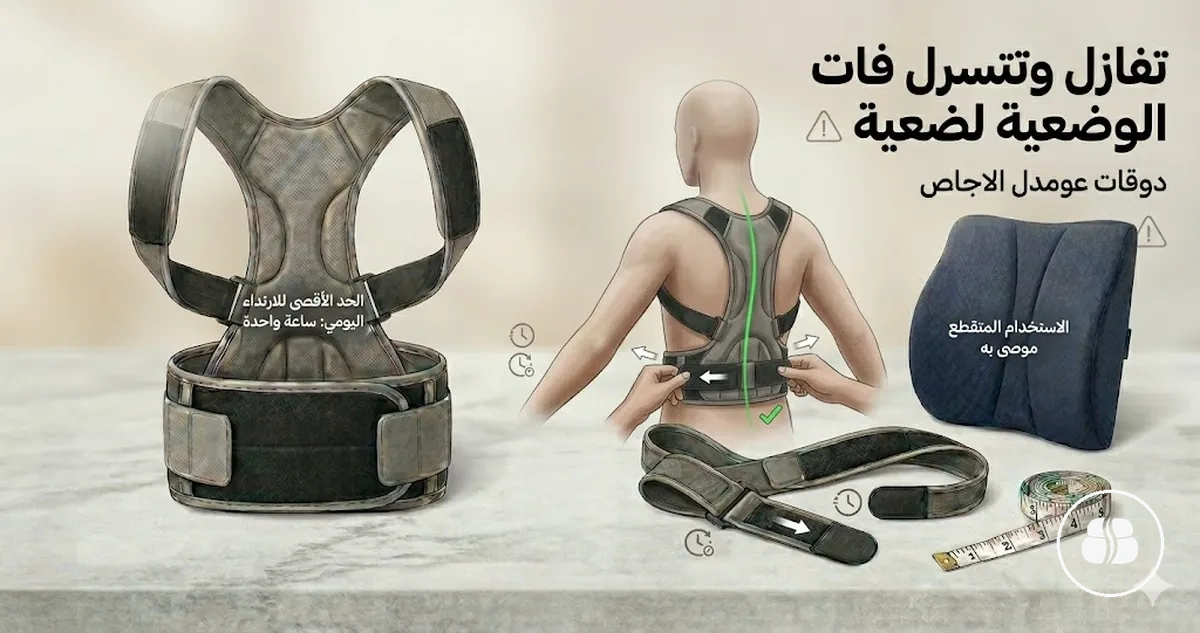
How to use posture support accessories correctly
Posture support accessories are wearable support tools that guide body alignment through gentle external tension and positioning rather than rigid correction. They encourage awareness of shoulder and back posture while distributing light support across straps or cushioning zones. Their effectiveness typically depends on fit quality, adjustment control, and how naturally they align with neutral body posture during use.
Correct use starts in a neutral posture with balanced strap tension that does not restrict breathing or movement. Positioning, adjustment, and comfort checks should stay consistent during use to avoid uneven pressure or overcorrection. Strap tension, alignment, and feedback such as shoulder ease or pressure points help indicate whether adjustments are suitable. Common mistakes include over-tightening, misaligned straps, and relying entirely on the accessory instead of maintaining posture awareness. Sizing boundaries also matter because persistent discomfort often signals a mismatch rather than adjustment error. For broader context and related options, visit Posture support accessories hub.
Before wearing posture support accessories
Preparation before wearing posture support accessories refers to basic checks that help the accessory sit comfortably and support neutral posture without forcing alignment. It establishes a stable baseline so the support can distribute pressure more evenly during use. This stage reduces adjustment errors and improves comfort during initial positioning.
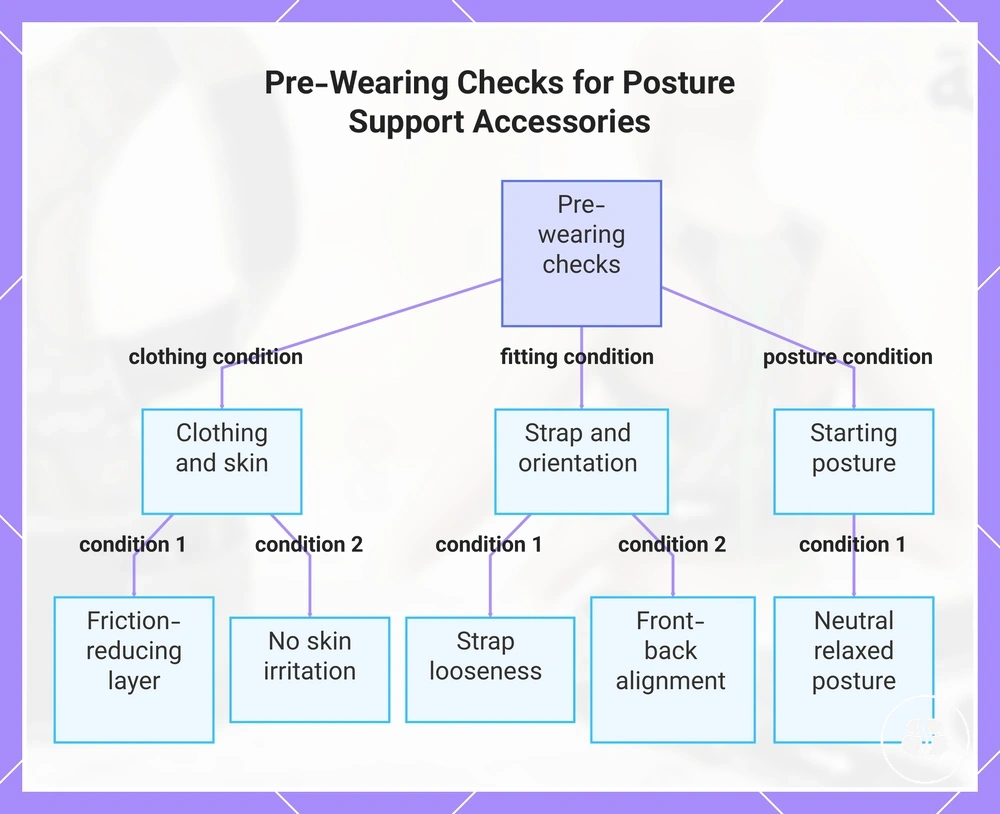
These checks influence how evenly support is distributed and how comfortable adjustments feel during use. The following conditions help ensure the accessory starts in a stable state before wearing it:
- Clothing layer suitable for reducing unnecessary friction or pressure
- Skin comfort without irritation or sensitive pressure points
- Strap looseness to allow gradual adjustment
- Accessory orientation aligned with intended front-back positioning
- Starting posture maintained in a relaxed, neutral position
This chart shows the essential conditions to verify before putting on a posture support accessory to ensure comfort and even pressure distribution.
Clothing layer and skin comfort
Clothing layer and skin comfort describe how fabric thickness and material contact between posture support accessories and the skin influence pressure distribution, friction levels, and overall wear comfort. Direct skin contact or thin layers can increase sensitivity around strap edges, while additional fabric layers may help spread pressure more evenly depending on fit and adjustment conditions.
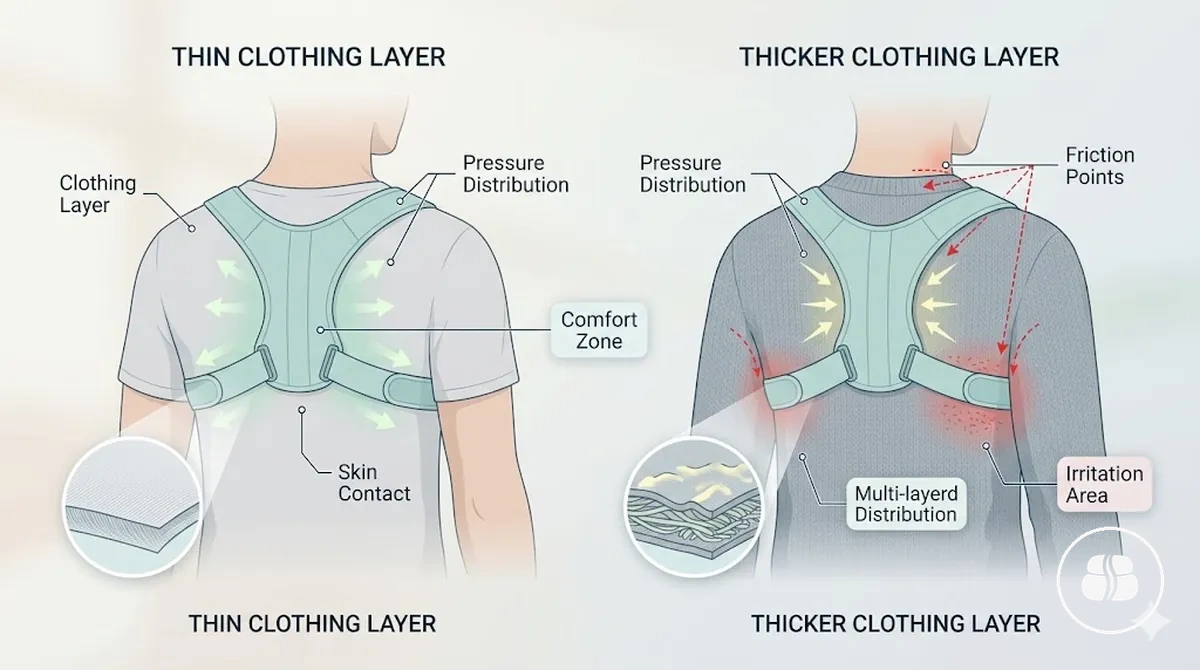
Comfort outcomes usually occur when the fabric layer reduces friction and allows more stable contact between straps and skin. Irritation can develop when straps press directly on sensitive areas or when uneven layering creates localized pressure points. The difference between comfort and irritation depends on how consistently the fabric layer supports pressure distribution during movement and adjustment.
Starting from a neutral posture
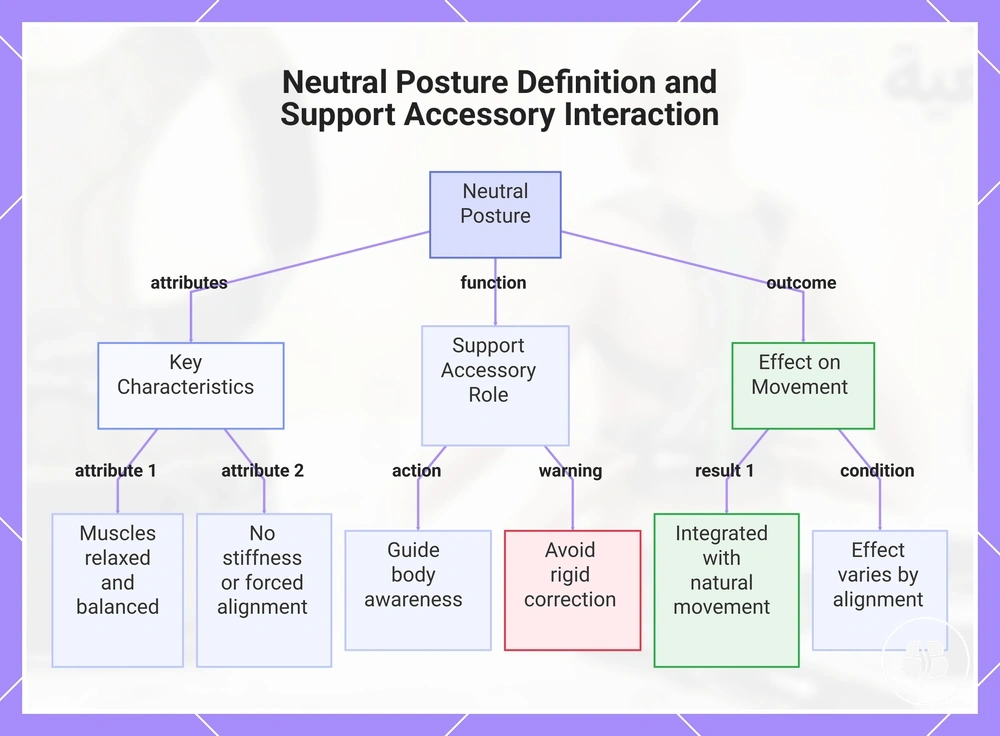
Neutral posture refers to a relaxed body position where muscles remain balanced without intentional stiffness or forced alignment. In this state, posture support accessories can guide awareness of body positioning rather than pushing the body into rigid correction, which helps maintain a more natural interaction between support and movement.
This relaxed posture may help the accessory guide awareness without forcing rigid alignment, though the effect can vary depending on individual body alignment and adjustment. When neutral posture is maintained, the support tends to feel more integrated with natural movement rather than restrictive or overly corrective.
This chart defines neutral posture, describes its key characteristics, explains how support accessories function with it, and shows the effect on natural movement.
Correct wearing position for posture support accessories
Correct wearing position for posture support accessories refers to how the system is aligned on the upper body after wearing, based on whether support areas, straps, and contact points distribute pressure evenly across the shoulders and upper back. Positioning is evaluated by checking balance in placement rather than assuming a fixed single alignment outcome.
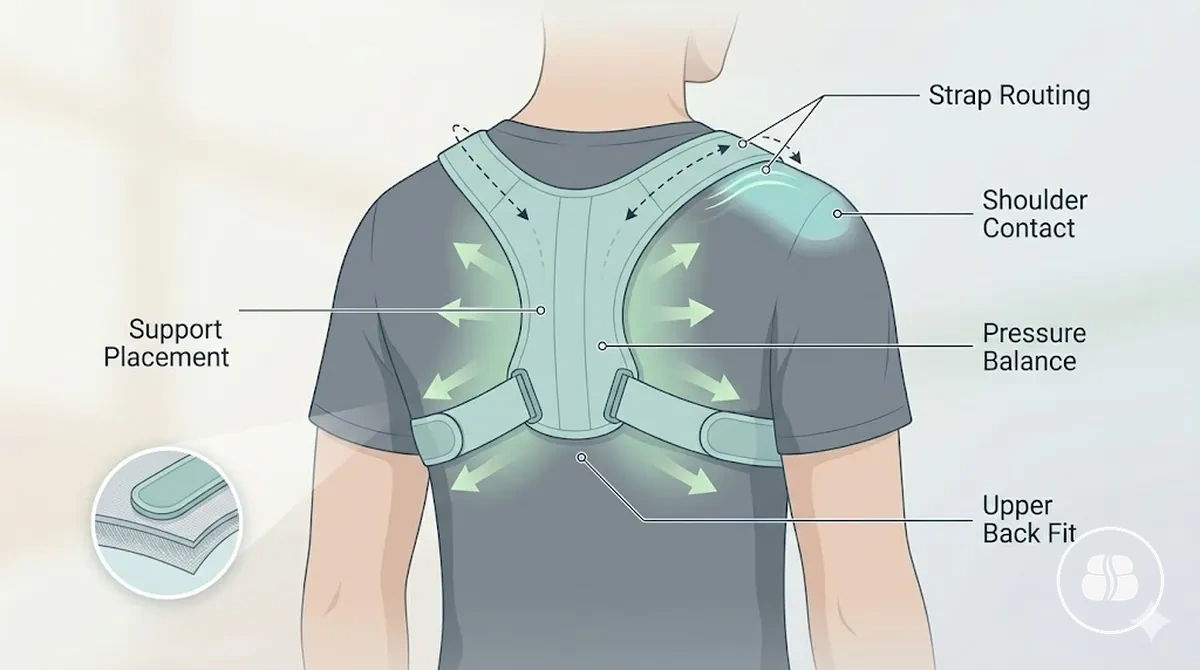
Once worn, positioning is typically assessed through key indicators that show how the system behaves on the body:
- Support placement: stays aligned on the upper back without drifting upward or downward
- Strap routing: remains symmetrical on both sides to reduce uneven pulling
- Shoulder contact: distributes contact evenly rather than concentrating pressure on one side
- Pressure distribution: spreads across contact zones instead of focusing on a single point
Where the support should sit on the body
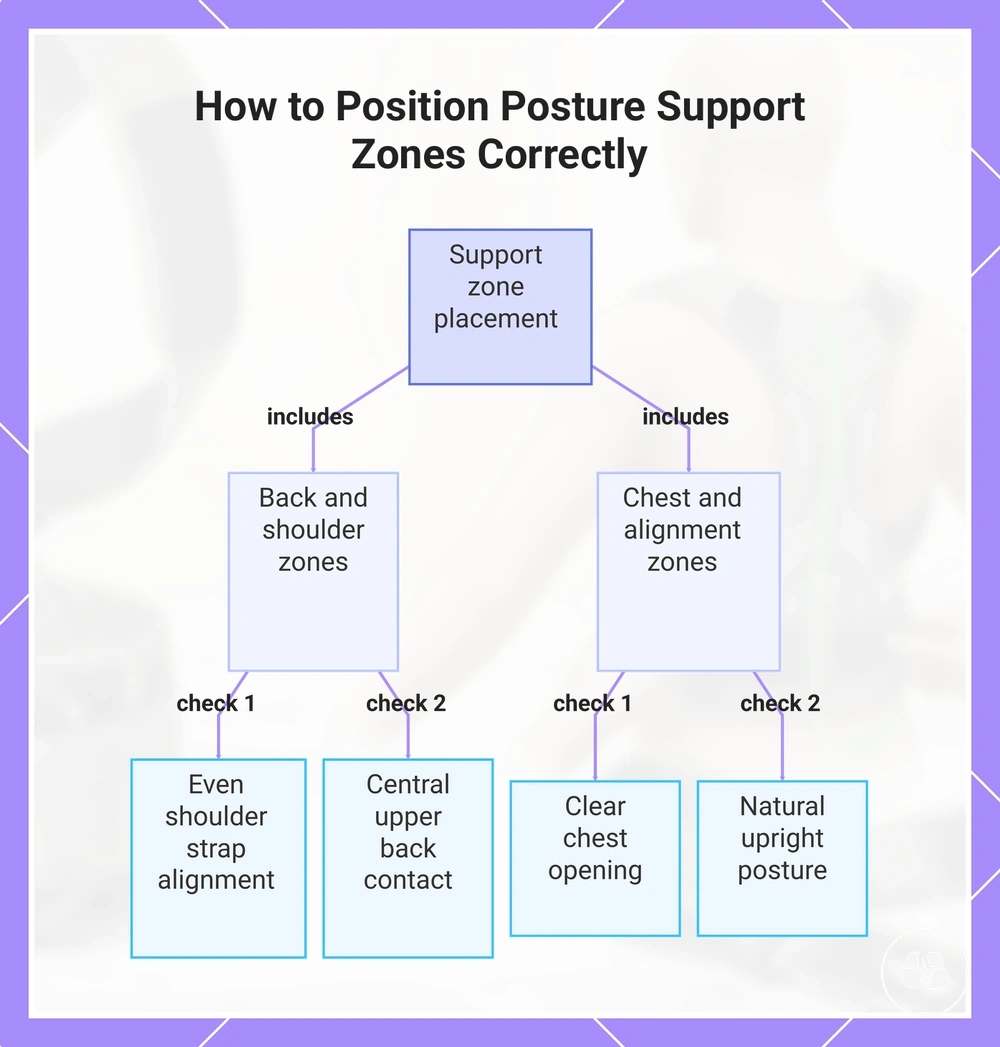
Support zones refer to how posture support accessories are positioned across key contact areas of the upper body, determining how guidance is distributed between the shoulders, upper back, chest, and alignment regions. Correct placement depends on keeping these zones coordinated so no single area carries uneven tension or displacement.
- Shoulder straps: should align evenly across both shoulders to maintain balanced support
- Upper back contact: should rest on the central back region to guide overall stability
- Chest opening: should remain clear to avoid restricting natural breathing and movement
- Alignment areas: should follow the body’s natural upright positioning without forced correction
This chart shows the four key upper body contact areas for posture support and their correct placement requirements.
How shoulder and back alignment should feel
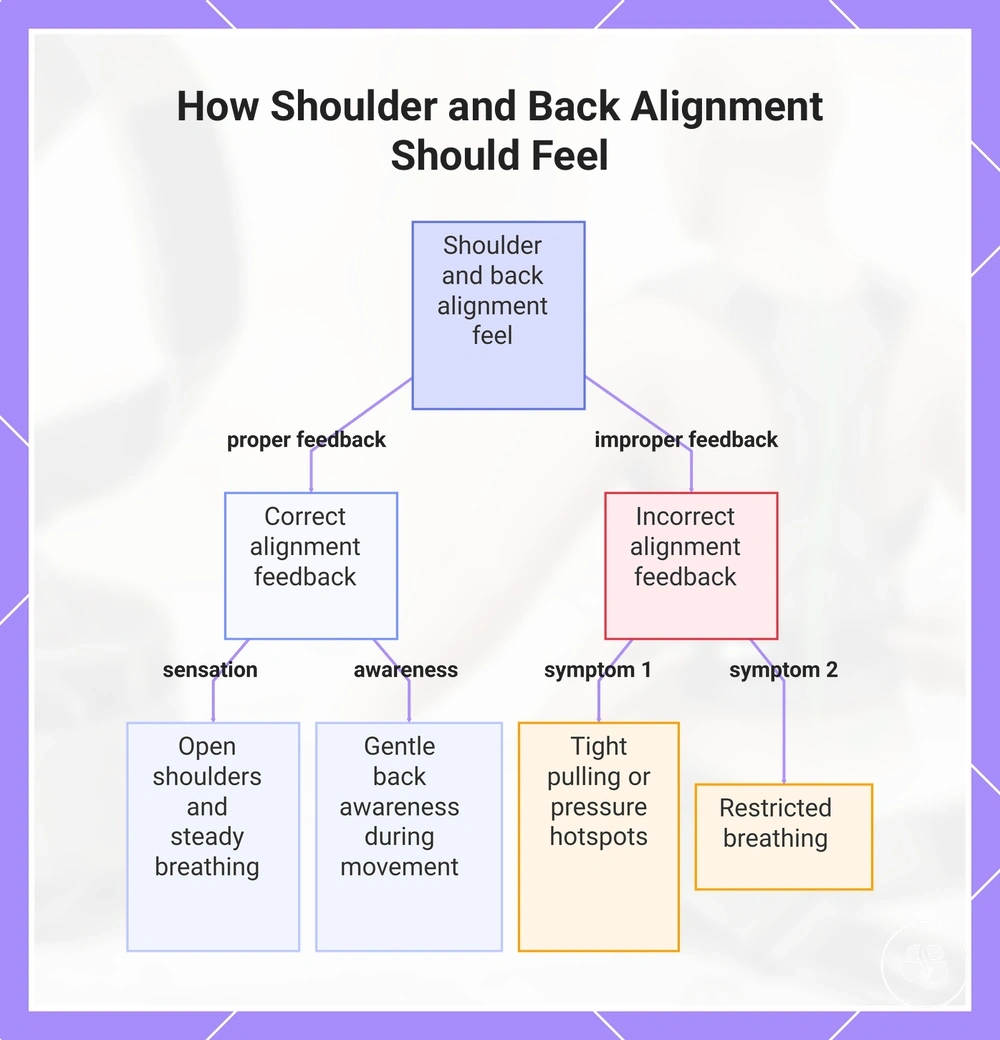
How shoulder and back alignment should feel refers to the sensory feedback that indicates posture support accessories are sitting in a balanced position, where support feels light across the shoulders and back without creating forced pulling or uneven tension.
Alignment feedback typically feels like open shoulders, steady breathing, and gentle back awareness that stays consistent during movement. When positioning is appropriate, the sensation remains natural and balanced, while tight pulling, pressure hotspots, or restricted breathing may indicate the need for adjustment.
This chart shows the sensory feedback that indicates correct or incorrect posture support alignment.
How to put on posture support accessories
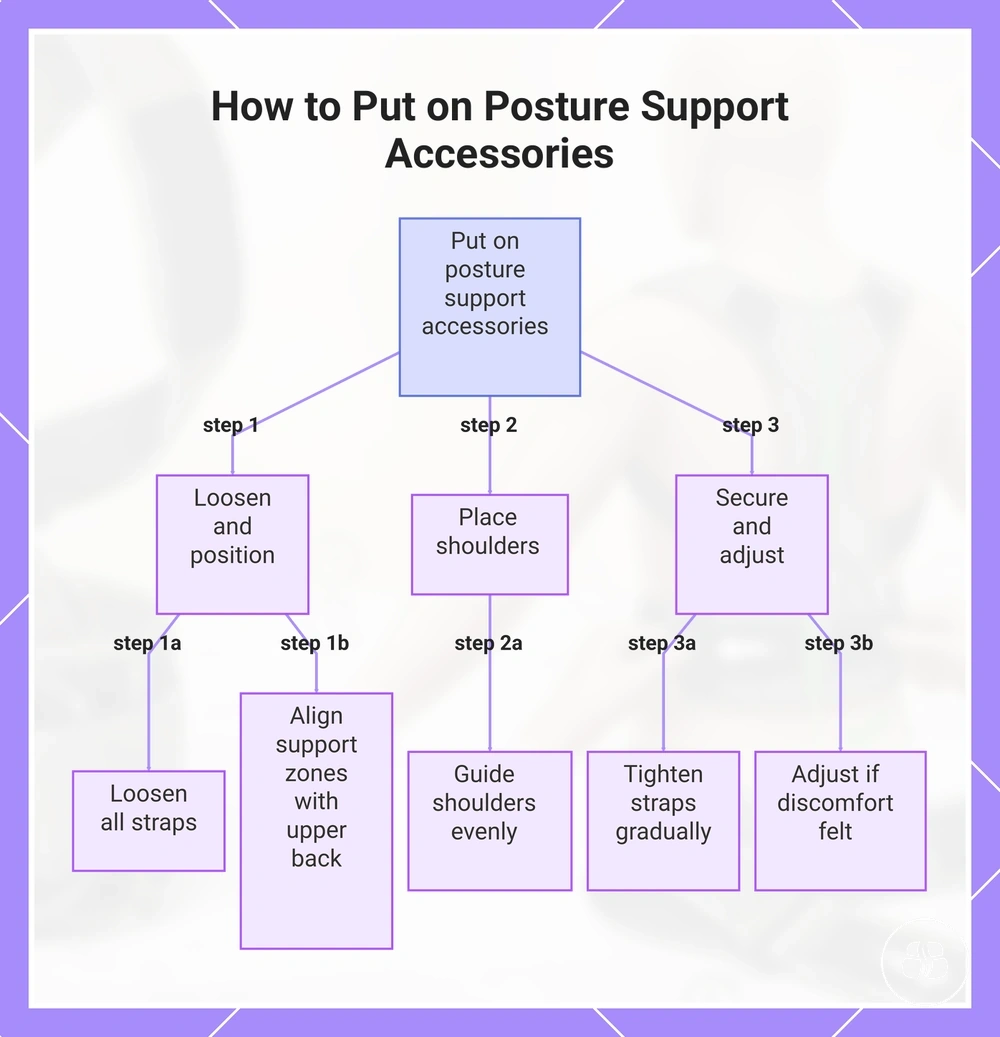
How to put on posture support accessories is a sequential wearing process where each step is performed in order to ensure the support zones align correctly on the body without creating uneven tension or discomfort.
The wearing process typically follows a structured sequence that helps stabilize fit and alignment:
- Loosen straps: start by loosening all straps to allow easy positioning
- Position: place the accessory so the support zones align with the upper back area
- Place shoulders: guide both shoulders into the straps evenly without twisting
- Secure: tighten straps gradually to maintain balanced tension on both sides
- Check comfort: adjust fit if pulling, pressure points, or restriction is felt
This chart shows the sequential steps to correctly wear a posture support accessory, from loosening straps to final fit adjustment.
Loosening straps before wearing
Loosening straps before wearing posture support accessories refers to releasing tension in the strap system so the device can be positioned without resistance and adjusted gradually once it is placed on the body.
This step starts by fully relaxing both shoulder and side straps to increase entry space and reduce pulling during placement. After positioning the accessory on the upper body, the straps can then be tightened in stages to restore balanced support and controlled fit.
Placing the straps over the shoulders
Placing the straps over the shoulders refers to positioning each strap evenly over both shoulders so the strap system sits symmetrically before any tightening adjustments are made.
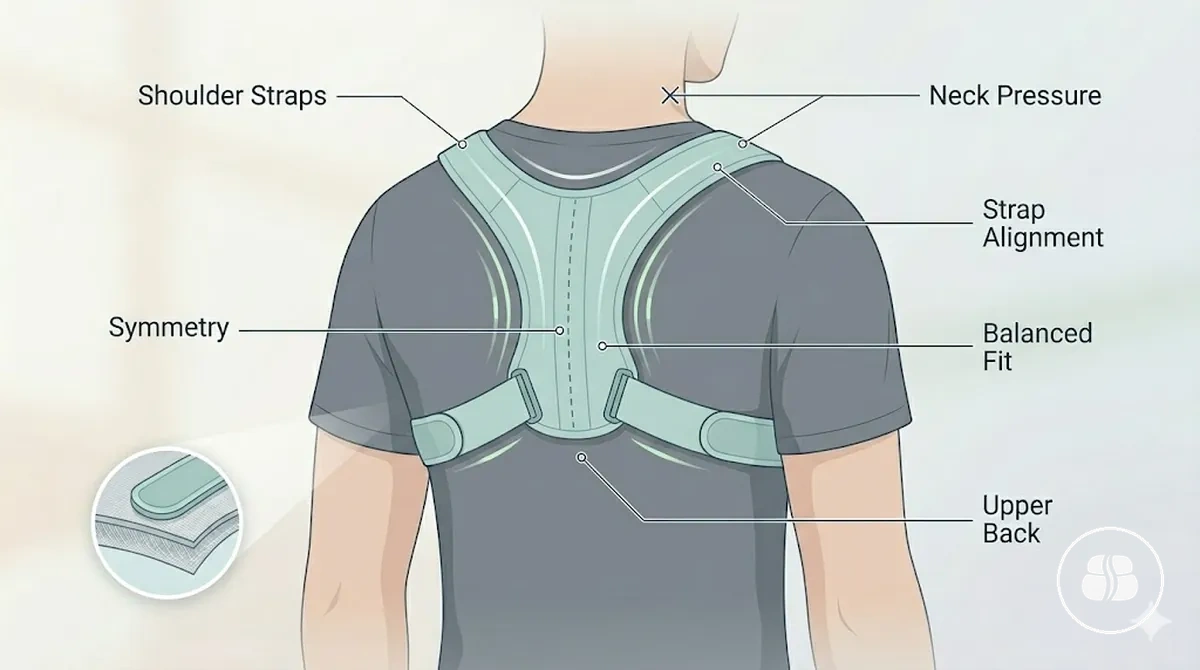
This step focuses on keeping both straps aligned at the same height and direction to avoid uneven pull or neck pressure. Each strap should rest naturally on the shoulders without shifting toward the neck area, allowing a balanced base for subsequent adjustment steps.
Securing the accessory without forcing posture
Securing the accessory without forcing posture refers to fastening the strap system with controlled tension so the body remains in a natural alignment instead of being pulled backward or into a rigid position.
This step focuses on tightening the straps gradually until the support feels stable and evenly distributed. It should hold the accessory in place without forcing shoulder or upper-back correction, allowing natural posture during movement.
How to adjust posture support accessories during use
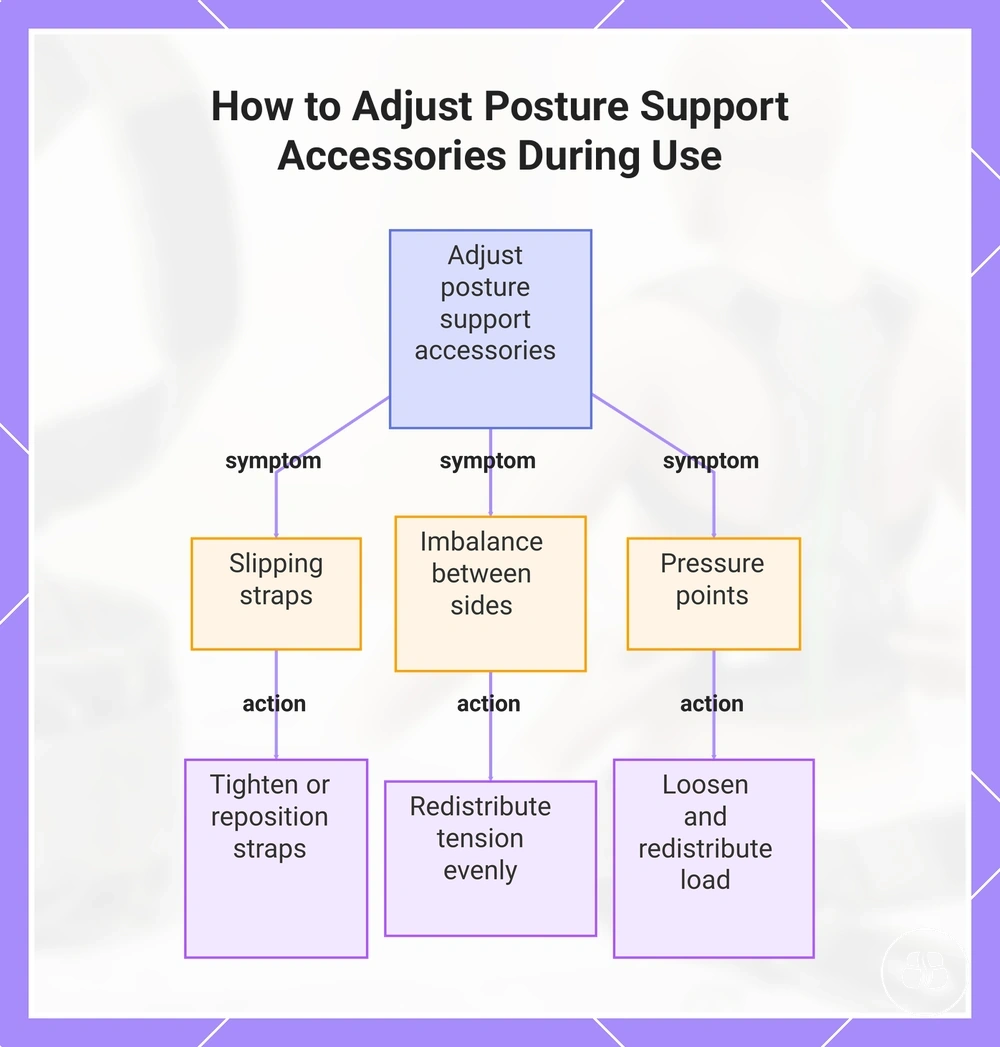
How to adjust posture support accessories during use refers to modifying strap tension and positioning while wearing the system in response to comfort signals such as slipping, imbalance, or pressure points.
This adjustment process depends on real-time feedback from the body. When slipping occurs, the straps may need slight tightening or repositioning to improve stability. If imbalance is felt between sides, tension can be redistributed so both shoulders share support evenly. When pressure points appear, loosening specific areas and redistributing load across contact zones can improve comfort without changing the overall fit structure.
This chart shows the three common comfort signals during use and the corresponding adjustments to improve fit.
Strap tension for support without restriction
Strap tension for support without restriction refers to how tightly the posture support straps are adjusted so they provide stability while still allowing natural breathing and shoulder movement during use.
This balance is adjusted by fine-tuning tension until the support feels secure without creating rigidity across the upper body. When tension is too high, breathing and shoulder mobility may feel limited. When it is too loose, the accessory may shift and reduce support consistency. The adjustment is typically refined through small incremental changes based on comfort feedback.
Fit checks after adjustment
Fit checks after adjustment refer to verifying that the posture support accessory remains balanced and comfortable after changes to strap tension or positioning, ensuring the adjustment does not introduce uneven support or restriction.
This check focuses on three key signals: symmetry across both shoulders, steady breathing without chest restriction, and pressure distribution that stays even without concentrated points. If any imbalance, breathing limitation, or localized pressure is noticed, minor readjustments can be made to restore a more stable and comfortable fit.
Common wearing and adjustment mistakes
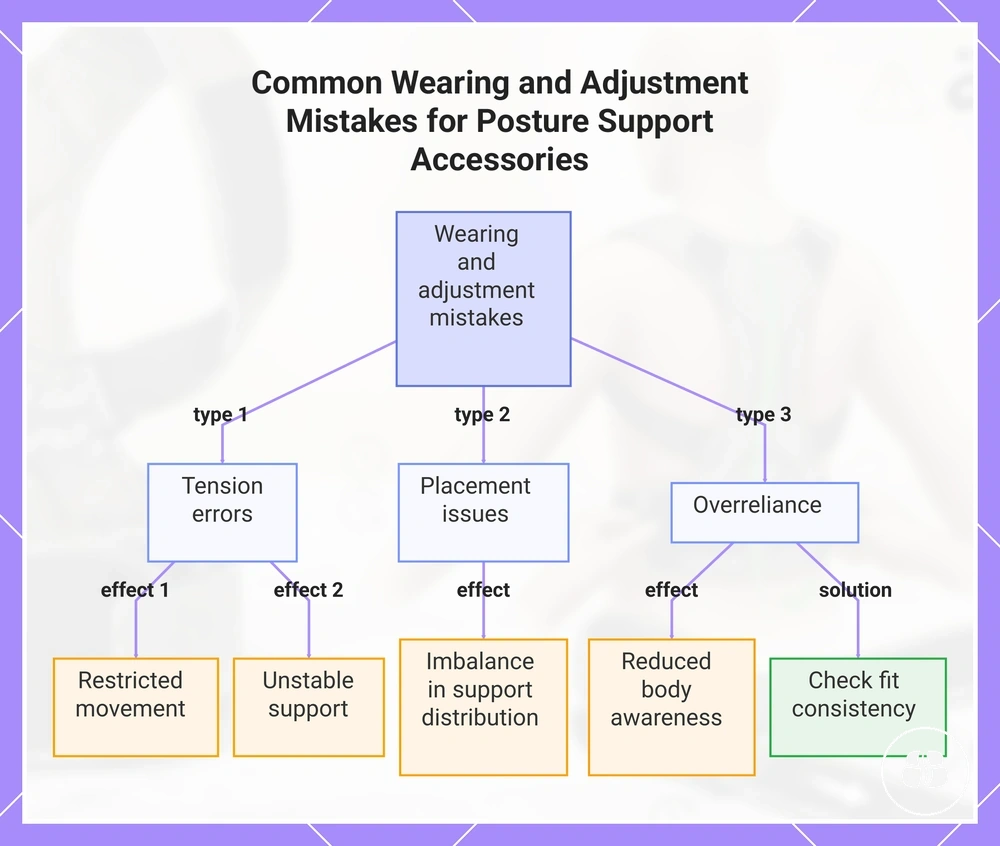
Common wearing and adjustment mistakes refer to recurring issues in how posture support accessories are positioned, tightened, or relied on during use, which can reduce stability, comfort, or intended support balance.
These mistakes typically appear in three main areas of use and adjustment:
- Tension errors: applying too much or too little strap tension, which can lead to either restricted movement or unstable support.
- Placement issues: positioning the accessory unevenly on the shoulders or upper back, which may create imbalance in support distribution.
- Overreliance: depending fully on the accessory without making small posture corrections, which can reduce natural body awareness during use.
These issues can usually be reduced by checking fit consistency after adjustment and keeping support balanced during movement rather than fixed in a rigid position.
This chart shows the three main categories of wearing and adjustment mistakes for posture support accessories, their effects, and a key reduction approach.
Wearing the accessory too tight
Wearing the accessory too tight refers to a condition where strap tension exceeds a comfortable support level, causing the posture support system to compress the upper body instead of guiding alignment.
This condition is typically identified through three primary signs. Pressure marks may appear on the shoulders or upper back due to concentrated force. Breathing can feel restricted as chest expansion becomes limited. Movement limitation may also occur, with reduced shoulder mobility during normal activity.
When these signals appear, the tension state usually needs gradual reduction to restore balance between support and comfort without removing the stabilizing function of the accessory. :contentReference[oaicite:0]{index=0}
Wearing the accessory for too long
Wearing the accessory for too long refers to a duration-related condition where extended use may lead to fatigue, reduced comfort, and increased pressure sensitivity in supported areas.
With prolonged use, fatigue can develop in the shoulders and upper back as continuous support load accumulates. Comfort may gradually decline as the body adapts to sustained positioning, especially during static or low-movement activities.
Pressure sensitivity can also become more noticeable over time in contact zones where straps or support points remain active. These effects typically vary depending on usage duration, adjustment quality, and individual comfort response.
Relying on support instead of posture awareness
Relying on support instead of posture awareness refers to a reliance behavior where external support replaces active body feedback and reduces natural posture awareness during use.
This reliance can reduce posture awareness over time by shifting alignment control away from muscle engagement and internal balance cues toward the support system itself. As a result, body feedback signals may become less noticeable during normal movement.
Over time, reduced posture awareness can make it harder to detect small alignment changes or discomfort signals, since the body becomes less responsive to subtle shifts during extended use.
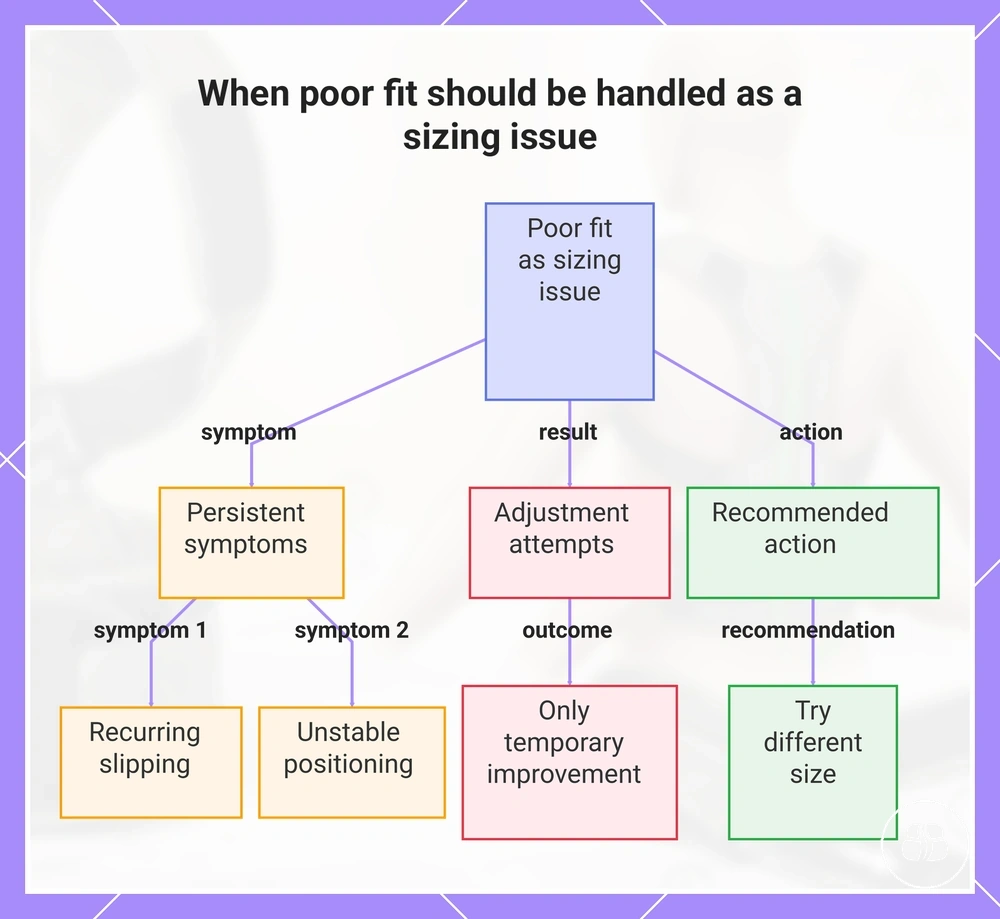
When poor fit should be handled as a sizing issue
When poor fit should be handled as a sizing issue refers to situations where repeated adjustment attempts do not resolve alignment, comfort, or stability problems, suggesting a sizing mismatch rather than an adjustment error.
Persistent issues such as recurring slipping, uneven pressure distribution, or unstable positioning often indicate that the accessory dimensions may not align well with the body structure. In these cases, repeated strap or position adjustments may only provide temporary improvement.
When these patterns continue across normal use, the fit concern is more likely related to sizing compatibility, where a different size or configuration may be needed to achieve consistent support behavior.
This chart shows the key indicators that a fit problem is due to sizing mismatch rather than adjustment errors, and the recommended action.
Using posture support accessories safely in daily routines
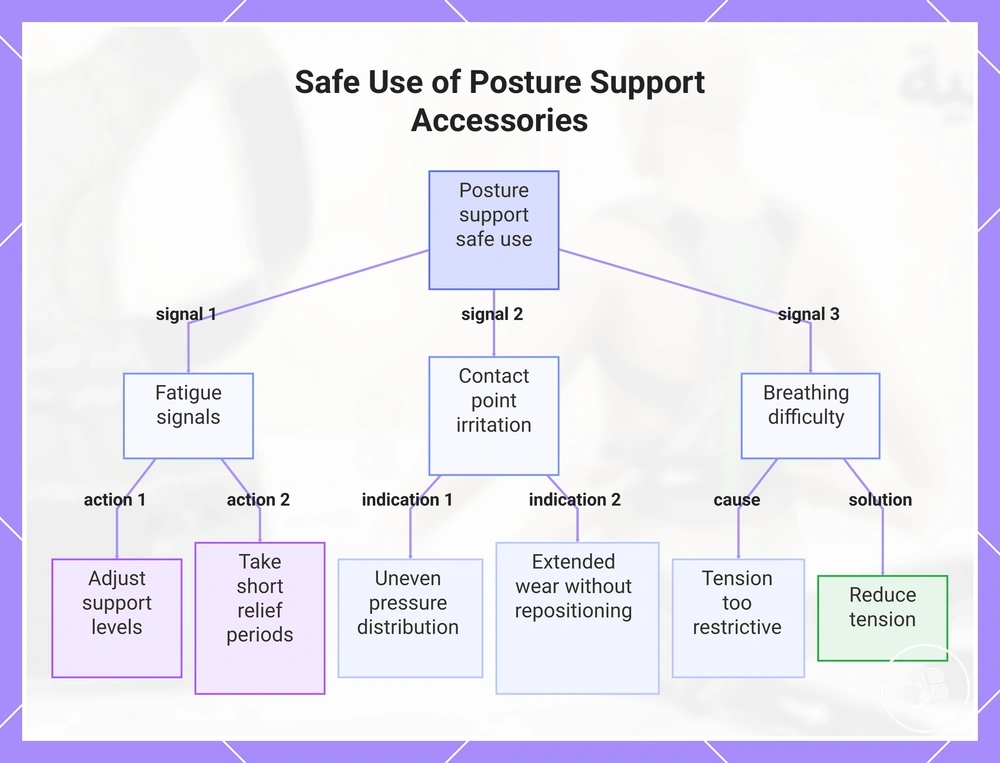
Using posture support accessories safely in daily routines refers to maintaining controlled use while continuously monitoring body feedback such as fatigue, irritation, or breathing difficulty during wear.
Safe usage depends on observing how the body responds throughout everyday activities. When fatigue appears in the shoulders or upper back, it may indicate that support levels need adjustment or short relief periods. Irritation at contact points can suggest uneven pressure distribution or extended wear without repositioning.
Breathing difficulty signals that the tension or fit may be too restrictive and should be reduced to restore comfortable movement. Regular attention to these signals helps maintain a balance between supportive function and natural body awareness during daily use.
This chart illustrates the body feedback signals that indicate safe use adjustments for posture support accessories.