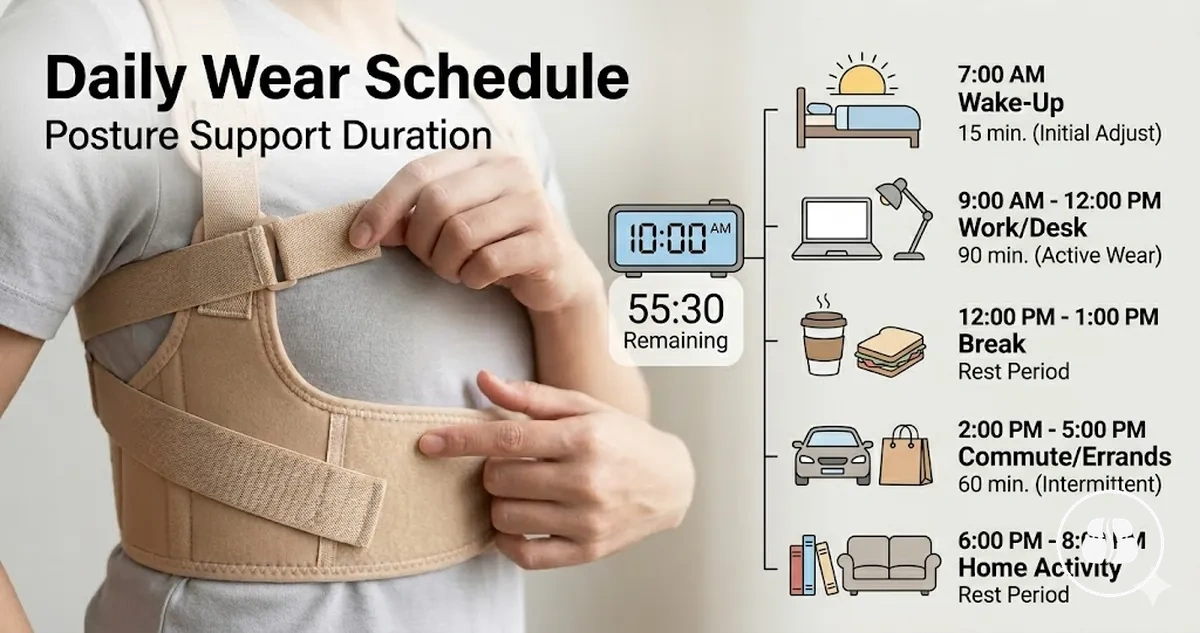
Daily wear schedule for posture support accessories
Posture support accessories are temporary daily-use aids that can support posture awareness, comfort, and controlled routine building. They should be planned around a daily wear schedule and duration, not treated as continuous support.
A careful wear routine usually starts with gradual use, planned breaks, and regular comfort checks. Shorter support periods can help the user notice posture habits without depending on the accessory for every movement. If pressure, discomfort, or fatigue appears, the schedule may need to be reduced, paused, or adjusted. Continuous wear should not be assumed safe or suitable for every user.
The right support schedule depends on the accessory type, fit, activity, and user response. A posture brace, posture corrector, cushion, or posture support aid may feel different during desk work, standing tasks, commuting, or rest periods. Daily use should remain a support routine, not a guarantee of posture correction. For the broader category context, use the Posture support accessories hub.
Realistic support goals come before exact time ranges. Once the purpose of daily posture support use is clear, duration, breaks, increase, reduction, and safe limits become easier to judge.
What daily posture support use should achieve
Daily posture support use is a limited support routine intended to improve posture awareness, provide reminder value, and support comfort during specific activities. Posture support accessories can help reinforce attention to body position, but daily use should have a limited purpose.
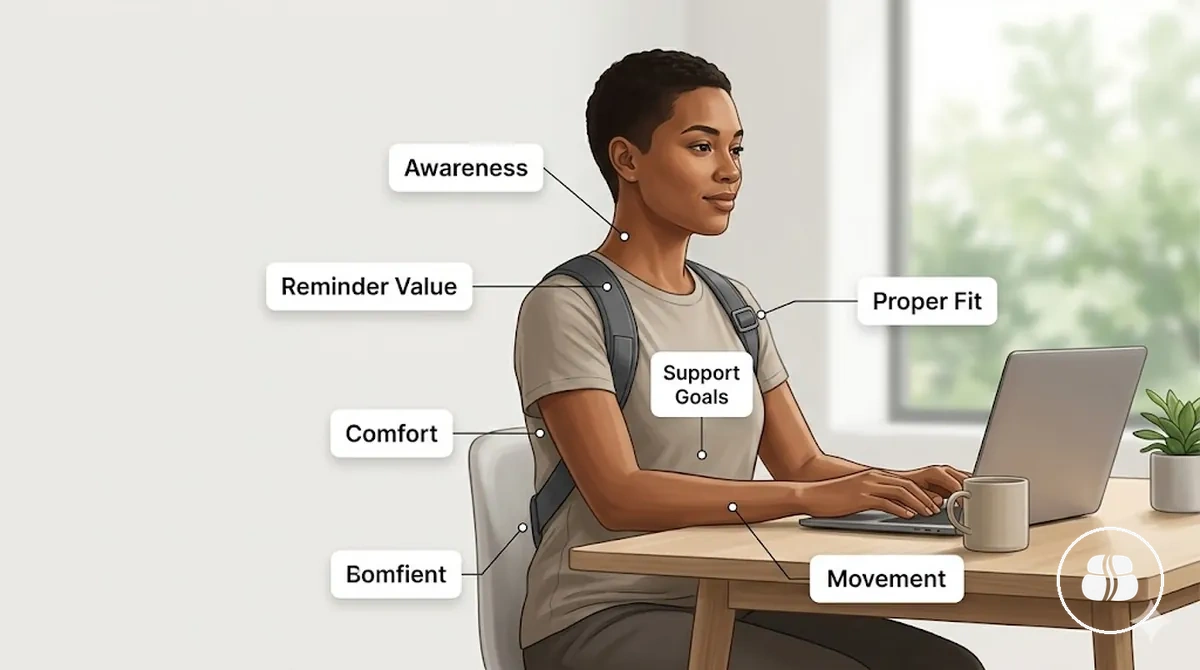
For many users, the main support goals are awareness, reminder value, comfort, and routine consistency. A posture support aid may make it easier to notice posture habits or return to a preferred position during certain tasks. Comfort, proper fit, and user response can vary by activity and wear routine, so realistic outcomes depend on individual use. When daily posture support use encourages awareness without creating reliance, it may contribute to a more controlled routine.
- Awareness: Helps users notice posture habits more consistently.
- Reminder value: Provides a physical cue to reassess body position.
- Comfort: May support selected activities when fit and user response are appropriate.
- Support goals: Encourages routine building rather than dependence on the accessory.
Daily wear should support posture awareness rather than replace movement, strengthening, or proper fit. Posture support accessories are best viewed as tools that complement a routine instead of acting as a substitute for active posture control. Keeping this boundary in mind helps prepare for duration and schedule guidance.
Can posture support accessories be worn every day
Yes, posture support accessories can be worn every day when daily use involves limited duration, a comfortable fit, and regular breaks. The suitability of daily wear depends on the accessory type, activity context, and user response. Daily use is generally more appropriate when those conditions remain comfortable and manageable over time.
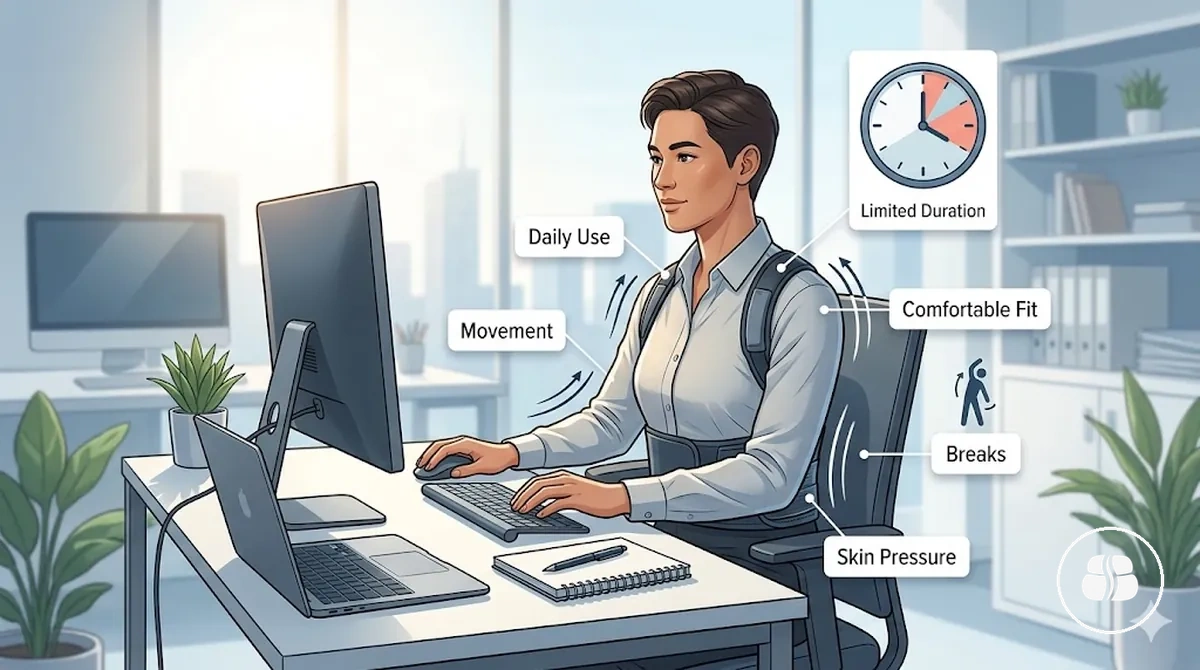
- More suitable: Limited duration, comfortable fit, planned breaks, and low skin pressure.
- Needs adjustment: Increasing discomfort, excessive skin pressure, restricted movement, or signs of reliance risk.
- Depends on: Accessory type, support intensity, activity context, daily duration, and individual user response.
Different posture support accessories place different demands on the body. A posture brace, shoulder support, cushion, or other support aid may feel appropriate for one activity but less suitable for another. Wear time often depends on comfort, support intensity, and how the accessory interacts with daily movement. A comfortable fit and regular breaks remain important conditions for daily use.
Office sitting is a common situation where posture support accessories may be used as posture reminders during focused work periods. Short posture-reminder sessions can help reinforce awareness without requiring continuous support. If skin pressure, irritation, or discomfort develops, those signals should take priority over a planned schedule.
Daily wear should remain within safe limits and should not increase reliance risk by replacing normal movement or posture awareness. For broader guidance on wear boundaries and related considerations, see Posture support accessories: Safe Use, Side Effects, and Wear Limits.
A gradual wear schedule for the first weeks
A gradual wear schedule starts with limited daily posture support use and adjusts over time based on comfort response. Beginning too aggressively can make it harder to judge how a posture support accessory fits into a routine. Gradual progression helps build awareness while reducing over-reliance risk.
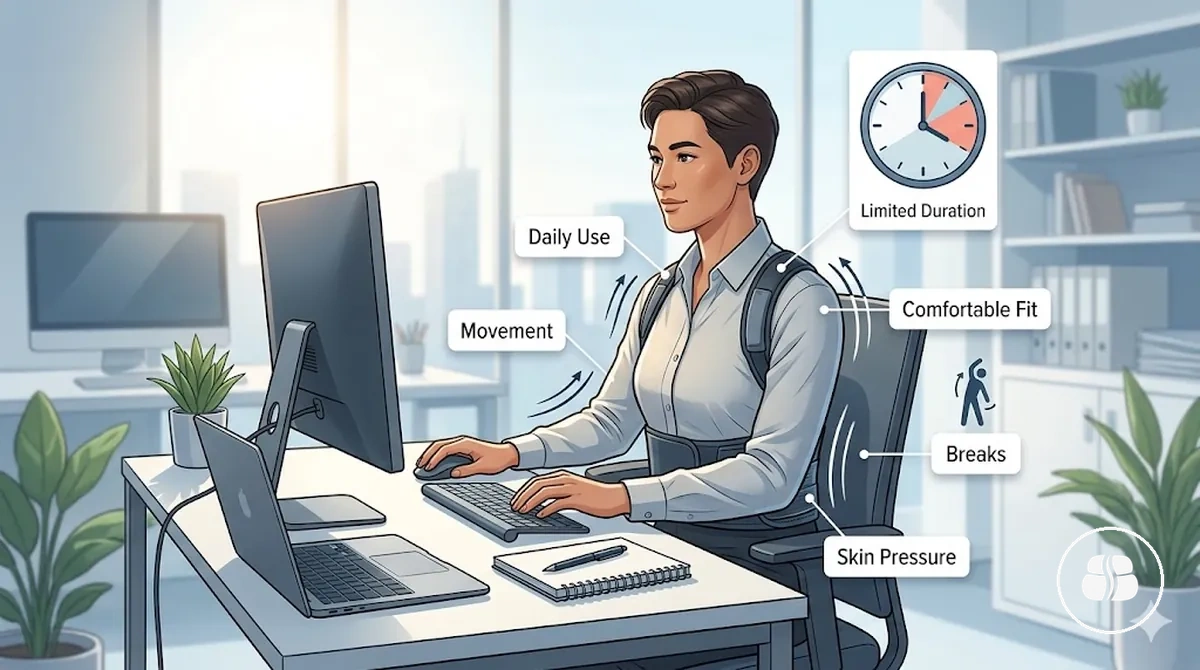
Starting duration, frequency, comfort response, progressive increase, and later reduction are the main variables that shape a support routine. Different users may respond differently to the same posture brace, posture corrector, cushion, or support aid. Changes should follow user response rather than a fixed timetable. These factors are best treated as adjustable variables rather than mandatory rules.
The first weeks are usually focused on observing comfort, routine fit, and posture awareness before increasing wear progression. The steps below describe a conservative schedule pattern that can be adapted when user response changes.
- Begin with a short starting duration and limited frequency to understand how the posture support accessory feels during normal activities.
- Monitor comfort response during and after each session, paying attention to movement, pressure, and overall comfort.
- Maintain regular breaks between sessions so daily posture support use remains a support routine rather than continuous assistance.
- Use a progressive increase only when comfort remains consistent and the support routine continues to feel manageable.
- Review awareness, comfort, and reliance patterns during the first weeks to determine whether further increase is appropriate.
- Introduce a later reduction when posture awareness improves or when support is needed less often within the routine.
If discomfort appears at any stage, the gradual wear schedule should be adjusted, paused, or reduced rather than continued unchanged.
Short first sessions
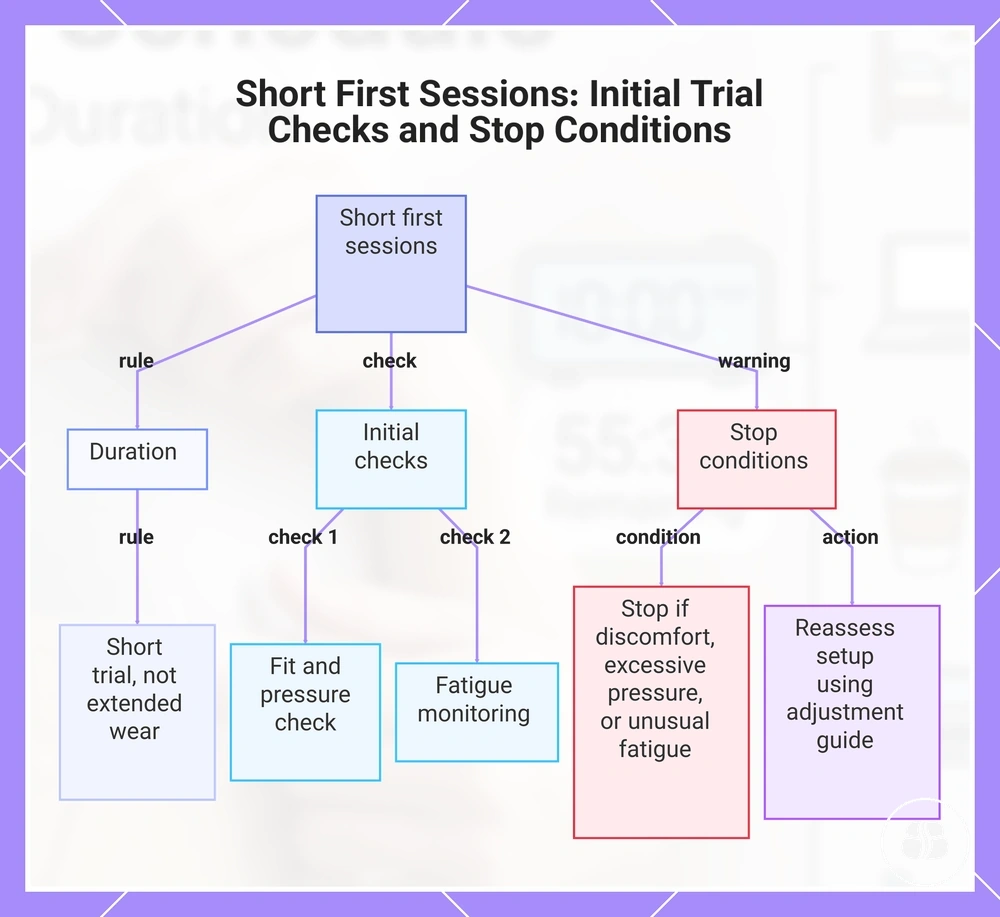
Short first sessions should start as a trial period focused on checking fit, pressure, and body response. Early use is intended to identify comfort signals before daily posture support use becomes part of a broader routine. Keeping the first wear period limited makes it easier to notice potential issues without increasing reliance.
- Duration: Treat the first session as a short trial rather than an extended wear period.
- Fit: Check whether the posture support accessory feels stable and comfortable during a limited task.
- Pressure: Monitor skin pressure and contact points for signs of irritation, pinching, or uneven support.
- Fatigue: Pay attention to shoulder or back fatigue that may develop during the initial sessions.
- Stop conditions: If discomfort, excessive pressure, unusual fatigue, or an unfavorable body response appears, stop and reassess the setup.
When fit or strap tension appears to affect comfort, use How to wear and adjust posture support accessories correctly for guidance on wearing and adjustment considerations.
This chart shows the key checks and stop conditions for short first sessions when using posture support accessories, focusing on fit, pressure, fatigue, and when to stop.
Increasing duration as the body adapts
Increasing duration should happen only when comfortable sessions remain free from problematic pressure, numbness, or fatigue. Wear time depends on how the body adapts to the support routine rather than a fixed promise of progression. A gradual increase helps evaluate comfort response while staying within safe limits.
When the body adapts well, users may consider extending sessions or increasing wear time based on comfort, activity type, and recovery between sessions. If pressure, numbness, fatigue, or reduced recovery appears, it is usually better to hold steady rather than continue progression. The table below outlines criteria that may help determine whether to increase duration or maintain the current schedule.
| Attribute | May Support Increasing Duration | May Support Holding Steady |
|---|---|---|
| Session Length | Comfortable sessions remain consistent | Discomfort appears during use |
| Number of Sessions | Sessions remain manageable with breaks | Recovery becomes less comfortable |
| Comfort Response | Stable body response after use | Pressure or irritation develops |
| Activity Type | Normal activities remain comfortable | Activity increases strain or discomfort |
| Recovery | Recovery between sessions remains comfortable | Fatigue or numbness continues after sessions |
Reducing support as posture awareness improves
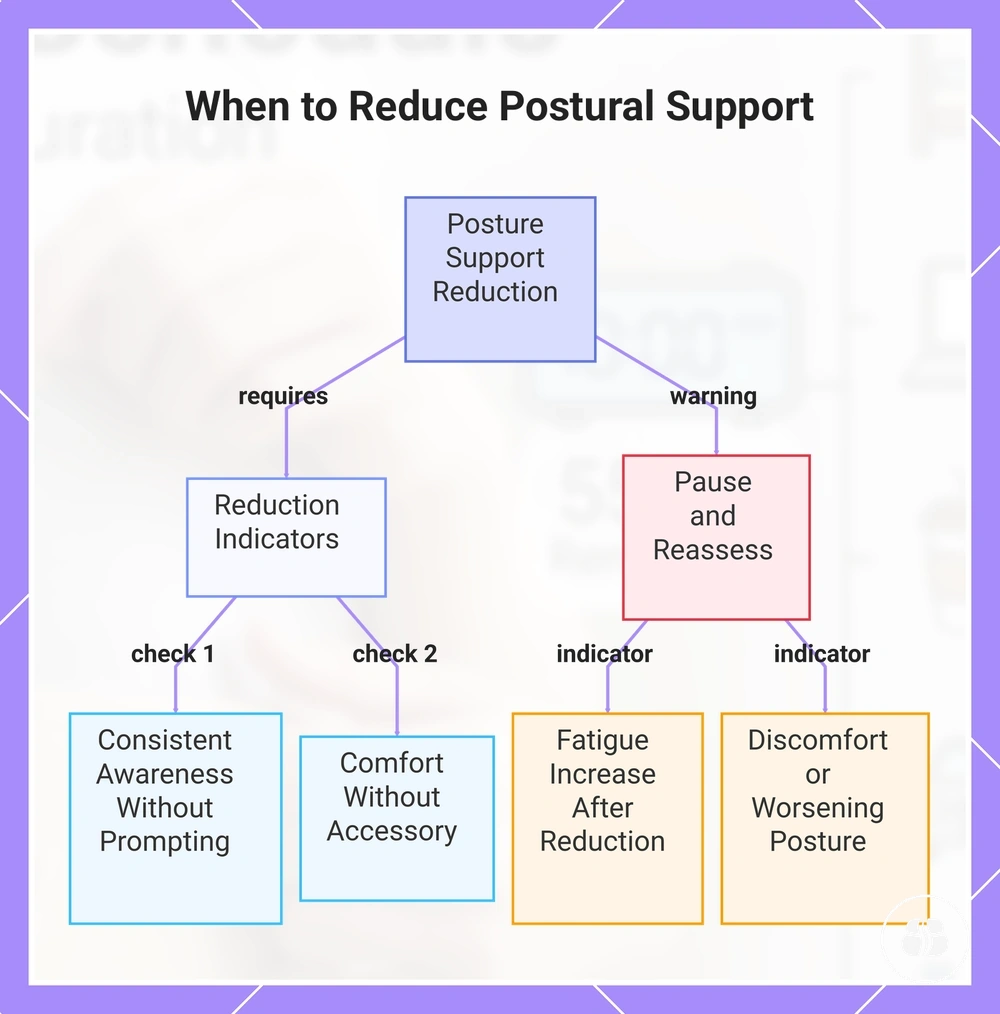
Reducing support becomes reasonable when posture awareness, movement, and active control are carrying more of the routine. This should be treated as a schedule adjustment, not proof of permanent correction. Tapering use works best when the change follows observable user response.
Fewer slouching cues, less fatigue during normal tasks, and comfort without the accessory may suggest that reduced wear time is appropriate. The user can reduce or continue less frequent support when awareness improves and daily movement remains comfortable. If discomfort, worsening posture habits, or reduced control appears, the reduction should be paused and reassessed.
- Awareness: Reduce support only when posture awareness remains consistent without constant prompting.
- Comfort: Taper use when comfort without the accessory stays acceptable during normal activity.
- Fatigue: Continue support if fatigue increases after reducing wear time.
- Pause point: Reassess the schedule adjustment if movement quality, comfort, or active control declines.
This chart shows the conditions for reducing postural support and the warning signs that require pausing the reduction.
How long to wear posture support accessories in one day
How long to wear posture support accessories in one day depends on user condition, comfort, and support intensity, so daily wear should usually be planned as limited sessions rather than continuous use. Daily duration can vary between users and accessory types. Wear time is often adjusted according to pressure, activity demands, and user response.
Braces, shoulder supports, cushions, and reminder-style accessories do not create the same wearing experience. Higher support intensity or noticeable pressure may justify shorter sessions, while lower-intensity support may allow longer daily sessions when comfort remains stable. Activity type can also influence duration because sitting, standing, and movement create different demands. Reliance risk should be considered alongside comfort rather than focusing only on wear time.
The table below organizes duration ranges by accessory type and use context. These ranges are intended as condition-based references that depend on comfort, pressure, and user response rather than fixed promises.
| Accessory Type | User Condition | Daily Duration Range | Key Attributes |
|---|---|---|---|
| Posture Brace | Beginner or adapting user | Short to moderate sessions | Higher support intensity, monitor pressure and comfort |
| Posture Brace | Comfortable ongoing use | Moderate sessions with breaks | User response and reliance risk should be reviewed |
| Shoulder Support | Light reminder use | Short to moderate sessions | Comfort, movement, and pressure tolerance |
| Cushion | Seated activity | Activity-dependent duration | Lower direct pressure, comfort remains the main factor |
| Reminder-Style Accessory | Awareness-focused use | Short recurring sessions | Supports posture awareness with lower reliance risk |
If discomfort increases, pressure becomes noticeable, or user response changes, duration may need to be shortened, held steady, or reviewed. The goal is to maintain comfort and awareness rather than pursue continuous use or a universal wear limit.
When to use posture support during daily activities
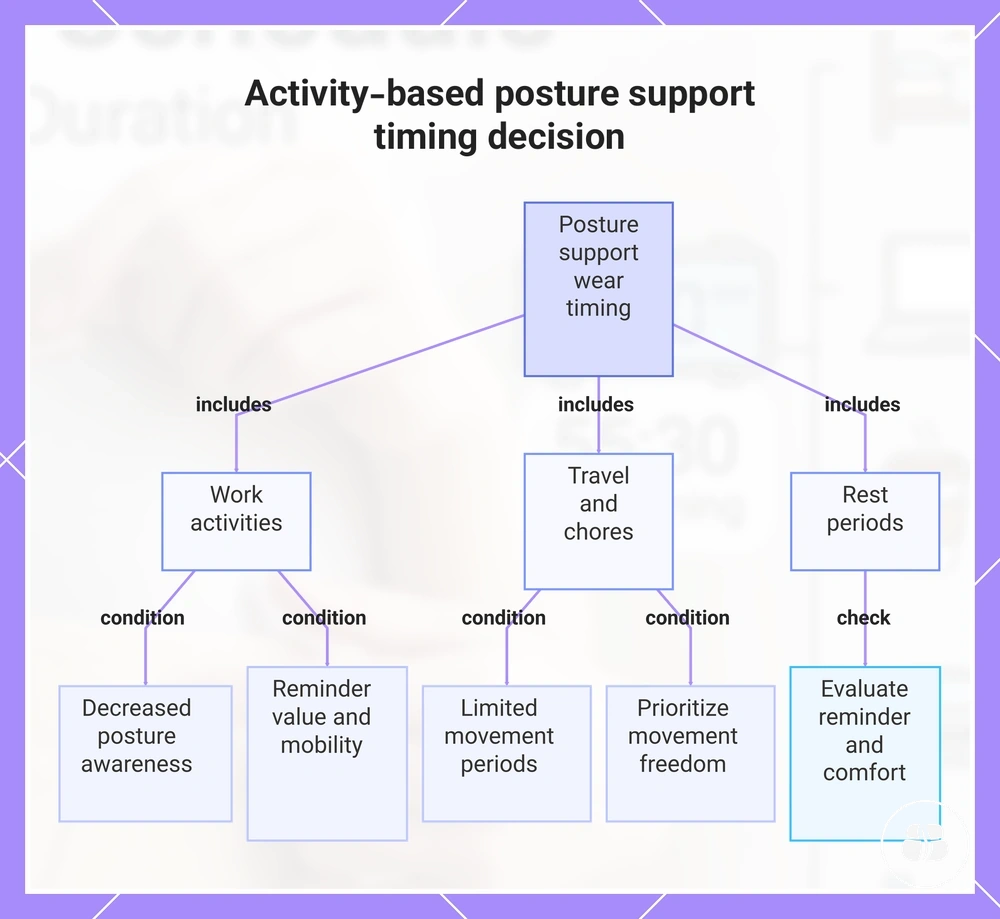
Posture support can provide support value or reminder value during daily activities where posture awareness tends to decrease over time. The most useful wear window often depends on the task being performed rather than a fixed daily schedule. Activity context determines the best wear window.
Desk work may benefit from posture support use when prolonged sitting reduces posture awareness. Standing tasks can create different comfort and movement demands, so support value depends on how freely the user can move. Commuting may make reminder value more relevant during passive periods, while light chores often require greater movement freedom. In each case, comfort and movement freedom should remain part of the decision process.
The checklist below organizes activity-use decisions around practical conditions rather than fixed routines. It can help identify when posture support use may offer support value or reminder value during daily tasks.
- Desk work: Consider a support session when posture awareness decreases during extended seated tasks.
- Standing tasks: Use posture support when reminder value is useful and movement freedom remains comfortable.
- Commuting: Consider support during periods of limited movement where posture habits may become less consistent.
- Light chores: Prioritize movement freedom and comfort before extending wear time.
- Rest periods: Evaluate whether posture support provides useful reminder value or whether comfort without support remains acceptable.
Practical decisions should focus on duration, movement freedom, comfort, and posture awareness within the specific activity. If support value remains useful without reducing comfort, posture support may fit that activity window. If comfort declines or movement becomes restricted, the activity context may need a shorter session or a different wear window.
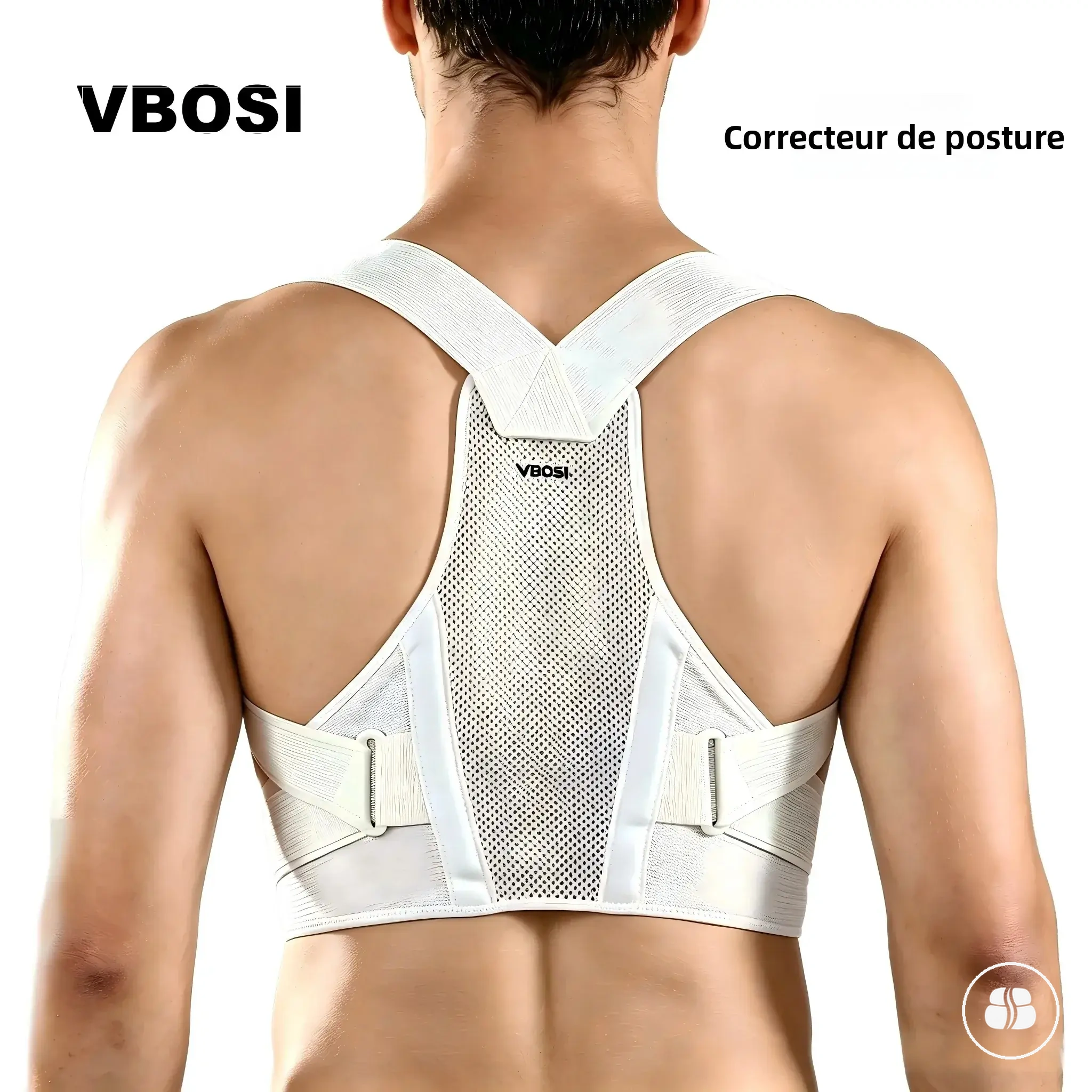
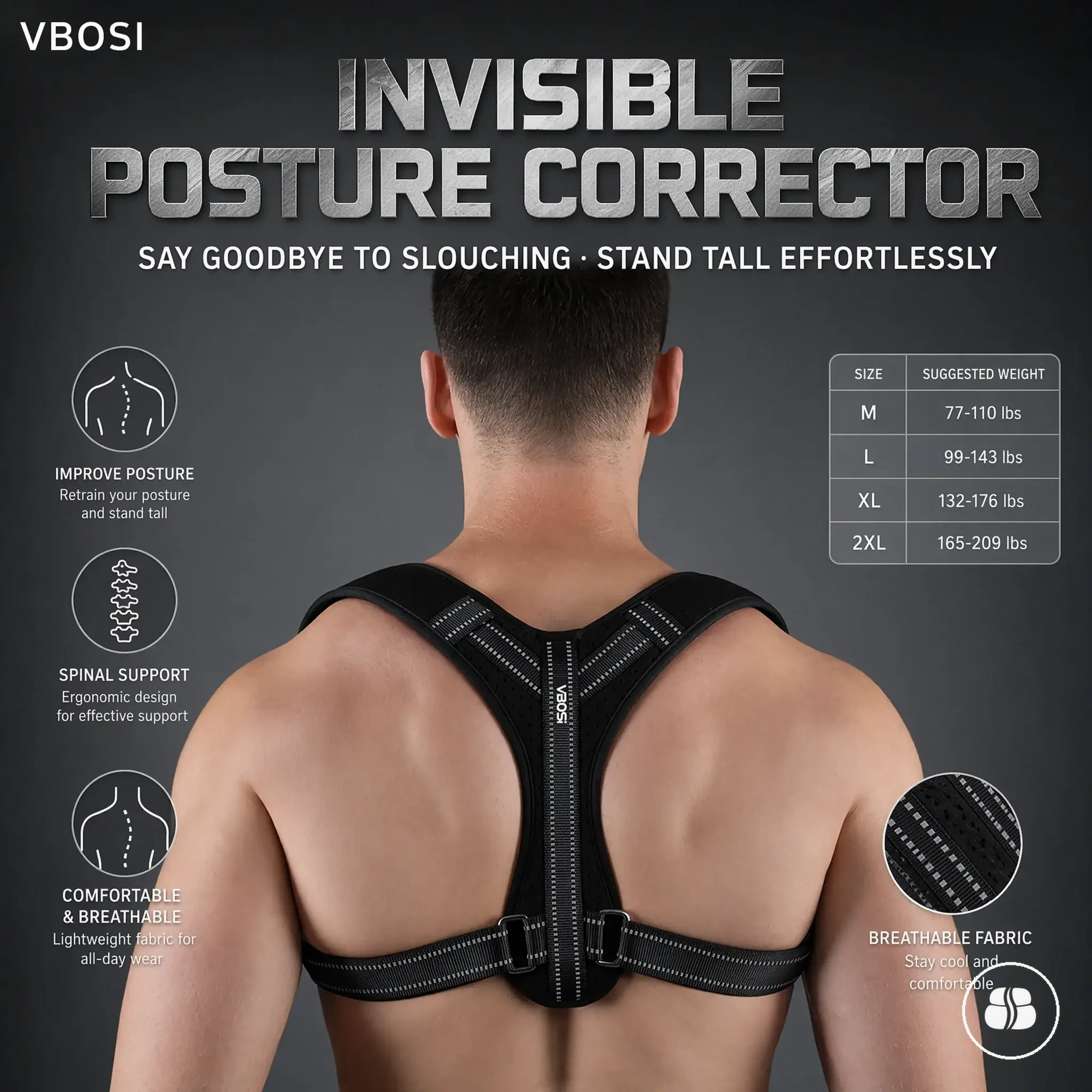
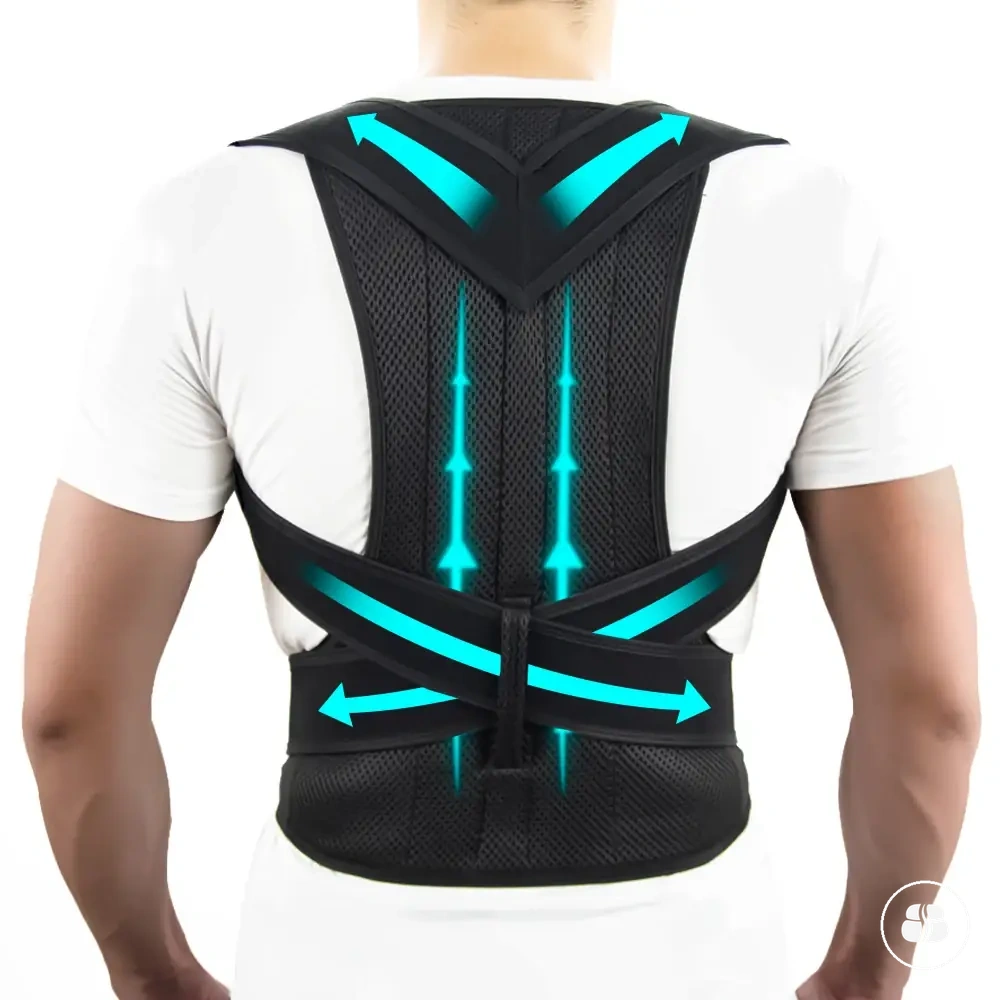
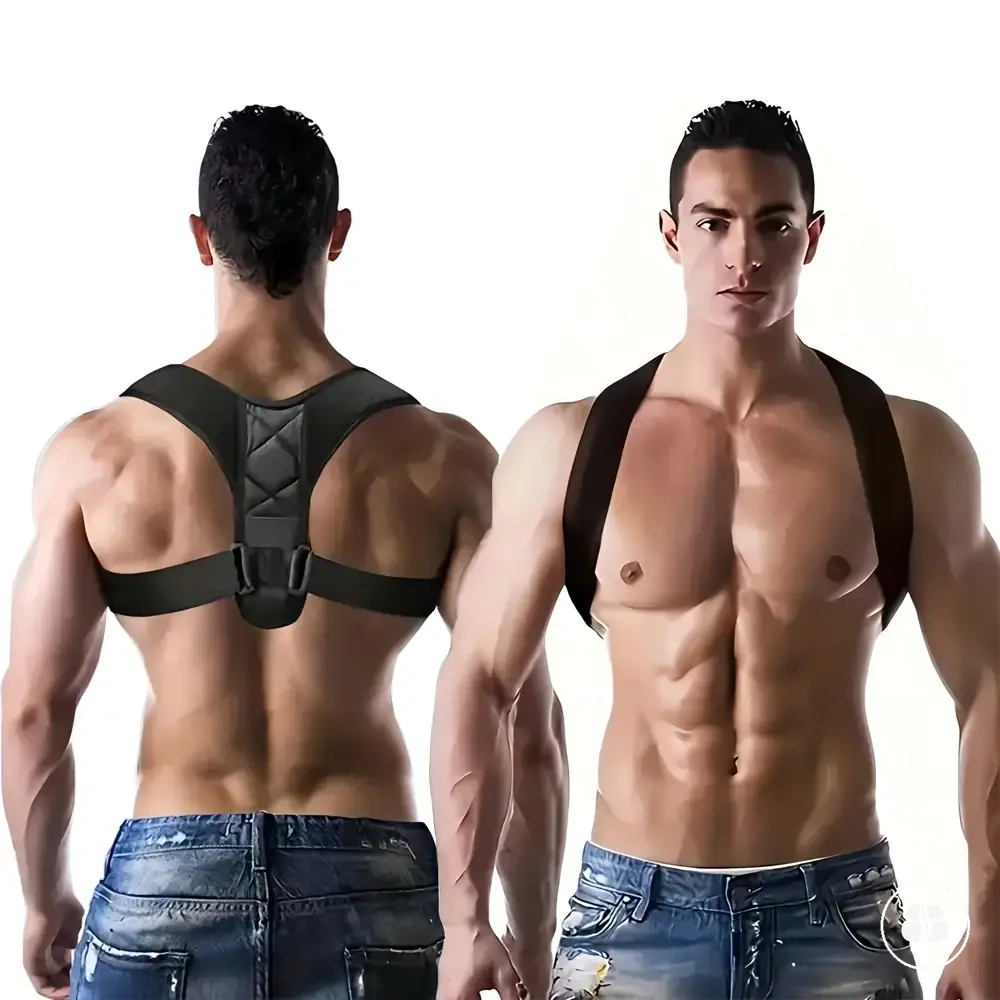
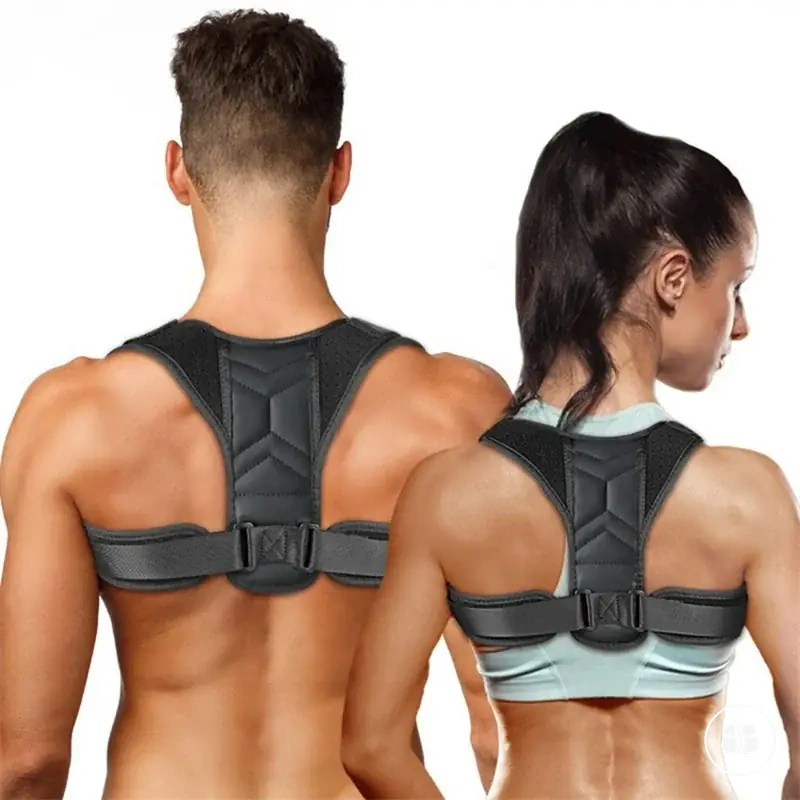
Here are product examples that may make comparison easier. Before buying, always review the compatibility criteria, essential features, and product details.
This chart groups daily activities into three categories and shows the specific conditions for using posture support in each context.
Breaks between posture support sessions
Breaks are planned time away from posture support sessions that help reduce pressure, fatigue, and over-reliance. A daily routine is usually easier to sustain when support sessions are separated by time off support rather than used continuously. Break windows also provide opportunities to assess comfort and user response.
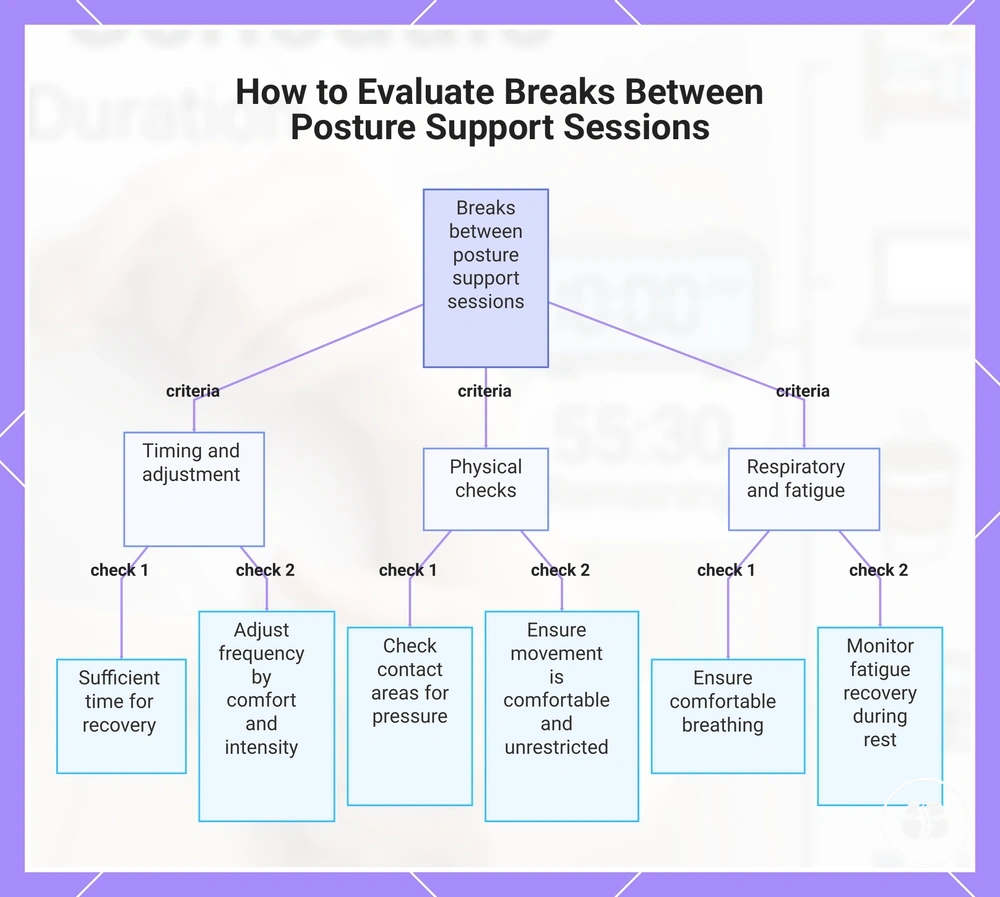
Break frequency depends on support intensity, activity demands, and individual comfort. Session spacing can help determine whether posture support remains comfortable throughout the day or whether adjustments may be needed. Skin checks during rest periods can help identify irritation, pressure points, or discomfort that develops during use. Movement, breathing comfort, and muscle fatigue should remain comfortable before another support session begins.
The checklist below highlights practical conditions that can help determine whether breaks between posture support sessions support a sustainable daily routine. These criteria focus on user response rather than exact universal timing.
- Session spacing: Leave sufficient time away between posture support sessions to evaluate comfort and recovery.
- Skin checks: Review contact areas for pressure, irritation, or other signs of discomfort.
- Movement: Use break windows to confirm that normal movement remains comfortable and unrestricted.
- Breathing comfort: Ensure breathing feels comfortable before continuing support use.
- Muscle fatigue: Monitor whether fatigue decreases during rest periods or continues after support removal.
- User response: Adjust break frequency according to comfort, support intensity, and overall sustainability.
This chart shows the practical conditions to check whether breaks between posture support sessions support a sustainable daily routine.
Why all-day posture support use can become a problem
All-day posture support use can become a problem when support remains in place longer than needed for posture awareness or reminder value. A posture support accessory may feel helpful at first, but continuous use can change how the user responds to support throughout the day. All-day use increases risk when support replaces active control.
Continuous use may increase pressure at contact points and make skin irritation or discomfort more noticeable over time. Long wear can also contribute to limited movement when the accessory reduces normal position changes during daily activities. As pressure and discomfort increase, the value of the support session may decrease. These outcomes often depend on support intensity, fit, activity type, and user response.
Reduced active muscle engagement can occur when posture support becomes the primary source of positioning instead of posture awareness and active control. Continuous support may also create false confidence, where posture habits receive less attention because the accessory is expected to do most of the work. When this pattern develops, over-reliance can become more likely. Support limits are often easier to manage when posture support remains part of a broader routine rather than the entire routine.
The contrast below highlights the difference between useful support and over-reliance. Understanding this distinction helps clarify daily-wear limits without treating posture support as either harmful or permanently necessary.
| Useful Support | Over-Reliance |
|---|---|
| Used during selected support sessions | Used through prolonged or continuous use |
| Supports posture awareness | May reduce attention to active posture control |
| Allows regular breaks and movement | May contribute to limited movement and dependence on support |
| Comfort and user response are reviewed | Discomfort, pressure, or fatigue may be overlooked |
This section focuses on daily-wear limits and practical boundaries. For broader safety context, side effects, and wear-limit considerations, see Posture support accessories: Safe Use, Side Effects, and Wear Limits.
Signs that the daily wear schedule needs adjustment
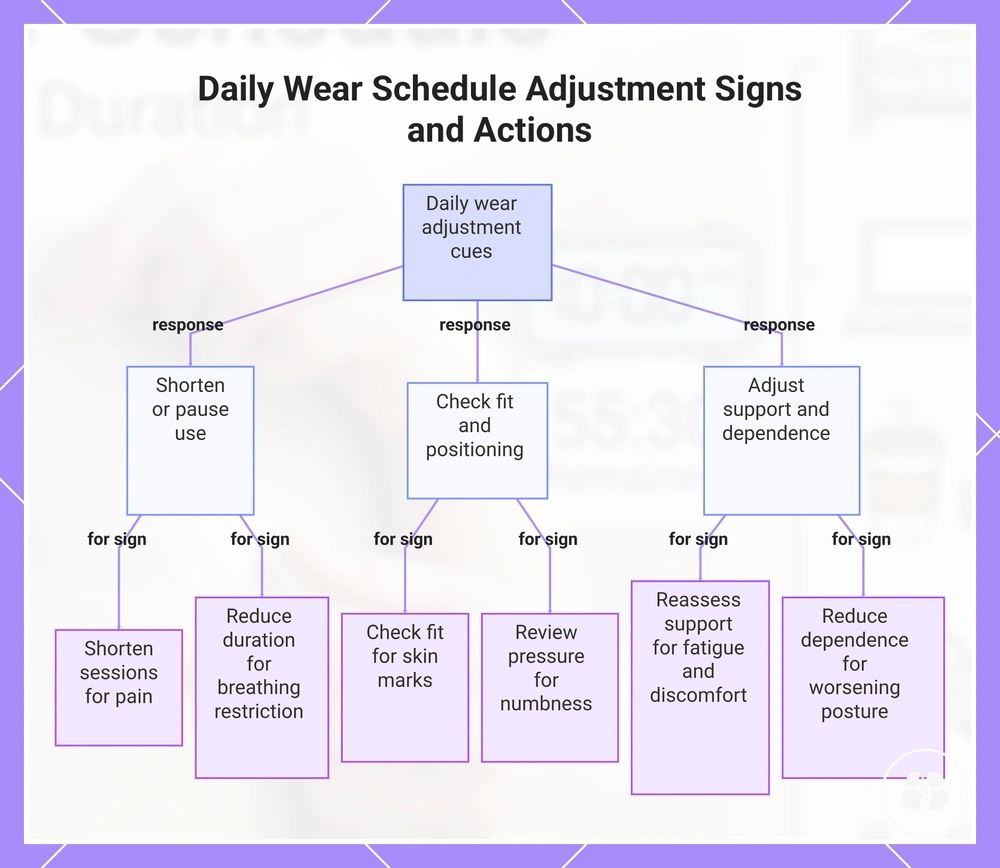
Warning signs mean the daily wear schedule should be shortened, paused, or reassessed. These signs are adjustment cues rather than a diagnosis. When discomfort increases or normal use becomes less comfortable, the schedule may need review before continuing unchanged.
Pain, numbness, tingling, skin marks, breathing restriction, shoulder fatigue, and discomfort during normal tasks can indicate that the current schedule is no longer working well. Skin marks associated with pressure may suggest that fit, support intensity, or wear duration should be reviewed. Breathing restriction or increasing shoulder fatigue can signal that support sessions are becoming less comfortable. These signs should be evaluated as part of overall user response rather than viewed in isolation.
The checklist below helps connect warning signs to practical adjustment actions. The goal is to map signs to appropriate changes in the daily wear schedule rather than ignore them.
- Pain: Shorten sessions and reassess the schedule if pain develops during or after use.
- Numbness or tingling: Pause use and review whether pressure or positioning may be contributing.
- Skin marks: Check fit, pressure points, and wear duration when marks remain noticeable after use.
- Breathing restriction: Reduce duration or pause use until breathing comfort returns.
- Shoulder fatigue: Reassess support intensity, session length, and break frequency.
- Discomfort during normal tasks: Review whether the accessory is affecting movement or routine activities.
- Worsening posture without the accessory: Consider whether over-reliance may be developing and reduce dependence on continuous support.
If symptoms persist, worsen, or continue despite schedule changes, professional guidance may be appropriate. When skin marks, pressure, or discomfort appear related to positioning, How to wear and adjust posture support accessories correctly can help with fit-checking considerations before continuing the routine.
This chart shows the warning signs that indicate the daily wear schedule may need adjustment, along with the recommended actions for each sign.